
Oil: A Surplus on the Horizon
 PriceONN Editorial Desk
Multi-source verification
PriceONN Editorial Desk
Multi-source verification
Crude Prices Face Downward Pressure Amid Shifting Geopolitics
The scent of peace, however tentative, in the Middle East has triggered a sharp sell-off in Brent crude futures. This geopolitical easing is now casting a shadow over oil prices, with projections indicating a potential return to a market surplus by the close of 2026. The recent sharp decline in Brent, marking its most significant daily drop in three months, was directly linked to reports circulating about a ceasefire agreement. Further optimism stemming from United States-led negotiations with Iran has continued to weigh on prices.
Historically, a slide in Brent prices often coincided with a weaker US dollar. This was largely due to reduced expectations of inflationary pressures and fewer anticipated interest rate hikes from the Federal Reserve. However, this established pattern seems to be breaking down. Current market sentiment reveals a palpable fear among investors that the Federal Reserve might deviate from expectations and implement an unexpected policy tightening. Derivatives markets, specifically CME futures, are pricing in a 38% probability of a monetary policy tightening in July, a level of uncertainty not seen since September 2024. Such a surprise move by the central bank could inject fresh momentum into the US dollar.
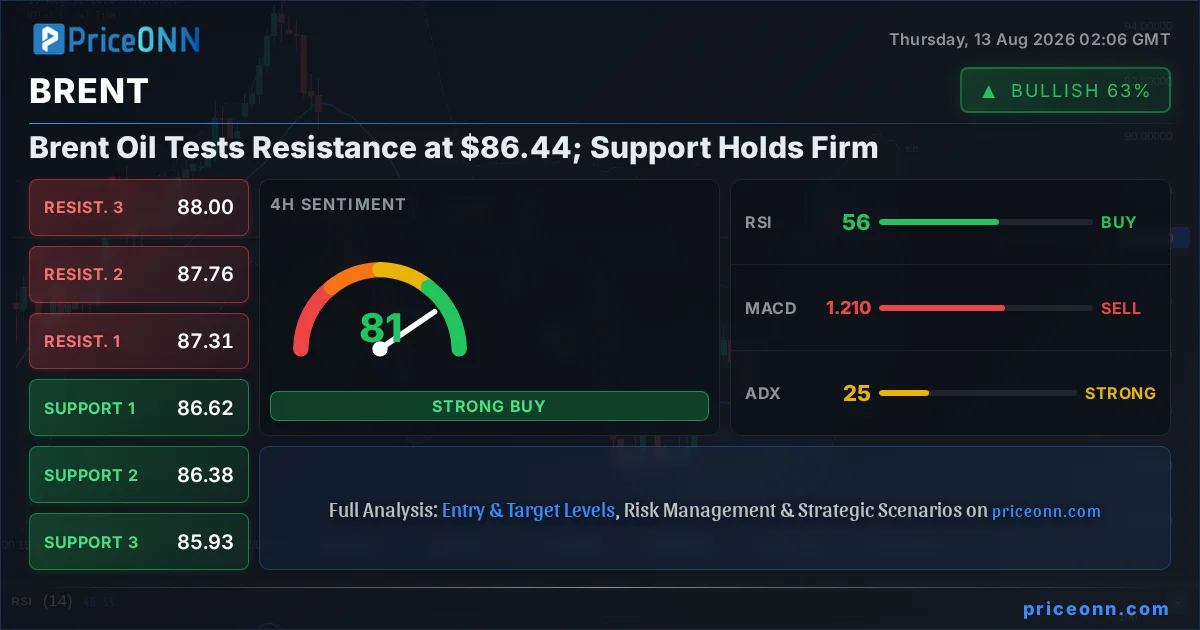
Analyst Projections Point to Significant Supply Increase
The pressure on crude oil prices is intensifying as the immediate threat of conflict in the Middle East recedes. Macquarie Bank, a prominent financial institution, forecasts that the geopolitical tensions will dissipate within weeks, partly influenced by the approaching US midterm elections. Consequently, Macquarie anticipates a substantial oil market surplus, potentially reaching 2 million barrels per day, emerging as early as the fourth quarter of 2026. This surplus is projected to nearly double in the first quarter of 2027, reaching an estimated 4 million barrels daily.
Despite ongoing concerns, critical shipping lanes remain operational. Around 25 oil tankers have reportedly navigated the Bab el-Mandeb Strait, a vital chokepoint. As long as the Houthi threats do not materialize into widespread disruptions, the global oil market can continue to breathe easier. The Caspian Pipeline Consortium’s recent resumption of full operations in the Black Sea further alleviates concerns about potential supply interruptions, directly contributing to the downward trajectory of Brent prices.
Yet, not all market participants are abandoning bullish positions. Barclays has highlighted a significant reduction in oil transit through the Strait of Hormuz, with flows dropping from 5.9 million barrels per day to 2.9 million barrels per day. Société Générale estimates that approximately 4% of global oil supplies remain at risk. These analysts suggest that the lingering geopolitical instability, coupled with persistent demand factors, could prevent oil prices from swiftly returning to their pre-conflict levels. Every month that the Middle East conflict endures, an additional $10 per barrel could be added to Brent’s price.
Adding another layer to the demand-side equation, import figures from China are showing signs of recovery. After hitting a decade low of 6.2 million barrels per day in June, Chinese imports are expected to rebound to 7.8 million barrels per day in July. This anticipated surge in demand from a major global consumer, alongside other rising global consumption trends, could provide a floor for Brent prices even as Middle Eastern tensions de-escalate.
Reading Between the Lines
The current market narrative is a complex interplay between receding geopolitical risk and resilient demand signals. While the de-escalation in the Middle East is undoubtedly the primary driver pushing prices lower, the potential for a significant supply surplus by late 2026 warrants close attention. This shift could fundamentally alter market dynamics, moving from a supply-constrained environment to one characterized by ample availability.
Traders should closely monitor the Federal Reserve's monetary policy trajectory. A surprise rate hike, while potentially strengthening the US Dollar Index (DXY), could also dampen global economic activity, indirectly impacting oil demand. Furthermore, the divergence between Brent crude and the US dollar suggests that traditional correlations may no longer hold, requiring a more nuanced approach to trading energy markets and currency pairs like USD/CAD. The resilience of Chinese import demand and the operational status of key transit routes like the Strait of Hormuz remain critical factors to watch.
Track markets in real-time
Empower your investment decisions with AI-powered analysis, technical indicators and real-time price data.
Join Our Telegram Channel
Get breaking market news, AI analysis and trading signals delivered instantly to your Telegram.
Join Channel PriceONN News
Brent oil price rose to the highest in over one week on Tuesday, in extension of Monday’s nearly 5% advance, following the latest verbal escalation by President Trump that quickly changed the sentiment and countered efforts of Iran and Oman to find solution for reopening of strategic Hormuz strait. The latest demands from President Trump […] The post Brent Oil Price Falls After Recovery Failed to Clear Important $90 Barrier appeared first on ActionForex.
PriceONN News
A deal to reopen the Strait of Hormuz is not inevitable. Oil prices are rising amid growing risks of an escalation of the conflict in the Middle East. The US dollar continued to recover from losses caused by the jobs report, against a backdrop of rising geopolitical tensions in the Middle East with traders squaring […] The post Brent Is Following a Path of Demands Rather Than Commitments appeared first on ActionForex.
PriceONN News
The Consumer Price Index (CPI) rose by 0.1% month-on-month (m/m) in July – in line with expectations. On a twelve-month basis, CPI edged down to 3.4% (from 3.5% in June). Energy costs fell by 1.5% m/m, led by a 2.9% m/m decline in prices at the pump. Food prices rose 0.1% m/m – its softest […] The post US: Inflationary Pressures Remain Subdued in July appeared first on ActionForex.
PriceONN News
US inflation eased as expected in July, reinforcing case for Fed to stay on hold while it waits for clearer evidence on both prices and labor market. Headline CPI rose from -0.4% to 0.1% m/m, while annual rate slowed from 3.5% y/y to 3.4%. Core CPI increased from 0.0% to 0.2% m/m, with annual core […] The post US CPI Slows to 3.4% as Core Inflation Eases to 2.5% appeared first on ActionForex.
PriceONN News
Whatever the inflation figures may be, the precious metal will come out on top. Japan and the US don’t want to give the yen’s fate to speculators. The US dollar continues to recover from the blow dealt by the labour market statistics. A rally in Treasury bond yields is driving the rise in the USD […] The post Gold as a Sure-Fire Bet appeared first on ActionForex.
PriceONN News
Germany’s benchmark index just made history, breaking above 26,500 for the first time ever, extending a rally that has already delivered close to 10% over the past twelve months. The move came on fresh optimism around a potential resolution to the Iran conflict, though that optimism proved short-lived: President Trump’s latest demands, that Tehran compensate […] The post DAX 40: Record Highs, Real Fundamentals, One Channel Left to Test appeared first on ActionForex.
PriceONN News
Hello fellow traders. In this technical article we’re going to take a look at the Elliott Wave charts charts of Copper (HG_F) commodity published in members’ area of the website. As our members know, Copper Futures recently completed a pullback that provided a high-probability trading setup. The decline unfolded as a clear Elliott Wave Zig […] The post Copper (Hg_F) Elliott Wave: Targeting a Buy at the Blue Box appeared first on ActionForex.
PriceONN News
The NFIB’s Small Business Optimism Index rose 2.4 points to 99.8 in July, soundly beating expectations for a roughly flat reading of 97.5. Eight out of the ten index subcomponents improved during the month and two deteriorated. The largest improvement came from the net share of firms planning to increase employment (up 9 points to […] The post US: Small Business Optimism Spiked in July appeared first on ActionForex.
PriceONN News
Overnight, the RBA held its cash rate steady at 4.35%, as widely expected after June’s inflation data came in softer than forecast at 3.8% headline. Yet the accompanying statement struck a notably cautious tone, warning that trimmed mean inflation remains elevated and largely unchanged from the March quarter, with oil and related commodities still trading […] The post EUR/AUD: Two Central Banks on Hold, One Triangle About to Break appeared first on ActionForex.
PriceONN News
Gold rose to 4,400 USD per ounce on Tuesday, reaching a two-month high. Demand for the precious metal is growing rapidly, even amid heightened inflation risks and expectations of higher interest rates driven by elevated oil prices. Chinese institutional investors continue to build positions in gold as a defensive asset amid heightened volatility in other […] The post Gold Rallies: Long-Awaited Rise and Growing Safe-Haven Demand appeared first on ActionForex.
PriceONN News
RBA on hold as expected, recognising the data has broken against its hawkish narrative. Base case clearly an extended period on hold, but RBA will hike if upside risks to inflation materialise. As widely expected, the RBA Monetary Policy Board (MPB) kept the cash rate on hold at 4.35% at its August meeting. The accompanying […] The post RBA Holds at 4.35%, Narrows Risk of Hikes appeared first on ActionForex.
PriceONN News
Easing concerns over the situation in the Strait of Hormuz provided support for risk-sensitive assets. On 8 August, the Iranian side reported progress in talks with Oman over a possible new route through the strait, although the implementation of any agreement remains dependent on additional conditions. Reduced concerns over potential disruptions to energy supplies helped […] The post Ethereum Analysis: Attempted Breakout from the Sideways Structure appeared first on ActionForex.