
Can the S&P 500 Reclaim Key Support After Hitting 2026 Lows?
The S&P 500 index has tumbled to its lowest point of 2026, falling below the 6,570 level for the first time this year. This significant decline puts the equity market on track for a fourth consecutive weekly loss and raises concerns about its position below the crucial 200-day moving average.
Market Context
The recent bearish sentiment appears to be fueled by a confluence of factors, primarily the escalating military conflict in the Middle East. Elevated oil prices, a direct consequence of these geopolitical tensions, are stoking fears of a renewed inflationary surge. This, in turn, reinforces expectations that the Federal Reserve may maintain higher interest rates for an extended period, thereby pressuring corporate earnings and the broader economy. Investors are also grappling with the possibility of the United States becoming entangled in a prolonged conflict with Iran, a scenario that could introduce considerable economic challenges despite official assurances aimed at calming market nerves.
Analysis & Drivers
Market data indicates that the ongoing geopolitical instability is the primary driver behind the S&P 500's sharp downturn. The conflict in the Middle East has led to a significant spike in crude oil prices, which directly impacts inflation expectations. Analysts note that this inflationary pressure is a key concern for central bankers, suggesting a prolonged period of elevated interest rates. Remarks from Fed officials this week have consistently reinforced this hawkish stance, creating a challenging environment for equity valuations. Furthermore, uncertainty surrounding the potential for wider conflict, particularly involving the United States and Iran, adds another layer of risk aversion among investors.
Despite official statements from the US administration indicating no plans for ground troop deployment and suggestions from Israeli leadership that further strikes on Iranian energy infrastructure might be avoided, market sentiment remains fragile. Treasury Secretary Scott Bessent's comments regarding potential internal collapse within the Iranian regime add to the complex geopolitical narrative, but the immediate impact on market prices has been negative.
Trader Implications
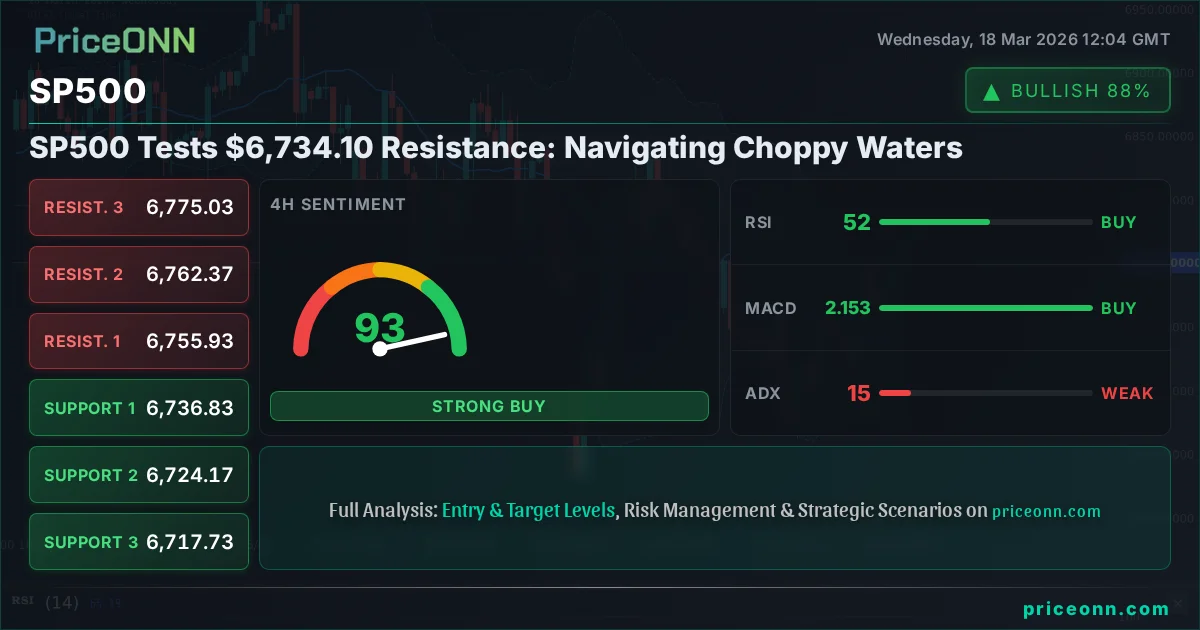
From a technical perspective, the S&P 500 has broken through a previously identified descending trendline, now acting as resistance (R2), and has fallen to a new low (point B), breaching a broader channel boundary. Market data shows that price has entered a Sell-Side Liquidity zone. This suggests that the recent bearish breakout below the channel might be a false move. Traders should closely monitor whether the index can reclaim the broken channel boundary. A failure to do so could signal further downside, while a successful reclamation might indicate a short-covering rally. Key levels to watch include the recent low around 6,570 as immediate resistance and the 200-day moving average as a critical longer-term indicator of trend health.
Outlook
The immediate outlook for the S&P 500 remains cautious, heavily dependent on de-escalation in the Middle East and clearer signals from the Federal Reserve regarding monetary policy. Any further escalation of geopolitical tensions could push the index lower, while positive developments or signs of easing inflation might trigger a recovery. Traders will be looking for a decisive move back above the broken channel and the 200-day moving average to regain confidence. Upcoming economic data releases, particularly inflation reports and Fed speeches, will be critical in shaping market sentiment in the coming weeks.
Frequently Asked Questions
What is the current critical support level for the S&P 500?
The S&P 500 recently fell below the 6,570 level, establishing it as a significant point of reference. Traders are watching to see if the index can hold above this level or if it will break further, potentially targeting lower support levels not seen this year.
What factors are causing the S&P 500 to decline?
The primary drivers of the S&P 500's decline are heightened geopolitical tensions in the Middle East, leading to increased oil prices and inflation concerns. This scenario suggests the Federal Reserve may keep interest rates higher for longer, negatively impacting corporate performance and investor sentiment.
What should traders watch for in the coming week?
Traders should monitor the S&P 500's ability to reclaim the 6,570 level and the 200-day moving average. Additionally, upcoming inflation data and any new developments in Middle Eastern geopolitical situations will be crucial for short-term price direction.
Track markets in real-time
Empower your investment decisions with AI-powered analysis, technical indicators and real-time price data.
Join Our Telegram Channel
Get breaking market news, AI analysis and trading signals delivered instantly to your Telegram.
Join Channel

PriceONN