
Canadian Crude Cashes In on War Premium
 PriceONN Editorial Desk
Multi-source verification
PriceONN Editorial Desk
Multi-source verification

Alberta's Budget Gets a Boost From Global Events
Just a month prior, Alberta's financial planners braced for three consecutive years of budget shortfalls, a consequence of depressed oil values. Now, a dramatic turn of events sees Canadian crude oil companies positioned to capitalize significantly from the Middle East crisis. This unexpected windfall stems from the close alignment between Canadian crude pricing and the surging WTI benchmark.
When Minister Nate Horner unveiled Alberta's budget, the forecast anticipated oil prices hitting their nadir in the current year, with recovery not expected until 2027. The budget's projections hinged on a WTI price of $60.50 per barrel. However, the reality has far outstripped those conservative estimates, with prices vaulting past $90 per barrel. This surge promises a substantial revenue boost for Alberta and, by extension, Canada.
Rory Johnston from Commodity Context observed, "We are a massive net exporter of oil and products. Western Canada is going to benefit. You're going to see a boost in royalty revenues." This price rally holds the potential to not just eliminate Alberta’s projected deficit but to generate a surplus.
Supply Dynamics and Market Realities
Tyler Meredith, a former economic advisor to Canada’s prime minister, suggests that "$90 a barrel over the course of the year would be sufficient to wipe out, and probably turn into a surplus, what was going to be a $10-billion deficit." He further noted that even the planned release of reserves by International Energy Agency members may not reverse the upward price momentum.
Earlier in the week, IEA members collectively agreed to release up to 400 million barrels of crude from their emergency stockpiles. Canada is among the nations contributing to this coordinated effort. The initial announcement of this substantial release briefly exerted downward pressure on prices, as traders reacted by selling oil in anticipation of increased supply. However, this initial reaction proved short-lived, as market participants reassessed the situation and recognized that 400 million barrels would likely have a limited impact on global supply should disruptions persist, particularly concerning the Strait of Hormuz. Consequently, oil prices have resumed their upward trajectory after a brief dip.
Upstream vs. Downstream: A Tale of Two Strategies
Generally, integrated oil companies, those with both upstream (exploration and production) and downstream (refining and distribution) operations, are better insulated against price volatility than pure-play companies. Integrated firms can benefit from both high and low oil prices. Should the price rally falter, the downstream segment would capitalize on lower feedstock costs. Conversely, if the rally persists, the upstream operations become the primary driver of profitability, enabling companies to fully exploit the price surge.
Canada's Commitment and Contingency Plans
Canada's pledge to contribute to the IEA's emergency release necessitates tapping into existing resources, as the nation lacks a strategic petroleum reserve akin to that of the United States. In response, the federal government is actively evaluating its options. Energy Minister Tim Hodgson outlined potential strategies, stating, "We can delay taking downtime, for example. We can, for brief periods of time, peak production, which we’re talking to suppliers about doing. We can ask refineries that are using imported oil to use more domestic oil."
Portfolio Impact: Navigating the Crude Oil Surge
The unexpected surge in crude oil prices presents both opportunities and challenges for investors. The immediate impact is clear: Canadian energy companies, particularly those focused on upstream production, are likely to see increased profitability. However, the sustainability of this rally hinges on geopolitical stability and the effectiveness of supply-side interventions.
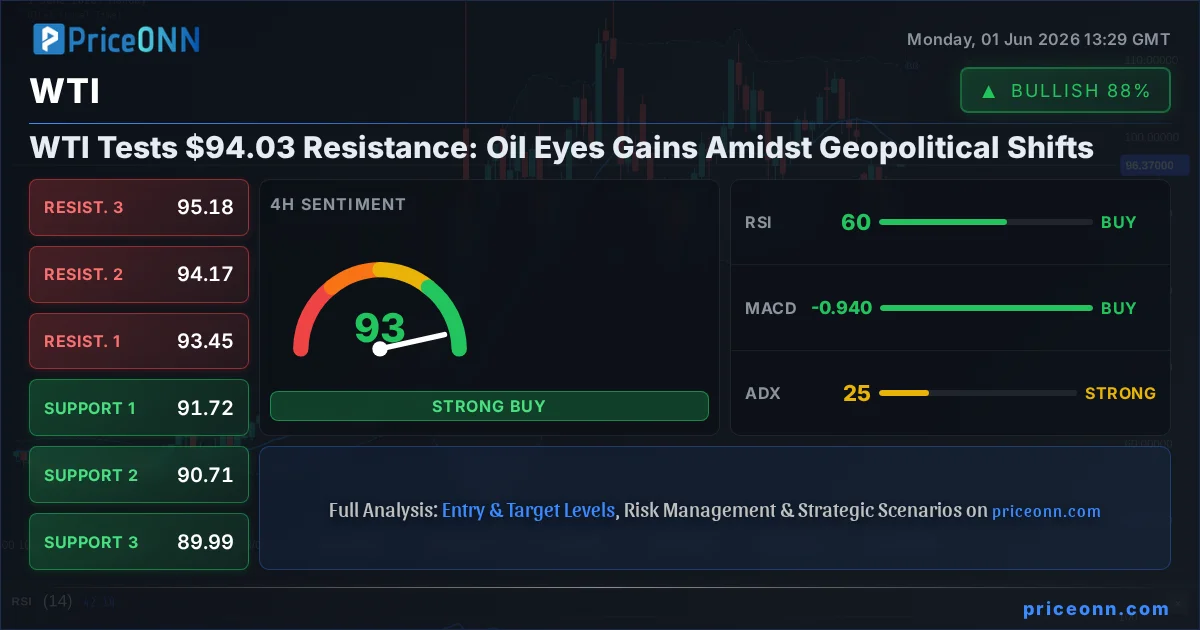
For traders, monitoring the WTI price is crucial. A sustained break above $90 could signal further upside, while a retracement below $85 might indicate a potential pullback. Investors should also pay close attention to the Canadian dollar (USD/CAD), as it often exhibits a positive correlation with oil prices. A stronger Canadian dollar could erode some of the benefits for Canadian exporters.
Beyond Canadian equities and currency, the ripple effects could extend to inflation expectations and, consequently, central bank policy. A prolonged period of elevated oil prices could put upward pressure on inflation, potentially prompting central banks to maintain or even increase interest rates. Assets to watch include: Brent Crude, Energy Sector ETFs, and Canadian Government Bonds.
The key risk remains geopolitical instability. A de-escalation of tensions in the Middle East could trigger a sharp correction in oil prices. Conversely, further escalation could send prices even higher, creating both opportunities and risks for investors.
Track markets in real-time
Empower your investment decisions with AI-powered analysis, technical indicators and real-time price data.
Join Our Telegram Channel
Get breaking market news, AI analysis and trading signals delivered instantly to your Telegram.
Join Channel PriceONN News
Crude oil prices experienced a significant drop, with WTI futures falling over 1.8% to $87.25, as optimism grew for a U.S.-Iran deal potentially reopening the Strait of Hormuz.
PriceONN News
Crude oil prices experienced a significant downturn as market sentiment shifted towards optimism about a potential US-Iran Memorandum of Understanding that could reopen the Strait of Hormuz. WTI futures fell nearly 2% on the news.
PriceONN News
(RTTNews) - Crude oil prices have tumbled on Friday as expectations of the U.S. and Iran signing a Memorandum of Understanding run high. The MoU would allow for immediate reopening of the Strait of Hormuz and pave the way for the resumption of oil and energy trade.
PriceONN News
Crude oil futures experienced a dramatic intraday reversal on Thursday, soaring overnight on geopolitical fears only to pull back significantly as reports of a potential diplomatic understanding between the U.S. and Iran emerged.
PriceONN News
(RTTNews) - Extending the losses from yesterday's session, crude oil prices have gone into freefall on Wednesday as investor expectations on a potential U.S.-Iran agreement continue to rise despite the U.S. refusing to ease its demands.
PriceONN News
(RTTNews) - Crude oil prices have tumbled on Tuesday as optimism about a U.S.-Iran peace deal that could lead to reopening of the Strait of Hormuz soon grows despite reports of fresh U.S. strikes on Iran yesterday.
PriceONN News
(RTTNews) - After surging early in the day, crude oil prices have tumbled over the course of the trading session on Thursday. With the downturn, crude oil is extending the losses from the two previous sessions, as investors watch the developments in U.S.-Iran peace talks.
PriceONN News
Global oil prices are treading water after a significant 5% slump, as market sentiment grapples with cautious optimism over Middle East de-escalation efforts versus lingering geopolitical uncertainties. Brent crude hovers near $104.72 and WTI near $98.07.
PriceONN News
WTI Crude futures for July delivery plunged 5.66% to $98.26 per barrel as diplomatic efforts to resolve the U.S.-Iran conflict gained significant traction. This sharp decline overshadowed a larger-than-expected drawdown in U.S. crude inventories.
PriceONN News
Crude oil prices experienced a sharp decline, with WTI futures for July delivery falling 5.66% to $98.26. This drop is largely attributed to renewed diplomatic efforts aimed at de-escalating the U.S.-Iran conflict and easing tensions around the Strait of Hormuz.
PriceONN News
The Iran war suddenly turned what had started as a year of oversupply in global oil and LNG markets into the worst oil and gas supply disruption in history. Three months after the U.S.-Israeli strikes on Iran began on February 28, the world has already lost 1 billion barrels of crude oil supply, oil and gas prices have found a new, much higher floor, and whipsaw with violent volatility nearly every day, trade routes have shifted, and tanker rates have spiked. Actual supply shortages are...
PriceONN News
The Iran war has handed the United States a rare opportunity: a new dawn of energy dominance in an increasingly fractured world. With coordinated US-Israeli strikes disrupting the Strait of Hormuz from late February, roughly 20% of global LNG supply has been stripped from the market since early March. Prices have surged across Asia and Europe. And into that vacuum, American gas has flowed. The numbers speak for themselves. US LNG exports to Asia jumped sharply in April, with nearly a quarter of...