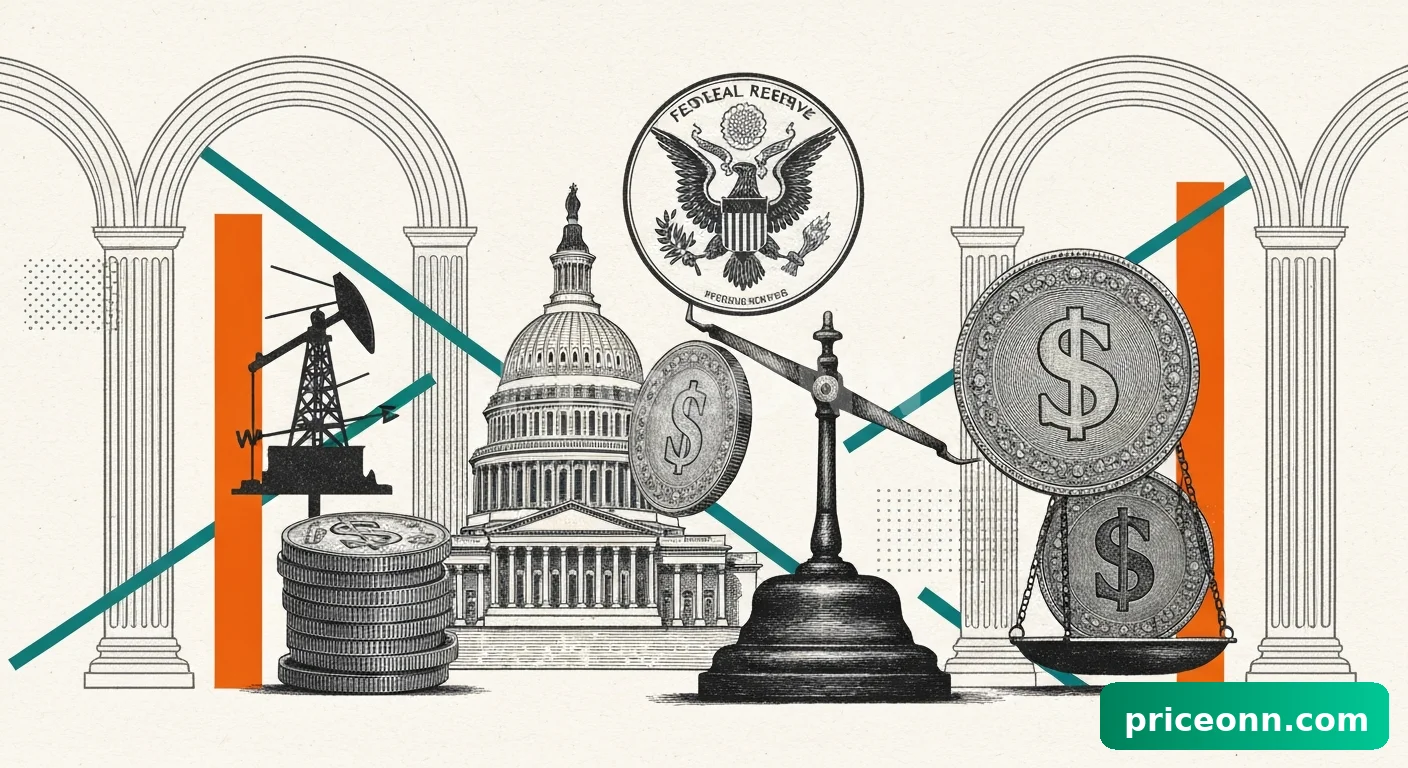
Canadian Dollar softens ahead of Fed, BoC rate decisions

Market Crossroads: Rate Decisions Loom Large
The currency pair USD/CAD is navigating choppy waters early Wednesday, trading with slight gains around the 1.3700 handle. A palpable sense of caution has settled over trading floors as participants brace for simultaneous, high-stakes interest rate decisions from two of North America's most influential central banks. The Federal Reserve and the Bank of Canada are both set to unveil their latest monetary policy pronouncements later today, creating a significant inflection point for financial markets.
This strategic pause reflects the market's natural inclination to digest incoming data and policy intentions before committing to significant directional bets. The outcomes of these meetings are expected to provide clarity on the future trajectory of interest rates, inflation targets, and economic outlooks, all of which are critical determinants for currency valuations.
Unpacking the Canadian Dollar's Drivers
Understanding the forces shaping the Canadian Dollar (CAD) requires a multifaceted view. At its core, the BoC's benchmark interest rate plays a pivotal role. When the central bank adjusts its policy rate, it sends ripples through the entire lending landscape, influencing borrowing costs for businesses and consumers alike. The Bank of Canada's primary mandate centers on maintaining price stability, typically targeting an inflation rate between 1% and 3%. Consequently, higher interest rates generally bolster the CAD by making Canadian assets more attractive to global capital seeking yield. Conversely, quantitative easing measures tend to weaken the currency, while quantitative tightening can offer support.
Beyond monetary policy levers, the price of Oil stands as a colossal influence. As Canada's preeminent export commodity, fluctuations in crude oil prices often translate directly into movements in the Loonie. A surge in oil prices typically lifts the CAD, driven by increased demand for the currency as foreign buyers acquire Canadian crude. This dynamic also frequently correlates with an improved Canadian Trade Balance, the crucial metric comparing the value of exports against imports, which further underpins the currency's strength.
Interestingly, the traditional view of inflation as a pure currency devaluer has been challenged in recent decades. With the liberalization of capital flows, higher inflation rates can paradoxically strengthen a currency. This occurs when central banks respond by hiking interest rates to combat rising prices, thereby attracting significant foreign investment inflows from investors hunting for higher returns. This increased demand for capital naturally boosts the local currency.
Furthermore, the overarching health of the Canadian economy, as reflected in key macroeconomic indicators, is indispensable. Data points such as Gross Domestic Product (GDP) figures, Purchasing Managers' Indexes (PMIs) for manufacturing and services sectors, employment statistics, and consumer confidence surveys all provide vital clues about economic vitality. A robust economic environment not only attracts foreign direct investment but also empowers the Bank of Canada to consider rate hikes, reinforcing the currency. Conversely, signs of economic weakness often precipitate a depreciation of the CAD.
Market Ripple Effects
The immediate implications of today's central bank decisions will likely reverberate across several interconnected markets. For traders eyeing the USD/CAD pair, the divergence or convergence in policy outlooks between the Fed and BoC will be paramount. A more hawkish stance from the Fed compared to the BoC could pressure the Loonie lower, while a surprisingly dovish Fed might offer a reprieve.
Beyond the currency pair itself, the energy complex, particularly Crude Oil futures, will be under scrutiny. A risk-averse sentiment stemming from uncertain central bank guidance could weigh on oil prices, indirectly impacting the CAD. Additionally, Canadian equity markets, such as the S&P/TSX Composite Index, may experience volatility depending on the market's interpretation of the central banks' economic forecasts. Finally, the broad strength of the US Dollar Index (DXY) will also be a key barometer, as a stronger dollar generally exerts downward pressure on USD/CAD.
Traders should focus on the forward guidance provided by both central banks. Subtle shifts in language regarding inflation, economic growth, and the future path of interest rates could unlock significant trading opportunities. Key levels to watch on the USD/CAD include the recent highs around 1.3750 and support zones near 1.3600. Any decisive break above the former or below the latter could signal a new short-term trend.
Track markets in real-time
Empower your investment decisions with AI-powered analysis, technical indicators and real-time price data.
Join Our Telegram Channel
Get breaking market news, AI analysis and trading signals delivered instantly to your Telegram.
Join Channel