Cliff Notes: Fear Overwhelms
A Week of Monetary Policy Divergence
Markets witnessed a week defined by a spectrum of central bank responses to mounting inflationary pressures, underscored by geopolitical tensions. The Reserve Bank of Australia (RBA) notably diverged from the pack, implementing a 25 basis point interest rate increase, pushing the official cash rate to 4.10%. This decision, though anticipated, was far from unanimous, with a close 5-4 vote revealing internal debate. The dissenting voices favored delaying action to gather further economic data, signaling a nuanced approach to policy tightening.
RBA Governor Bullock articulated the board's rationale, emphasizing that inflation's starting point was "already too high." She further cited evolving capacity developments, pointing to a recent subtle tightening in the labor market and slightly amplified capacity pressures compared to prior assessments. The ongoing conflict in the Middle East adds another layer of complexity, contributing to near-term price pressures and heightened uncertainty.
The RBA's move set an intriguing stage for Australia's latest labor force survey. The data surprised on two fronts: employment growth exceeded expectations with a gain of 48.9k jobs in February, elevating the three-month average growth rate to 1.3% year over year from a previous low. Concurrently, a surge in labor force participation pushed the unemployment rate up to 4.3% from 4.1%. This uptick in participation suggests that the prior figures may have temporarily compressed the unemployment rate, rather than indicating a fundamental re-tightening of the labor market.
While higher fuel prices were not the direct trigger for the RBA's March hike, the assessment was clear: the Middle East conflict skewed inflation risks upward. This impact is projected both in the immediate term through global energy prices and further out, should supply capacities be disrupted or inflation expectations escalate significantly. Analysis of Australia's energy price shock exposure is now a critical component of forward-looking economic strategy.
US Economy Focused Inward, Europe Cautious
Across the Pacific, the US Federal Open Market Committee (FOMC) acknowledged heightened global uncertainty but maintained its primary focus on domestic economic conditions. Projections for GDP growth were nudged upwards slightly for 2026 and 2027. Inflation forecasts saw a modest upward revision for 2026, but were largely stable for subsequent years, suggesting the FOMC views the inflationary impacts of tariffs and geopolitical events as transient. Crucially, capacity constraints within the US economy, such as in housing and energy, received minimal attention in FOMC communications. Likewise, the potential for second-round inflation effects stemming from commodity price shocks, particularly energy, appears to be downplayed, a stark contrast to the RBA's vigilance.
The FOMC's base case policy outlook remains for limited rate cuts, with members estimating the long-run neutral rate at 3.1%. Some market observers believe the FOMC might enact only one more cut this cycle, potentially as early as June, given the subdued private sector job creation discussed. However, with economic and fiscal capacity facing constraints, and upside risks from tariffs and commodity prices, there is a compelling argument that longer-term US yields may trend higher from current levels.
In Europe, the European Central Bank (ECB) Governing Council maintained its current interest rate stance, leaving the deposit rate at 2.0%. The accompanying statement acknowledged increased uncertainty stemming from the Middle East conflict but struck a balanced tone, asserting the ECB's preparedness to manage these conditions. President Lagarde indicated that the Eurozone economy is more resilient than during the 2022 energy shock, and the ECB is better equipped to gauge the impact of future disruptions.
ECB inflation forecasts were revised upwards significantly, with projections now peaking at 3.1% year over year in the second quarter and averaging 2.6% for the calendar year. These figures, however, are based on market variables from early March, which current spot prices for oil and gas now substantially exceed. ECB stress scenarios paint a more concerning picture: an adverse scenario sees inflation at 3.5% this year, while a severe scenario could push it to 4.4% and keep it elevated well beyond 2027. While GDP growth impacts appear manageable, they are still significant, with severe scenarios showing a notable drag on economic expansion through 2027. The core takeaway from these scenarios is the non-linear and escalating impact on both inflation and growth as crises prolong, triggering second-round effects and eroding confidence.
Market Ripple Effects
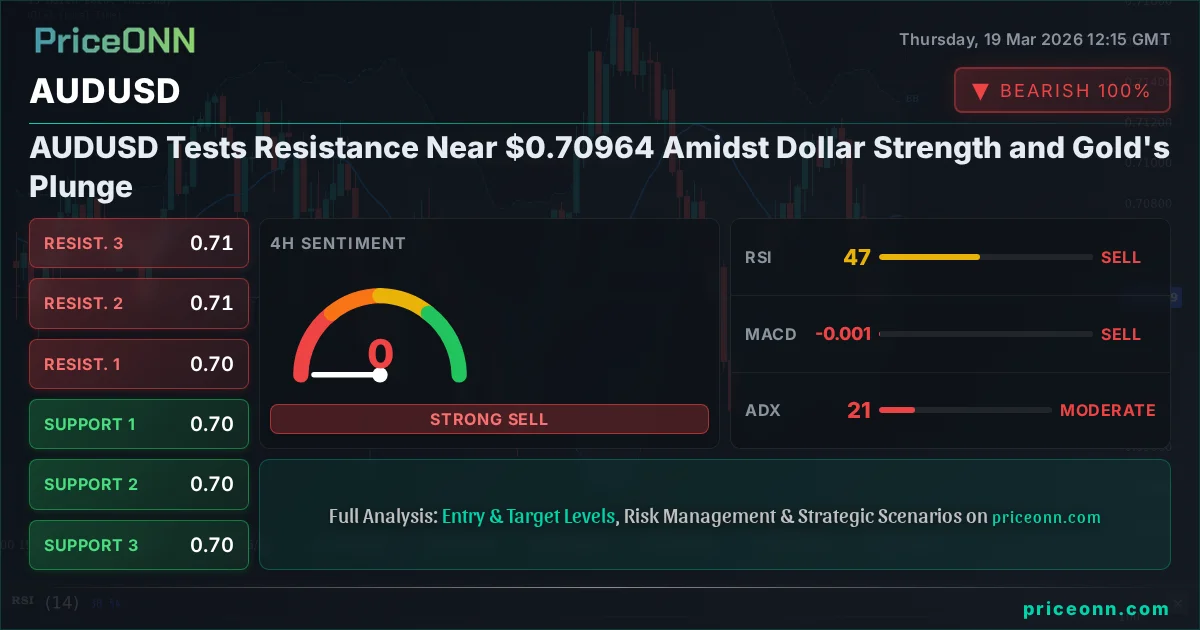
The divergence in central bank policy and the persistent threat of geopolitical instability create a complex trading environment. The RBA's hawkish tilt, supported by a robust labor market report, could provide some support for the Australian Dollar, particularly against currencies where central banks are signaling a more dovish path. Traders will be closely watching the AUD/USD pair for signs of sustained upward momentum.
In the US, the FOMC's focus on domestic growth alongside a seemingly less concerned view on inflation could lead to a steeper yield curve if market participants begin to price in the possibility of higher-for-longer rates, especially given the capacity constraints. This environment is generally supportive of the US Dollar Index (DXY), as higher yields attract capital. The contrast between the RBA's urgency and the FOMC's perceived complacency on inflation expectations is a key point of divergence.
Meanwhile, the Bank of England's shift in tone, with even dovish members considering rate hikes, suggests a growing consensus on the need to combat inflation. This hawkish pivot, coupled with market pricing for multiple hikes, could lend strength to the British Pound (GBP). However, the UK economy's sensitivity to energy prices and global trade disruptions presents a significant risk factor.
For commodity markets, particularly crude oil, the ongoing conflict in the Middle East remains the primary driver. Any escalation or sustained disruption to supply routes could trigger sharp price spikes, feeding directly into inflation forecasts across all major economies and potentially forcing central banks to adopt even more aggressive tightening measures than currently anticipated. The interplay between energy prices, inflation, and monetary policy remains the critical narrative for the coming months.
Track markets in real-time
Empower your investment decisions with AI-powered analysis, technical indicators and real-time price data.
Join Our Telegram Channel
Get breaking market news, AI analysis and trading signals delivered instantly to your Telegram.
Join Channel