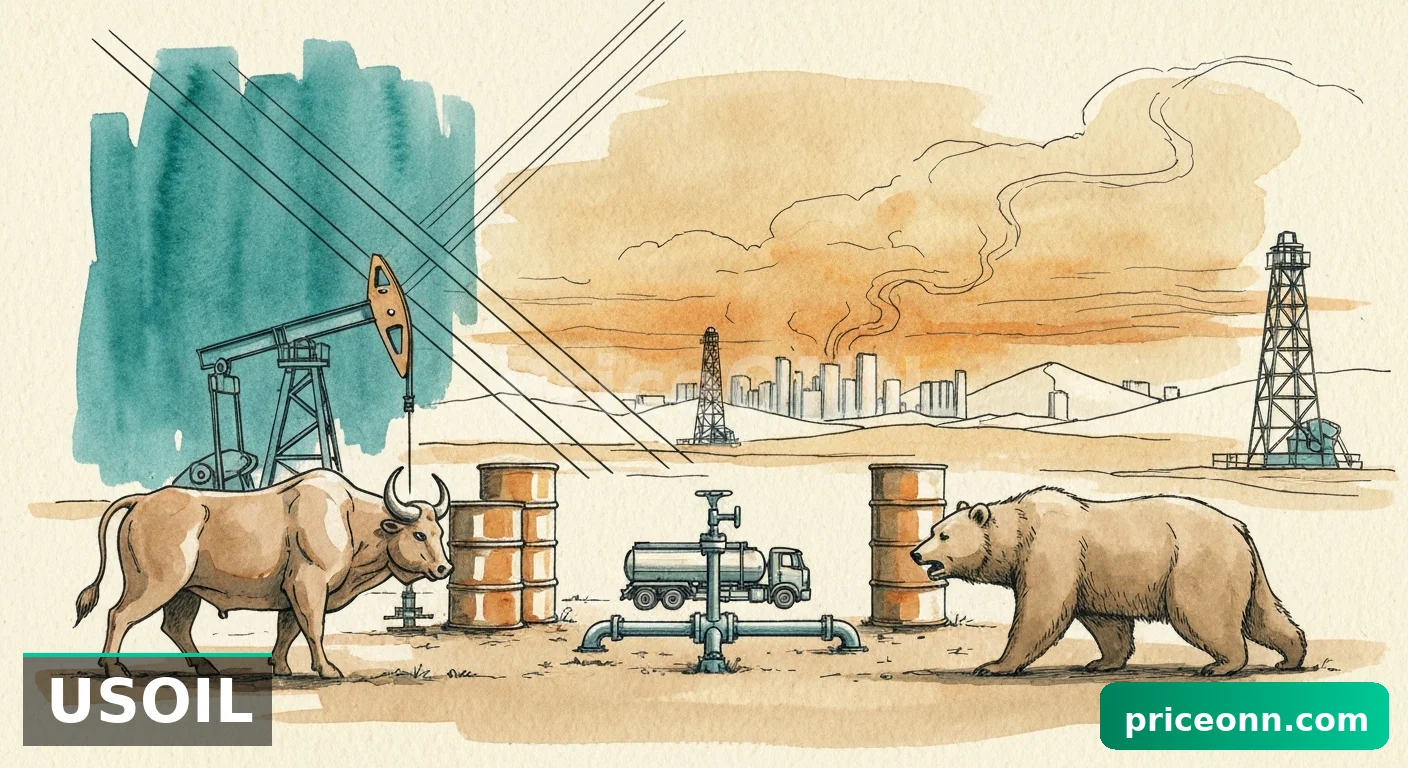
Crude Oil explodes higher as Strait of Hormuz crisis deepens

Understanding WTI Crude Oil
West Texas Intermediate (WTI) crude oil serves as a vital benchmark in the global energy market. This specific grade, often referred to as "light sweet crude," is prized for its low density and sulfur content, factors that contribute to its ease of refining. Extracted primarily from U.S. oilfields, WTI's distribution hinges on the Cushing, Oklahoma hub, a critical nexus in the North American pipeline network often called "The Pipeline Crossroads of the World." The price of WTI acts as a key indicator reflecting overall market sentiment and is routinely cited in financial news.
Fundamental Price Drivers
Like any commodity, the price of WTI crude oil is dictated by the forces of supply and demand. Robust global economic expansion typically spurs heightened demand for oil, whereas sluggish growth can dampen it. Geopolitical factors such as political turmoil, armed conflicts, and international sanctions can disrupt supply chains, leading to price volatility. Furthermore, the decisions made by the Organization of the Petroleum Exporting Countries (OPEC) exert considerable influence on oil prices. The value of the US dollar plays a crucial role as crude oil is predominantly traded in this currency; a weaker dollar can render oil more affordable for international buyers, and vice versa.
Inventory Data and OPEC's Influence
The American Petroleum Institute (API) and the Energy Information Administration (EIA) release weekly oil inventory reports that impact WTI crude prices. These reports offer insights into the balance between supply and demand. A decline in inventories typically suggests increased demand, potentially driving prices upward. Conversely, an increase in inventories may signal oversupply, exerting downward pressure on prices. The API report is released every Tuesday, followed by the EIA report on Wednesday. Historically, these reports tend to align, with discrepancies of less than 1% observed approximately 75% of the time. The EIA data, being sourced from a government entity, is generally regarded as the more authoritative of the two.
OPEC and OPEC+ Dynamics
OPEC, comprising 12 major oil-producing nations, convenes biannually to establish production quotas for its members. These decisions have a direct bearing on WTI oil prices. Reducing quotas can constrict supply, leading to price increases, while boosting production can have the opposite effect. The term OPEC+ encompasses a broader coalition that includes ten non-OPEC nations, with Russia being a prominent participant. The collective actions of OPEC and OPEC+ are closely monitored by market participants due to their significant influence on global oil supply and pricing.
The recent surge in WTI crude underscores the sensitivity of oil markets to geopolitical events. As tensions in key transit regions like the Strait of Hormuz intensify, the potential for supply disruptions looms large, further amplifying price volatility. Traders will continue to monitor inventory data and OPEC+ announcements to gauge the direction of crude oil prices.
Track markets in real-time
Empower your investment decisions with AI-powered analysis, technical indicators and real-time price data.
Join Our Telegram Channel
Get breaking market news, AI analysis and trading signals delivered instantly to your Telegram.
Join Channel