
Is the Euro Set to Tumble as German Inflation Surges Amidst Middle East Conflict?


The Eurozone's economic outlook faces a dual challenge this week as preliminary German inflation data for March is expected to show a significant uptick, while geopolitical tensions in the Middle East escalate, casting a shadow over global trade and energy markets.
Market Context
Market data indicates that German annual inflation is forecast to rise to 2.7% in March, a substantial jump from 1.9% in February. This surge is primarily attributed to soaring energy prices, a trend that has been amplified by recent geopolitical developments. While this data may not fully capture the immediate impact of the latest conflict escalations, it will be closely scrutinized by the European Central Bank (ECB). The ECB, under President Lagarde, is particularly attentive to seller price expectations, a component that will be further detailed in the EU Commission's business surveys for March. These surveys are considered critical for the ECB's monetary policy deliberations.
The situation is compounded by a speech from ECB official Stournaras, expected to offer insights into the central bank's stance on inflation and monetary policy. In Sweden, upcoming retail sales figures for February are anticipated to have limited market impact, given the overwhelming focus on international events. However, recent data has shown a divergence between Swedish retail sales, which rose 4.1% year-on-year in January, and weak consumer confidence, suggesting underlying economic complexities.
Analysis & Drivers
The primary driver for the projected rise in German inflation is the sharp increase in energy costs. Analysts note that the ongoing conflict in the Middle East, with reports of potential actions targeting Iran's Kharg Island oil hub, is a significant factor exacerbating these energy price pressures. This geopolitical instability introduces considerable uncertainty into commodity markets, with potential ramifications for global supply chains and inflation rates across various economies.
In the United States, market participants will be closely following speeches from Federal Reserve Chair Powell and Fed's Williams for any signals regarding future monetary policy direction. The upcoming US labor market data, including JOLTS job openings and Challenger job cuts, culminating in the non-farm payrolls report on Friday, will be pivotal. These figures are crucial for assessing the health of the US economy and the Fed's potential reaction function.
Overnight, attention will turn to Japan for Tokyo's March CPI data, offering an early indication of how energy shocks are affecting consumer prices. Additionally, February data on Japanese retail sales, unemployment, and industrial production will provide a backdrop, though likely considered less timely. China's NBS PMIs for manufacturing and services are also on the economic calendar. While February's manufacturing PMI fell to 49.0, preliminary March indicators from the Emerging Industries PMI and the Yicai high-frequency indicator suggest a potential rebound, although the Middle East situation adds a layer of unpredictability.
Trader Implications
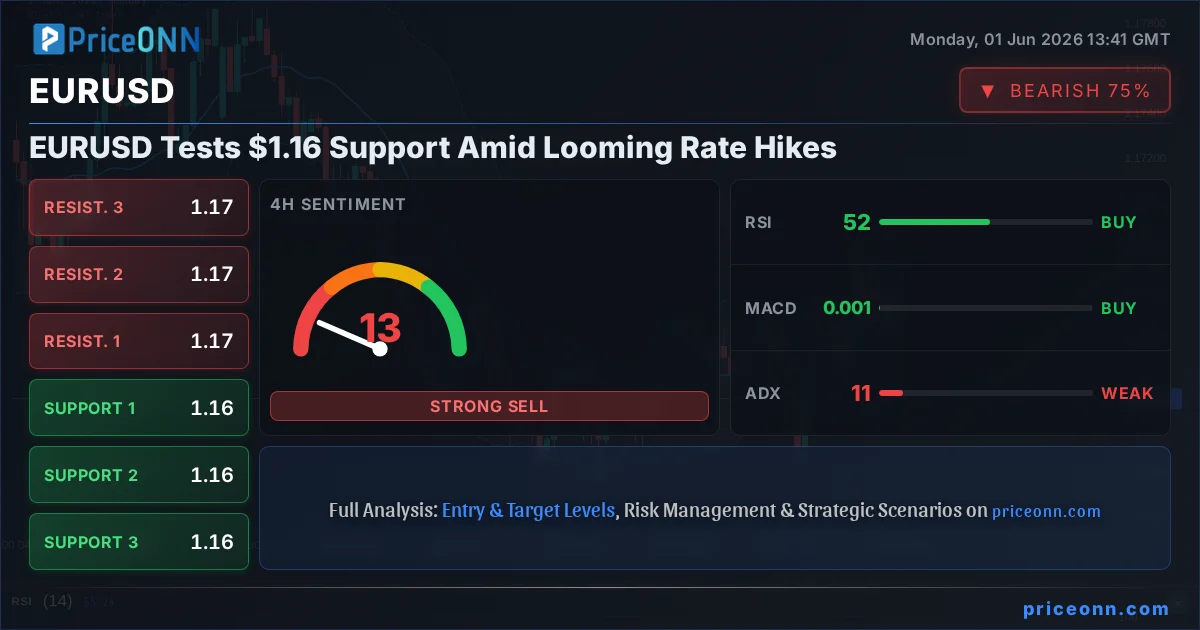
Traders should brace for potential volatility in currency markets, particularly within the Eurozone. The anticipated surge in German inflation could put the ECB in a difficult position, potentially delaying any anticipated monetary easing or even hinting at a more hawkish stance if price pressures persist. Key levels to watch for EUR/USD will be influenced by the inflation print and any hawkish commentary from ECB officials. A sustained move below 1.0800 could signal further downside, targeting 1.0750, while a stronger-than-expected inflation figure coupled with hawkish ECB remarks might see a test of resistance at 1.0850.
The escalating Middle East tensions are a significant wildcard. Any further escalation could lead to a flight to safety, benefiting currencies like the USD and JPY, while potentially weighing on riskier assets and commodity-linked currencies. Traders should monitor oil price movements closely, as sustained increases could fuel broader inflation concerns and impact central bank policies globally. The US dollar index (DXY) may find support if geopolitical risks increase, potentially challenging recent lows around 104.00.
Outlook
The coming week is packed with key economic data and geopolitical developments that will shape market sentiment. The German inflation figures and ECB commentary will be critical for the Euro's short-term trajectory. Simultaneously, the ongoing geopolitical risks in the Middle East serve as a potent reminder of the potential for supply-side shocks to disrupt economic stability and inflation trends. Traders will be looking for confirmation of an economic rebound in China and closely watching US labor market data for clues on the Federal Reserve's next move, all while navigating the heightened global uncertainty.
Frequently Asked Questions
What is the expected German inflation rate for March?
German inflation is projected to increase to 2.7% year-on-year in March, up from 1.9% in February, primarily driven by rising energy prices.
How might the Middle East conflict affect the Euro?
Escalating Middle East tensions could lead to higher energy prices, fueling inflation and potentially complicating the European Central Bank's monetary policy decisions. This could create volatility for the EUR/USD pair, with a potential downside risk if market sentiment shifts towards risk aversion.
What are the key levels to watch for EUR/USD this week?
Traders should monitor the 1.0800 support level for EUR/USD. A break below this could see a move towards 1.0750, while resistance is eyed around 1.0850, especially if inflation data and central bank commentary lean hawkish.
Track markets in real-time
Empower your investment decisions with AI-powered analysis, technical indicators and real-time price data.
Join Our Telegram Channel
Get breaking market news, AI analysis and trading signals delivered instantly to your Telegram.
Join Channel PriceONN News
Financial markets traded with a mixed tone today as investors tried to balance fresh signs of diplomatic progress in the Middle East against lingering concerns that the region’s energy and security risks are far from resolved. The shift in sentiment was reflected most clearly in currency markets, where Dollar weakened broadly as traders scaled back […] The post Dollar Falls as Peace Hopes Return, But Risks Haven’t Gone Away appeared first on ActionForex.
PriceONN News
USDJPY has returned to the area of previous interventions. The ECB is moving towards a rate hike in June. The US dollar retreated on Friday amid new record highs for stock indices and rumours of amendments to the US-Iran agreement. However, tit-for-tat exchanges between the adversaries pushed the dollar index back into the support zone […] The post Yen Braces for a New Storm appeared first on ActionForex.
PriceONN News
For a market supposedly obsessed with geopolitics, investors appear remarkably calm. The proposed US-Iran agreement remains unsigned, key details are still unresolved, and military exchanges between the two sides continue. Yet financial markets are behaving as though a lasting settlement is only a matter of time. Oil remains well below recent highs, Treasury yields are […] The post Trump Says “Relax”, Markets Appear To Be Listening Despite Ongoing Iran Tensions appeared first on ActionForex.
PriceONN News
USD/CAD is showing signs of potential weakness as Canada's economy struggles with a -0.1% Q1 GDP contraction and the specter of renewed trade uncertainties, while global oil prices react to Middle East truce hopes.
PriceONN News
The US Dollar experienced a notable decline last week as markets priced in a potential diplomatic resolution to the US-Iran conflict, leading to a drop in oil prices and Treasury yields. This shift in sentiment suggests a move away from stagflation fears towards a more stable economic outlook.
PriceONN News
Canada's labor market is showing signs of stabilization, with analysts predicting a dip in the unemployment rate to 6.8% in May, driven by an expected 25,000 new jobs. This follows a period of sluggish GDP growth and rising joblessness earlier in the year.
PriceONN News
The Canadian dollar faces headwinds as domestic demand cools and investment remains sluggish. However, upcoming trade negotiations could offer a much-needed catalyst for a rebound.
PriceONN News
Markets are pricing in a potential de-escalation in the US-Iran conflict, leading to a significant drop in crude oil prices and a weakening US Dollar as diplomatic efforts appear to be gaining traction.
PriceONN News
Canada's economy showed signs of a slowdown in early 2026, but upcoming May jobs data is expected to reveal a modest uplift. Analysts anticipate the unemployment rate to fall to 6.8%.
PriceONN News
The dominant story across financial markets last week was not artificial intelligence, central banks, or economic data. It was a dramatic shift in expectations regarding the future of the US-Iran conflict. Investors increasingly embraced the view that the three-month war is moving toward a diplomatic resolution after reports emerged that negotiators had drafted a 60-day […] The post US-Iran Endgame in Sight? Markets Vote for Peace as Oil, Yields and Dollar Fall appeared first on ActionForex.
PriceONN News
USD/CAD faces pressure as Canada's economy shows signs of stalling, with Q1 GDP contracting 0.1% and domestic demand weakening. This comes as trade negotiations and geopolitical shifts add layers of uncertainty.
PriceONN News
Canada's economy showed signs of life in early 2026, with analysts expecting a moderate job growth of around 25,000 positions and a potential dip in the unemployment rate to 6.8% for May.