
Is Europe's Energy Security Now Held Hostage by US LNG?

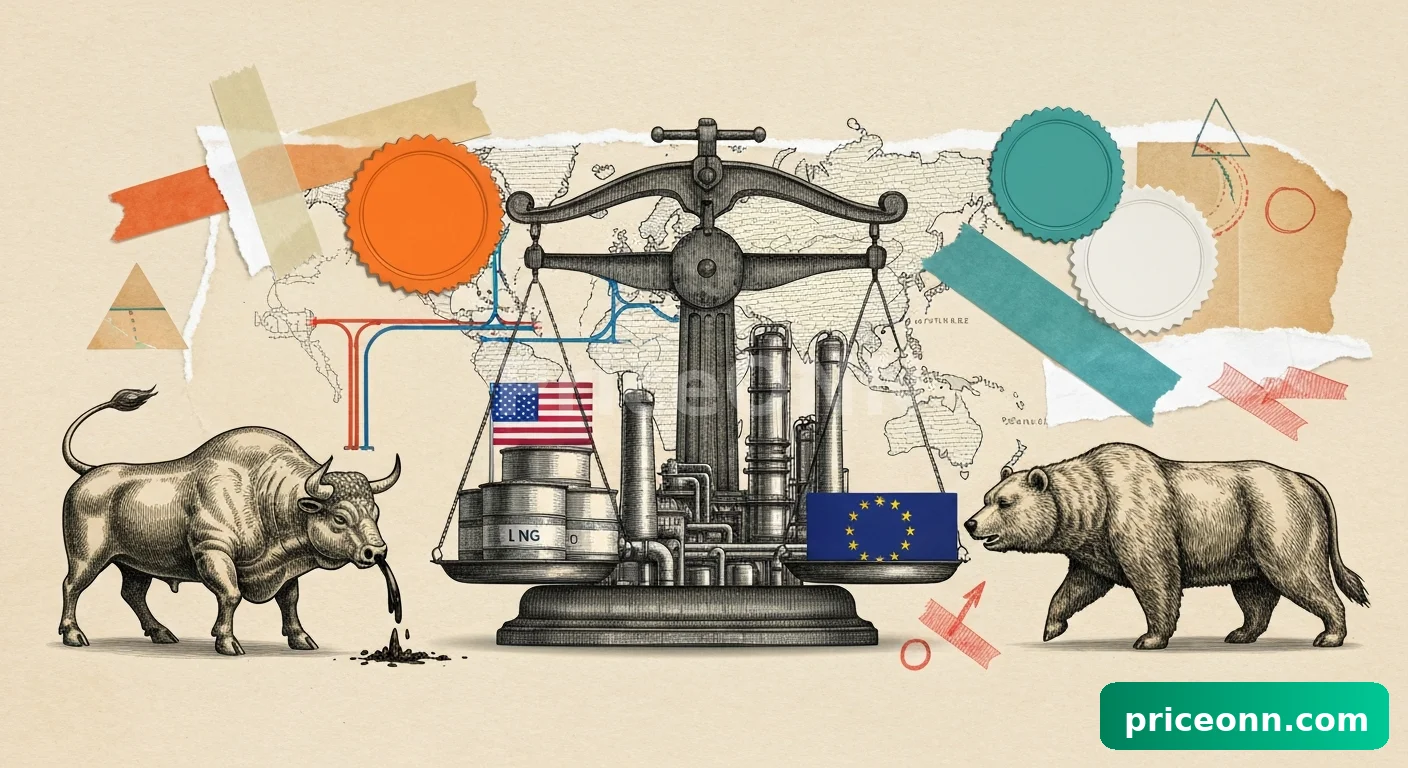
The global energy landscape is undergoing a profound transformation, with Europe finding itself at a critical juncture. While geopolitical tensions in regions like the Middle East and Eastern Europe capture headlines, a more subtle yet significant shift is reshaping transatlantic energy dynamics. Europe has successfully transitioned away from its deep-seated reliance on Russian natural gas, a move lauded as a major victory for energy security. However, market data and analyst observations suggest this diversification may have inadvertently led to a new form of dependence, with the United States emerging as the dominant supplier of Liquefied Natural Gas (LNG), potentially positioning Europe's energy future as a tool for political and economic leverage.
Market Context
For decades, Europe's energy strategy was intrinsically linked to Russian pipeline gas. The disruption of these supplies due to geopolitical events necessitated a rapid pivot. In response, European nations, spearheaded by Brussels, significantly increased their imports of LNG. The United States, with its burgeoning LNG export capacity, stepped in to fill a substantial portion of this gap. Currently, approximately 50% of Europe's LNG imports originate from the United States. This has been framed by many policymakers as a successful diversification, restoring energy security and reinforcing the transatlantic alliance. However, this narrative is increasingly being challenged by analysts who argue that Europe has merely substituted one form of dependency for another, potentially exposing itself to new vulnerabilities.
Analysis & Drivers
The core driver of this shift is the strategic imperative for Europe to secure stable energy supplies following the geopolitical fallout with Russia. The United States, as a major LNG producer, has been a willing and able partner in fulfilling this demand. However, the concentration of supply from a single, albeit allied, nation raises significant questions about long-term energy autonomy. Industry reports indicate that this growing reliance on US LNG is not simply a market transaction but is increasingly being viewed through the lens of hard power economics. Washington's signals suggest that trade support and alignment on other policy fronts may become implicitly or explicitly tied to Europe's commitment to purchasing US energy resources. This creates a scenario where energy security could become a bargaining chip in broader diplomatic and trade negotiations, moving beyond a purely market-driven relationship.
The assumption that alignment of values will always guarantee alignment of interests between Europe and the US is now being tested. While both regions share democratic ideals, their economic and strategic priorities can diverge. The concentration of LNG supply from the US provides Washington with a unique leverage point. This leverage could be applied to influence European policy on trade, security, or other areas where US interests are paramount. The convenience and political expediency of the diversification narrative have, according to some market observers, masked the underlying structural shift towards a new, potentially more complex, dependency. The ability of the US to dictate terms, or at least exert significant influence, grows with Europe's increasing reliance on its LNG exports.
Trader Implications
For energy traders, this evolving dynamic presents both opportunities and risks. The ongoing demand for LNG in Europe, coupled with potential supply pressures from the US, could lead to increased price volatility. Traders should closely monitor US LNG export levels, European storage capacity, and any indications of shifts in US energy policy or diplomatic rhetoric. Key price levels to watch include the benchmark European natural gas prices, such as the TTF (Title Transfer Facility), and their correlation with US export volumes and US domestic gas prices.
The risk of US LNG being used as a political tool means that geopolitical events, even those seemingly unrelated to energy, could have an outsized impact on European gas prices. Traders must incorporate geopolitical risk premiums into their analysis. Furthermore, the potential for US policy to influence supply availability or pricing introduces an element of uncertainty that requires robust risk management strategies. Diversifying trading strategies to account for these new dependencies and potential leverage points will be crucial. Watching for any signals from Brussels regarding efforts to further diversify LNG sources beyond the US will also be important, as any success in that area could alter market dynamics.
Outlook
The future of Europe's energy security hinges on its ability to navigate this new dependence on US LNG. While the immediate need for gas supply has been met, the long-term implications of concentrated sourcing remain a significant concern. European policymakers face the challenge of balancing immediate energy needs with the strategic goal of true energy autonomy. Future developments will likely involve ongoing diplomatic discussions, potential efforts to secure LNG from other global suppliers, and continued monitoring of US energy policy. The market sentiment may shift from relief over Russian gas independence to apprehension over potential US leverage, setting the stage for continued price fluctuations and strategic realignments within the global energy market.
Frequently Asked Questions
What is the current percentage of Europe's LNG imports coming from the United States?
Market data indicates that approximately 50% of Europe's Liquefied Natural Gas (LNG) imports currently originate from the United States, highlighting a significant concentration of supply.
What are the risks associated with Europe's reliance on US LNG?
The primary risk is that Europe has substituted dependence on Russian gas for dependence on US LNG. This concentration of supply could allow the United States to exert economic or political leverage over European policy and trade, moving beyond a purely market-driven relationship.
What should energy traders watch for regarding European LNG markets?
Traders should monitor US LNG export volumes, European natural gas benchmarks like TTF, geopolitical developments impacting supply routes, and any policy shifts from the US or EU that could affect supply or pricing. Increased price volatility is anticipated.
Track markets in real-time
Empower your investment decisions with AI-powered analysis, technical indicators and real-time price data.
Join Our Telegram Channel
Get breaking market news, AI analysis and trading signals delivered instantly to your Telegram.
Join Channel PriceONN News
BP will sell 5% in the $35-billion Browse LNG project in Australia, which Australian energy giant Woodside is looking to progress, the UK-based supermajor told Reuters on Monday. BP is selling the 5% stake, out of its total of its 44% interest, to South Korea's GS Energy. “The dilution reflects BP’s disciplined approach to portfolio management by bringing in a committed partner,” BP said in a statement emailed to Reuters. The Browse LNG project in Australia, proposed by Woodside Energy, entails...
PriceONN News
The Iran war suddenly turned what had started as a year of oversupply in global oil and LNG markets into the worst oil and gas supply disruption in history. Three months after the U.S.-Israeli strikes on Iran began on February 28, the world has already lost 1 billion barrels of crude oil supply, oil and gas prices have found a new, much higher floor, and whipsaw with violent volatility nearly every day, trade routes have shifted, and tanker rates have spiked. Actual supply shortages are...
PriceONN News
The Iran war has handed the United States a rare opportunity: a new dawn of energy dominance in an increasingly fractured world. With coordinated US-Israeli strikes disrupting the Strait of Hormuz from late February, roughly 20% of global LNG supply has been stripped from the market since early March. Prices have surged across Asia and Europe. And into that vacuum, American gas has flowed. The numbers speak for themselves. US LNG exports to Asia jumped sharply in April, with nearly a quarter of...
PriceONN News
Nuclear fuel is becoming a geopolitical battleground as the world increasingly turns to nuclear energy to contend with skyrocketing energy demand projections. The combination of an oil-based energy crisis emanating out of the Strait of Hormuz, the enormous and ballooning energy needs of artificial intelligence, and the urgent imperative of decarbonization is garnering a renewed interest in nuclear energy as a carbon-free, efficient, and round-the-clock power source. Moreover, nuclear energy can...
PriceONN News
China has been cited as an example of a country that has managed to insulate itself relatively well against oil crises. With over a billion barrels in estimated inventories before the war in the Middle East started, China was the poster child of forward planning in energy security. But this could change, and if it does, it would make an already severe crisis even worse. Kpler sounded the alarm about that prospect earlier this month, reporting that Chinese refiners have reduced their purchases...
PriceONN News
Cuba has been experiencing a worsening energy crisis for several years, which previously led it to rely heavily on Venezuela for its fuel. Following the United States’ intervention in Venezuela in February, the energy crisis has grown even worse, as Cubans face regular blackouts and the economy suffers. Cuba requires about 100,000 barrels a day to power its grid and meet the regular transportation demands. It fulfils just 40 percent of this demand domestically. In January, the Trump...
PriceONN News
Crude oil prices experienced a significant drop, with WTI futures falling over 1.8% to $87.25, as optimism grew for a U.S.-Iran deal potentially reopening the Strait of Hormuz.
PriceONN News
Crude oil prices experienced a significant downturn as market sentiment shifted towards optimism about a potential US-Iran Memorandum of Understanding that could reopen the Strait of Hormuz. WTI futures fell nearly 2% on the news.
PriceONN News
(RTTNews) - Crude oil prices have tumbled on Friday as expectations of the U.S. and Iran signing a Memorandum of Understanding run high. The MoU would allow for immediate reopening of the Strait of Hormuz and pave the way for the resumption of oil and energy trade.
PriceONN News
Crude oil futures experienced a dramatic intraday reversal on Thursday, soaring overnight on geopolitical fears only to pull back significantly as reports of a potential diplomatic understanding between the U.S. and Iran emerged.
PriceONN News
Crude oil futures experienced a dramatic intraday reversal, soaring to $92.52 before pulling back significantly on Thursday. The volatile session was driven by shifting geopolitical narratives and U.S. inventory data.
PriceONN News
Brent crude prices surged towards the mid-$90s amid fears of supply disruptions from Middle East tensions, only to pare gains later as whispers of a potential US-Iran diplomatic understanding emerged.