
(FED) Minutes of the Federal Open Market Committee
 PriceONN Editorial Desk
Multi-source verification
PriceONN Editorial Desk
Multi-source verification

Policy Deliberations Amidst Global Uncertainty
The Federal Open Market Committee (FOMC) convened on April 28-29, 2026, grappling with a complex economic landscape. Key discussions revolved around persistent inflation pressures, significantly influenced by escalating tensions in the Middle East. Market data shows that while equity prices staged a recovery, both 2 year and 10 year Treasury yields saw a modest uptick, mirroring increased near-term inflation expectations. The U.S. dollar, after an initial climb, retraced some of its gains as sentiment shifted following ceasefire announcements.
Crude oil futures presented a mixed picture. While the futures curve indicated expectations of price declines in the coming months, its historical reliability as a forecaster was questioned. Near-term inflation expectations, as gauged by the Open Market Desk Survey, continued to climb. However, longer-term inflation outlooks, reflected in both survey data and market-based measures, remained anchored around the Committee's 2 percent target.
Market participants largely anticipated minimal changes to the federal funds rate target range throughout 2026. Options pricing suggested approximately a 30 percent chance of a rate hike by early 2027. Survey respondents, meanwhile, projected two 25 basis point rate reductions within the next year, though their timing shifted later to the second half of 2026 and early 2027.
Economic Activity and Financial Market Currents
The U.S. economy demonstrated resilience. Real Gross Domestic Product (GDP) growth was projected to accelerate slightly, buoyed by favorable financial conditions and robust investment in artificial intelligence (AI) technologies. The unemployment rate was expected to hover near its long-run estimate, with modest growth continuing. Inflation forecasts for 2026 were revised upward, primarily due to energy price spikes and the ongoing conflict's impact, but a return to the 2 percent target was anticipated by the end of 2027.
Labor market conditions showed signs of stabilization, with the unemployment rate holding steady and job gains averaging low numbers. While some indicators pointed to potential labor market softness, including sector concentration in job growth, most participants viewed these as broadly commensurate with slow labor force expansion. Nevertheless, risks to employment were perceived as tilted to the downside, with concerns about firms delaying hiring due to economic uncertainty or AI adoption.
Corporate earnings remained strong, supporting a broad increase in equity prices, with technology stocks leading the gains. Credit markets showed some stabilization, with tighter credit spreads and improved investor sentiment in the private credit sector, though redemption requests persisted. International markets experienced volatility, reacting to geopolitical news, with investor optimism around AI also contributing to foreign equity price increases.
Market Ripple Effects
The FOMC minutes offer critical insights for traders and investors navigating the current economic climate. The persistent inflation concerns, driven by geopolitical events and energy prices, suggest a cautious stance from the central bank. This environment could translate into sustained higher interest rates for longer than previously anticipated, impacting borrowing costs across various asset classes.
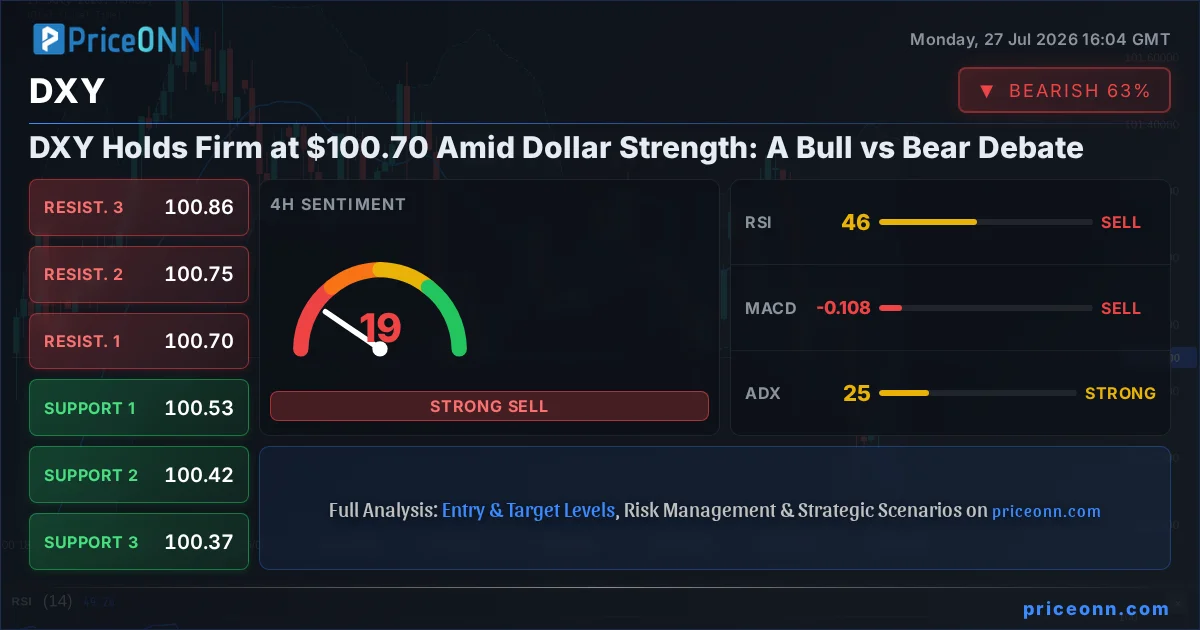
Traders should closely monitor the U.S. Dollar Index (DXY) for potential strength if the Fed maintains a hawkish bias relative to other central banks. Commodities, particularly crude oil (CL=F), will remain sensitive to Middle East developments, with any sustained price surge posing additional inflation risks. For equity markets, the resilience of the S&P 500 (^GSPC), particularly the tech sector's ability to absorb higher costs and leverage AI, will be a key indicator of market health amidst restrictive monetary policy.
The minutes signal that the central bank is keenly aware of the delicate balance between combating inflation and supporting employment. Investors should watch for any shifts in language regarding the pace of potential rate cuts, as well as incoming data on inflation and labor market slack. The possibility of inflation proving more stubborn than expected, coupled with downside risks to growth, presents a complex risk-management challenge for policymakers and market participants alike.
Track markets in real-time
Empower your investment decisions with AI-powered analysis, technical indicators and real-time price data.
Join Our Telegram Channel
Get breaking market news, AI analysis and trading signals delivered instantly to your Telegram.
Join Channel PriceONN News
Gold fell to 4,047 USD per ounce on Tuesday, erasing gains from the previous session. Pressure on the metal is mounting amid fears that the Federal Reserve may raise rates as early as this week. Markets currently estimate the probability of such a move on Wednesday at over 33% – an unusually high level of […] The post Gold Declines, Focus on Fed and Falling Oil Prices appeared first on ActionForex.
PriceONN News
The US stock market is not factoring in the existing risks. Investors are increasingly focusing on the cash flows of S&P 500 companies. US stock indices have closed in the red the last two weeks, something that hasn’t happened since March. The stock market has weathered both the armed conflict in the Middle East and […] The post It’s Time to Weigh Up the Risks for the S&P 500 appeared first on ActionForex.
PriceONN News
(RTTNews) - Gold prices traded higher on Monday as oil prices tumbled amid eased Middle East tensions, helping ease inflation and interest-rate concerns ahead of crucial Fed, BoE and BoJ central bank meetings due this week.
PriceONN News
The dollar heads into a pivotal week trading near 101.80, just off a 15-month high, with the Fed’s July 29 meeting standing as the clear focal point. Markets currently price roughly a 65% chance of a hold, though renewed Middle East escalation has kept a hike back on the table for later this year. Energy […] The post US Dollar Index: a Defining Week for the King of the Markets appeared first on ActionForex.
PriceONN News
EUR/USD enters the final week of July at 1.1369. Friday’s modest decline in energy prices reduced expectations that the Federal Reserve could raise rates as early as its upcoming meeting, scheduled for Tuesday and Wednesday. At the same time, the main currency pair remains very close to the monthly low recorded in late June. Markets […] The post EUR/USD Ahead of a Key Week: Holding Near Lows appeared first on ActionForex.
PriceONN News
The de-escalation of the conflict in the Middle East has sent Brent prices tumbling. The oil market could return to a surplus as early as the end of 2026. The US dollar and oil have lost their correlation. Brent recorded its worst daily fall in three months after reports of a ceasefire in the Middle […] The post Oil: A Surplus on the Horizon appeared first on ActionForex.
PriceONN News
The ceasefire in the Middle East has disrupted the greenback’s plans. Strong PMI data and falling oil prices are helping the euro. The US dollar faced a downward gap at the start of the week as the Middle East de-escalation of the conflict came as an unwelcome surprise to speculators who had built up net […] The post De-Escalation Undermines the Greenback appeared first on ActionForex.
PriceONN News
European Central Bank Governing Council member Peter Kazimir from Slovak reinforced the hawkish bias on Monday, arguing that policymakers will likely need to raise interest rates at least once more and warning that a worsening energy shock could ultimately require even more tightening than markets currently anticipate. His remarks come just days after the ECB […] The post ECB’s Kazimir Sees At Least One More Rate Hike, Warns Oil Shock Could Require More appeared first on ActionForex.
PriceONN News
On 21 July, Stats NZ reported an acceleration in inflation: the Consumer Price Index rose 1.5% in the second quarter, while the annual inflation rate climbed to 4.1%, its highest level in more than two years and slightly above analysts’ consensus forecast of 4.0%. The increase was driven primarily by higher fuel prices amid tensions […] The post NZD/USD: Inflation Surge Meets Strong US Dollar Pressure appeared first on ActionForex.
PriceONN News
US business activity accelerated at the start of the third quarter, with S&P Global’s Flash Composite PMI Output Index rising from 51.9 to 53.6 in July, its highest level in eight months. The improvement was driven by the services sector, where the Business Activity Index climbed from 51.2 to 53.6, also an eight-month high. Manufacturing, […] The post US PMI Hits Eight-Month High,Yet Rising Costs and Supply Delays Raise Caution appeared first on ActionForex.
PriceONN News
Market Overview The crypto market trended lower at the end of Monday, mirroring the US equity market, as it fell from a peak of $2.23T to $2.16T before returning to recent local lows of $2.18T by Tuesday morning. This marks yet another test of the 50-day moving average (MA) as support, which sellers have been […] The post Bitcoin Has Failed to Break Away from Its Long-Term Trend appeared first on ActionForex.
PriceONN News
I am already riding two EURUSD sell entries. Another possible sell opportunity could be forming for traders that are not in yet. EURUSD Possible Bearish Scenario Watch for price to tap 4 Hour FVG (Purple) first. Watch for a bearish shift and bearish reversal signs in the FVG zone. Wait for all above to play […] The post Riding EURUSD Sellside appeared first on ActionForex.