
Is the Fed Stuck on Inflation? Barkin and Goolsbee Signal Persistent Price Pressures


Market Context
Recent commentary from Federal Reserve officials Thomas Barkin and Austan Goolsbee indicates a growing unease within the central bank regarding the persistent nature of inflation. Their statements on Thursday suggest a notable shift in market sentiment, pushing expectations towards a scenario where interest rates remain elevated for an extended period. While neither policymaker explicitly advocated for an immediate rate hike, both underscored that progress on inflation has stalled, and the market cannot simply assume that recent price shocks, particularly those stemming from supply disruptions, will resolve without further intervention or a prolonged adjustment phase.
President Barkin characterized the Fed's decision at its latest meeting to maintain the current interest rate as a prudent step, allowing policymakers to gather more data on inflation and labor market trends, especially amidst ongoing geopolitical tensions and global economic disturbances. However, he cautioned that the central bank might soon face pressures that challenge both its employment and inflation mandates, potentially requiring action on one or both fronts. This stance suggests a delicate balancing act for the Federal Reserve as it navigizes a complex economic landscape.
Analysis & Drivers
The core driver behind this shift in tone is the perceived stickiness of inflation. Officials like Barkin are questioning the traditional approach of waiting for supply shocks to dissipate, highlighting a confluence of factors that could undermine inflation expectations. These include recurring geopolitical instability, the fragmentation of global trade, escalating national debt, and persistent supply chain bottlenecks. The risk of de-anchoring inflation expectations is a significant concern, as it can foster a self-fulfilling prophecy of higher prices, making it more challenging for the central bank to bring inflation back to its target of 2%.
While Barkin did not explicitly signal a prioritization of inflation risks over labor market stability, his remarks suggest that the central bank is increasingly scrutinizing the inflation outlook. The recent decision to hold rates steady provides a crucial pause for assessment, but the underlying inflationary pressures are becoming harder to ignore. This cautious approach from two prominent Fed officials implies that any pivot towards rate cuts might be further delayed, or even that the possibility of future hikes, though not explicitly stated, is not entirely off the table if inflation trends do not improve.
Trader Implications
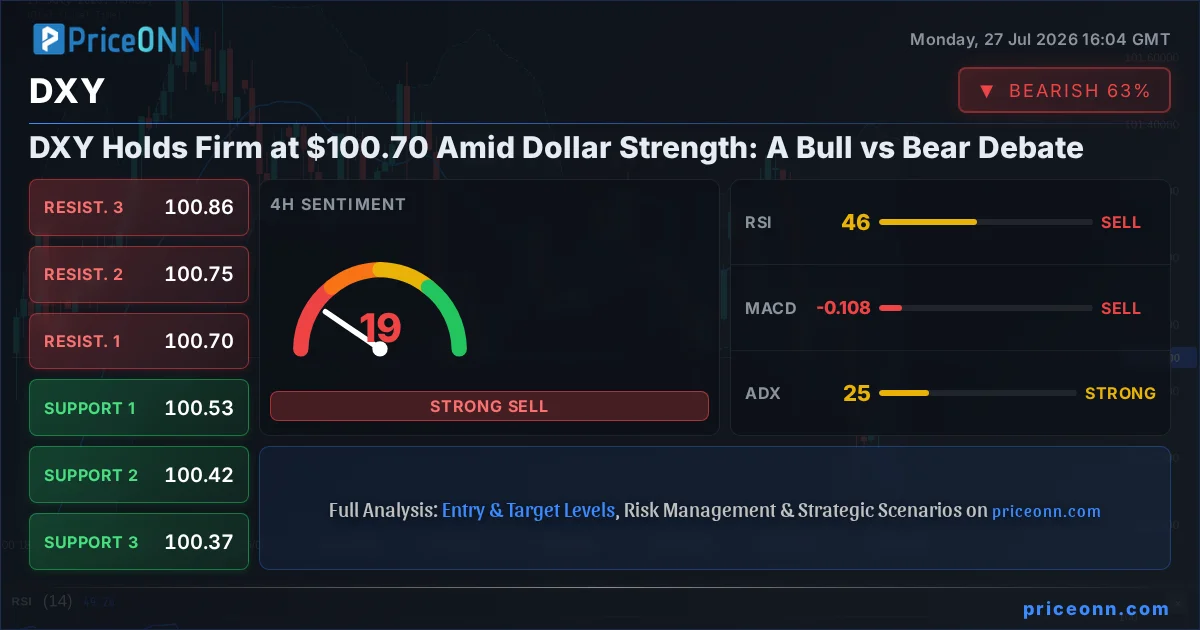
For forex traders, this commentary from Fed officials carries significant weight. The prospect of higher-for-longer interest rates typically supports a stronger U.S. Dollar, as it increases the attractiveness of dollar-denominated assets. Traders should closely monitor upcoming economic data releases, particularly inflation indicators such as the Consumer Price Index (CPI) and the Personal Consumption Expenditures (PCE) price index. Any signs of inflation re-accelerating or failing to decline towards the Fed's target could lead to further dollar strength and put pressure on riskier assets.
Key currency pairs to watch include EUR/USD and GBP/USD. If the Fed maintains a hawkish bias while other major central banks begin to signal or implement rate cuts, these pairs could see further downside. Conversely, if inflation data surprises to the downside, it could offer temporary relief and support for these currencies against the dollar. Traders should also pay attention to bond yields; a sustained rise in U.S. Treasury yields, driven by higher-for-longer rate expectations, would likely reinforce the bullish case for the dollar.
Outlook
The outlook suggests a period of heightened uncertainty for currency markets. The Federal Reserve appears to be in a holding pattern, prioritizing data-driven decisions while acknowledging the persistent inflation risks. The market's pricing of future rate cuts may need to be recalibrated, potentially leading to increased volatility in the short term. Upcoming speeches from other Fed officials and key inflation reports will be crucial in shaping the near-term direction of the U.S. Dollar and, by extension, major currency pairs. The path forward hinges on whether inflation data validates the Fed's growing concerns or provides evidence of a sustainable return to price stability.
Frequently Asked Questions
What is the Fed's current stance on inflation?
Federal Reserve officials like Barkin and Goolsbee are expressing growing concern that inflation pressures are persistent and progress has stalled. They are signaling that interest rates may need to remain higher for an extended period to combat these stubborn price increases.
How might persistent inflation affect the U.S. Dollar?
Persistent inflation and the prospect of higher-for-longer interest rates generally support a stronger U.S. Dollar. This is because higher rates make dollar-denominated assets more attractive to investors, increasing demand for the currency.
What key data should traders watch for clues on future Fed policy?
Traders should closely monitor U.S. inflation data, such as the Consumer Price Index (CPI) and Personal Consumption Expenditures (PCE) price index. Any indication that inflation is re-accelerating or failing to decline towards the Fed's 2% target will be critical in shaping expectations for future Federal Reserve policy decisions.
Track markets in real-time
Empower your investment decisions with AI-powered analysis, technical indicators and real-time price data.
Join Our Telegram Channel
Get breaking market news, AI analysis and trading signals delivered instantly to your Telegram.
Join Channel PriceONN News
The US stock market is not factoring in the existing risks. Investors are increasingly focusing on the cash flows of S&P 500 companies. US stock indices have closed in the red the last two weeks, something that hasn’t happened since March. The stock market has weathered both the armed conflict in the Middle East and […] The post It’s Time to Weigh Up the Risks for the S&P 500 appeared first on ActionForex.
PriceONN News
The ceasefire in the Middle East has disrupted the greenback’s plans. Strong PMI data and falling oil prices are helping the euro. The US dollar faced a downward gap at the start of the week as the Middle East de-escalation of the conflict came as an unwelcome surprise to speculators who had built up net […] The post De-Escalation Undermines the Greenback appeared first on ActionForex.
PriceONN News
(RTTNews) - Gold prices traded higher on Monday as oil prices tumbled amid eased Middle East tensions, helping ease inflation and interest-rate concerns ahead of crucial Fed, BoE and BoJ central bank meetings due this week.
PriceONN News
The dollar heads into a pivotal week trading near 101.80, just off a 15-month high, with the Fed’s July 29 meeting standing as the clear focal point. Markets currently price roughly a 65% chance of a hold, though renewed Middle East escalation has kept a hike back on the table for later this year. Energy […] The post US Dollar Index: a Defining Week for the King of the Markets appeared first on ActionForex.
PriceONN News
EUR/USD enters the final week of July at 1.1369. Friday’s modest decline in energy prices reduced expectations that the Federal Reserve could raise rates as early as its upcoming meeting, scheduled for Tuesday and Wednesday. At the same time, the main currency pair remains very close to the monthly low recorded in late June. Markets […] The post EUR/USD Ahead of a Key Week: Holding Near Lows appeared first on ActionForex.
PriceONN News
European Central Bank Governing Council member Peter Kazimir from Slovak reinforced the hawkish bias on Monday, arguing that policymakers will likely need to raise interest rates at least once more and warning that a worsening energy shock could ultimately require even more tightening than markets currently anticipate. His remarks come just days after the ECB […] The post ECB’s Kazimir Sees At Least One More Rate Hike, Warns Oil Shock Could Require More appeared first on ActionForex.
PriceONN News
On 21 July, Stats NZ reported an acceleration in inflation: the Consumer Price Index rose 1.5% in the second quarter, while the annual inflation rate climbed to 4.1%, its highest level in more than two years and slightly above analysts’ consensus forecast of 4.0%. The increase was driven primarily by higher fuel prices amid tensions […] The post NZD/USD: Inflation Surge Meets Strong US Dollar Pressure appeared first on ActionForex.
PriceONN News
Market Overview The crypto market trended lower at the end of Monday, mirroring the US equity market, as it fell from a peak of $2.23T to $2.16T before returning to recent local lows of $2.18T by Tuesday morning. This marks yet another test of the 50-day moving average (MA) as support, which sellers have been […] The post Bitcoin Has Failed to Break Away from Its Long-Term Trend appeared first on ActionForex.
PriceONN News
Gold fell to 4,047 USD per ounce on Tuesday, erasing gains from the previous session. Pressure on the metal is mounting amid fears that the Federal Reserve may raise rates as early as this week. Markets currently estimate the probability of such a move on Wednesday at over 33% – an unusually high level of […] The post Gold Declines, Focus on Fed and Falling Oil Prices appeared first on ActionForex.
PriceONN News
The de-escalation of the conflict in the Middle East has sent Brent prices tumbling. The oil market could return to a surplus as early as the end of 2026. The US dollar and oil have lost their correlation. Brent recorded its worst daily fall in three months after reports of a ceasefire in the Middle […] The post Oil: A Surplus on the Horizon appeared first on ActionForex.
PriceONN News
I am already riding two EURUSD sell entries. Another possible sell opportunity could be forming for traders that are not in yet. EURUSD Possible Bearish Scenario Watch for price to tap 4 Hour FVG (Purple) first. Watch for a bearish shift and bearish reversal signs in the FVG zone. Wait for all above to play […] The post Riding EURUSD Sellside appeared first on ActionForex.
PriceONN News
The Trump administration is weighing whether to extend access to some Chinese rare earth materials beyond the January 1, 2027 cutoff after U.S. producers acknowledged they cannot build sufficient domestic processing and magnet capacity before the deadline, Reuters reported on Monday. Industry executives and Pentagon suppliers told Reuters that U.S. processing and magnet manufacturing capacity remains insufficient to meet despite billions of dollars in federal support for new mines, separation...