
GBP/USD Price Forecast: Soft US CPI data backs upside towards 1.3500
 PriceONN Editorial Desk
Multi-source verification
PriceONN Editorial Desk
Multi-source verification
Sterling Surges as US Inflation Cools
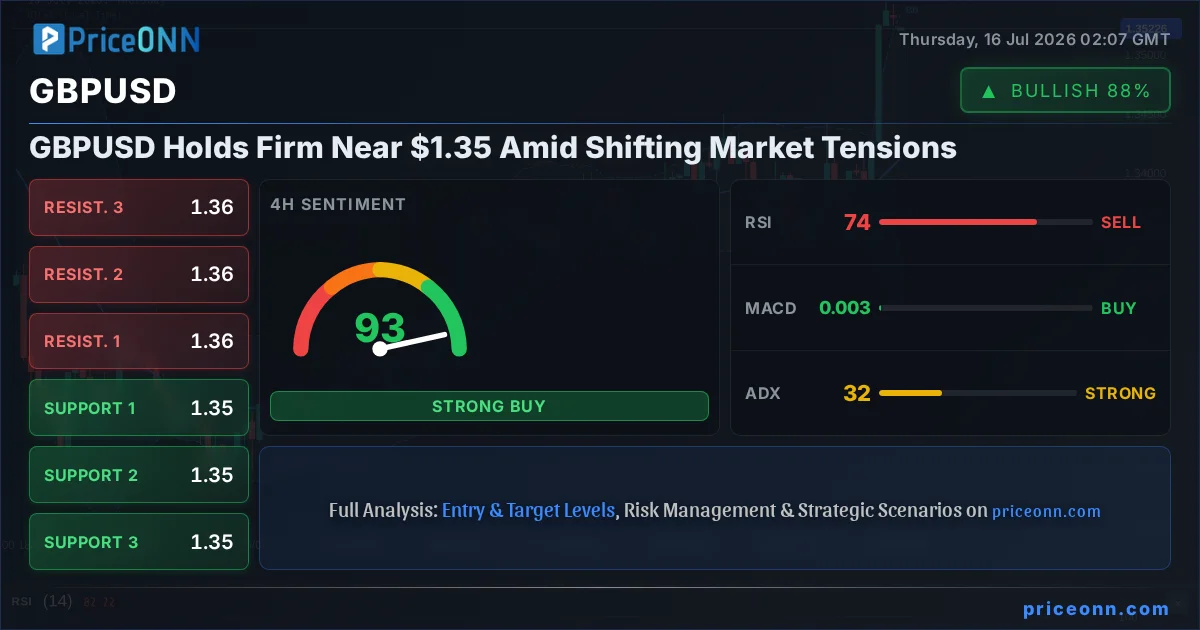
The British Pound registered a modest gain of 0.1% against its American counterpart, trading near the 1.3403 mark during Wednesday's European session. This upward movement in GBP/USD is directly linked to a palpable weakening of the US Dollar. Market sentiment shifted as crucial inflation figures from the United States landed softer than anticipated, leading participants to pare back expectations for aggressive monetary tightening by the Federal Reserve.
Understanding the dynamics of inflation is critical for currency traders. Inflation, at its core, measures the rate at which the general level of prices for goods and services is rising, and subsequently, purchasing power is falling. It's typically reported as a monthly (MoM) and annual (YoY) percentage change. Economists and central bankers pay close attention to 'core inflation', which strips out the more volatile components like food and energy. These items can swing wildly due to geopolitical events or seasonal shifts, distorting the underlying price trend. Central banks commonly target a core inflation rate of around 2%, aiming to maintain price stability.
The Consumer Price Index (CPI) serves as the primary gauge for this price fluctuation. When core CPI deviates significantly from the 2% target, it signals a need for monetary policy adjustment. A sustained rise above this threshold typically prompts central banks to increase interest rates to cool demand. Conversely, inflation falling below the target might lead to rate cuts. This relationship directly influences currency strength; higher inflation, when met with rate hikes, generally strengthens a nation's currency as it attracts foreign capital seeking higher yields. The inverse holds true for falling inflation.
The Gold Connection and Currency Implications
Historically, investors turned to gold as a hedge against soaring inflation, valuing its ability to preserve wealth. While gold still functions as a safe-haven asset during extreme market turmoil, its role as a primary inflation hedge has diminished. This shift is largely due to the central bank response. When inflation spikes, the subsequent increase in interest rates makes holding non-yielding assets like gold less attractive. The opportunity cost of parking funds in gold rather than in interest-bearing accounts or bonds rises significantly.
Conversely, periods of lower inflation are often favorable for gold. As central banks lower interest rates in response, the attractiveness of gold as an investment alternative to lower-yielding fixed-income assets increases. The recent dip in US inflation data could therefore have a dual effect: weakening the dollar by reducing Fed hike expectations and potentially providing a tailwind for gold prices as interest rate expectations moderate.
Why This Matters Now
The latest US inflation print has significantly altered the market's perception of the Federal Reserve's path forward. The data suggests that the aggressive rate hikes implemented over the past year may be starting to bear fruit, bringing price pressures under control. This development is crucial for the GBP/USD pair, as a less hawkish Fed stance typically weighs on the US Dollar.
For traders, the immediate implication is a potential for further upside in GBP/USD, with the 1.3500 level now coming into sharper focus. However, sustained momentum will depend on subsequent economic data from both the US and the UK. Investors will be closely watching the Bank of England's own inflation fight and interest rate decisions, which could introduce cross-currents for Sterling. The contrast between a potentially peaking US interest rate cycle and ongoing monetary policy considerations in the UK creates a dynamic environment.
Key risks to monitor include any unexpected resurgence in US inflation, which could quickly reverse the dollar's weakness and send GBP/USD lower. Conversely, any indication of a more dovish pivot from the Fed, perhaps through forward guidance or commentary from Fed officials, could solidify the current trend. Smart money desks are likely dissecting options market positioning and interbank swap rates for clues on institutional sentiment, looking beyond the headline CPI figures for deeper insights into market positioning and potential liquidity shifts.
Track markets in real-time
Empower your investment decisions with AI-powered analysis, technical indicators and real-time price data.
Join Our Telegram Channel
Get breaking market news, AI analysis and trading signals delivered instantly to your Telegram.
Join Channel PriceONN News
EUR/USD rose to 1.1429 on Thursday, with the US dollar continuing its moderate decline from the previous session. The market is assessing rising inflation risks driven by elevated energy prices against a backdrop of weakening economic data, while seeking further signals on Federal Reserve policy. At next week’s meeting, the regulator is expected to keep […] The post EUR/USD Recovers as Dollar Weakens appeared first on ActionForex.
PriceONN News
EUR/CHF may already be telling investors what to expect from today’s European Central Bank meeting. The cross broke decisively above 0.9278 this week, extending its recent rally as surging oil prices revived inflation concerns across Europe. The move suggests markets have begun positioning for a relatively more hawkish ECB even though policymakers are almost universally […] The post EUR/CHF Rally Points to Hawkish ECB Hold as Oil Reignites Inflation Risks appeared first on ActionForex.
PriceONN News
The British Pound (GBP) consolidates losses against the US Dollar (USD) on Wednesday, as a string of UK inflation figures provided some leeway for the Bank of England to maintain its “wait-and-see” stance through the coming months.
PriceONN News
Key insights from the week that was. The June Labour Force Survey offered both noise and signal. Employment surprised materially to the upside, rising 76.3k in the month. However, the gain was matched by a sizeable lift in labour supply, the participation rate bouncing 0.3ppts to 67.0%, a 13-month high. The ABS noted in the […] The post Cliff Notes: Markets on Edge appeared first on ActionForex.
PriceONN News
The European Central Bank left its key interest rates unchanged as widely expected, keeping the deposit rate at 2.25%, while acknowledging that renewed energy market volatility has complicated the inflation outlook. Rather than signalling any change in policy direction, the Governing Council emphasized that the “outlook for energy prices, while highly volatile,” remains well above […] The post ECB Holds Rates, Closely Watches Energy Shock and Inflation Spillovers appeared first on ActionForex.
PriceONN News
We expect the Federal Reserve to remain on hold in the July meeting, in line with consensus. Markets price in 20-25% probability for a hike. Without new projections or forward guidance from Warsh, the focus will be on the vote split. We think the most likely outcome is 2-4 votes in favour of a hike. […] The post US – Fed Preview: A Divided Hold appeared first on ActionForex.
PriceONN News
The strong support at 4,000 helps gold defy the fundamentals. Rising Treasury yields and a strong US dollar are creating headwinds. The US dollar staged a four-day growth against the backdrop of air strikes on Iran. Rumours of a temporary ceasefire have not been confirmed, pushing Brent to near $93 per barrel and fuelling inflation […] The post Gold: The Floor Has Been Found, but Where Is the Ceiling? appeared first on ActionForex.
PriceONN News
The Japanese Yen tumbled to another four-decade low today, with USD/JPY breaking above the 163 mark as investors continued to unwind Yen positions against the backdrop of widening global yield differentials and surging energy prices. The move has once again thrust Japan’s currency policy into the spotlight, raising familiar questions over whether authorities will step […] The post Yen Hits Fresh 40-Year Low. Can Japan Still Defend Its Currency? appeared first on ActionForex.
PriceONN News
Gold traded around 4,080 USD per ounce on Wednesday, having risen nearly 2% the previous day. Investors continue to assess developments in the Middle East and the impact of elevated oil prices on inflation and interest rates. Donald Trump has played down the prospects of an imminent resumption of negotiations with Iran and warned of […] The post Gold Rises Amid Heightened External Risks appeared first on ActionForex.
PriceONN News
The Euro’s (EUR) modest upside attempt against the US Dollar (USD) witnessed during Wednesday’s Asian session has been short-lived. The EUR/USD pair was capped below 1.1420, before pulling back to levels a few pips above 1.1400 during the European trading session.
PriceONN News
The Japanese Yen (JPY) attracts significant bids against its major currency peers during the European trading session on Wednesday. The USD/JPY pair falls vertically to near 162.65, but quickly recovers some losses and rebounds to around 162.90.
PriceONN News
The EUR/GBP cross gains momentum to near 0.8525 during the early European trading hours on Wednesday. The British Pound (GBP) weakens against the Euro (EUR) following the UK inflation report. All eyes will be on the European Central Bank (ECB) interest rate decision later on Thursday.