GBP/USD surges after BoE's unanimous pivot catches markets off guard
Sterling's Impressive Rally Amidst Central Bank Surprise
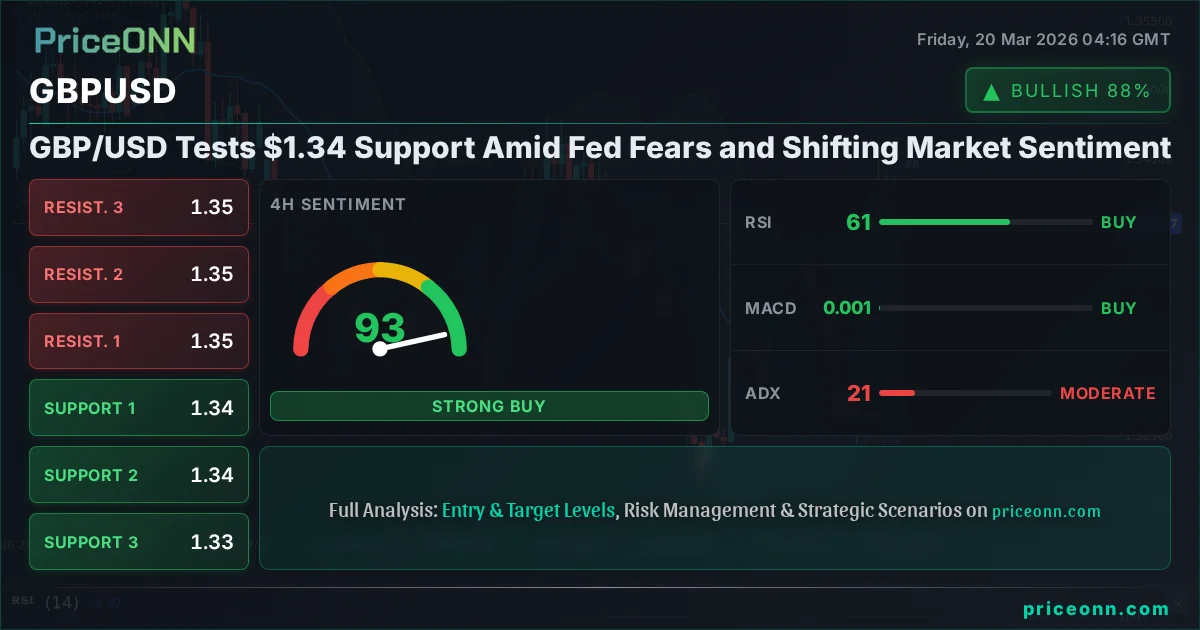
The Pound Sterling, a currency with a lineage tracing back to 886 AD and the official tender of the United Kingdom, demonstrated remarkable strength on Thursday. It clawed its way back, gaining approximately 1.3% to reclaim the 1.3400 mark and closing the trading session near 1.3430. This potent rally unfolded against a backdrop of generalized US Dollar depreciation, but the true catalyst appears to have been an unexpected hawkish shift from the Bank of England (BoE).
Globally, the Sterling holds a prominent position, ranking as the fourth most actively traded currency on foreign exchange markets. Recent data indicates it accounts for a substantial 12% of all transactions, with daily volumes averaging an impressive $630 billion. Its primary trading relationships include the GBP/USD pair, colloquially known as ‘Cable’, which alone represents 11% of FX volume. Other significant pairs include GBP/JPY, or the ‘Dragon’ among traders, at 3%, and EUR/GBP at 2%.
The issuance and monetary policy decisions for the Pound Sterling rest with the Bank of England. The central bank's primary mandate is the attainment of “price stability,” which it defines as maintaining inflation at a target of roughly 2%. To achieve this objective, the BoE primarily utilizes adjustments to its benchmark interest rates.
Understanding BoE's Monetary Levers and Sterling's Sensitivity
When inflationary pressures surge beyond the target, the BoE typically intervenes by increasing interest rates. This action makes borrowing more expensive for both individuals and corporations, effectively cooling down economic demand. For Sterling, such a move is generally considered bullish. Higher interest rate differentials often make the United Kingdom a more attractive destination for international capital seeking yield, thereby boosting demand for the currency.
Conversely, a sustained period of inflation falling below the 2% target can signal a slowdown in economic momentum. In such circumstances, the BoE might contemplate reducing interest rates. This policy aims to lower the cost of capital, encouraging businesses to take on more debt for investment in growth-oriented initiatives. The health of the UK economy, as reflected in various data releases, plays a critical role in shaping Sterling's trajectory.
Key economic indicators such as Gross Domestic Product (GDP) figures, Purchasing Managers' Indexes (PMIs) for both manufacturing and services sectors, and employment statistics are closely scrutinized. A robust economic performance typically bolsters the Pound Sterling. Not only does it attract foreign investment inflows, but it also increases the likelihood of the BoE implementing tighter monetary policy, which directly supports the currency. Weak economic data, conversely, often leads to a depreciation of Sterling.
Furthermore, the UK's Trade Balance report offers another significant dimension. This metric quantifies the difference between the value of a nation's exports and its imports over a specified period. A strong export performance, driven by high demand for UK goods and services from international buyers, can provide a direct boost to the currency. A positive net trade balance generally strengthens Sterling, while a persistent deficit can exert downward pressure.
Market Ripple Effects
The Bank of England's unexpected hawkish pivot has sent ripples across financial markets, directly impacting the GBP/USD exchange rate and influencing broader currency trends. The surprise move suggests the BoE may be more aggressive in its fight against inflation than previously anticipated, leading to a reassessment of interest rate expectations in the UK.
This development warrants close attention from investors tracking the US Dollar Index (DXY), as a stronger Sterling often correlates with weakness in the greenback, especially when driven by divergent monetary policy signals. Additionally, market participants should monitor UK government bond yields, which are likely to see upward pressure as higher interest rate expectations become embedded. The impact could also extend to European currency pairs, particularly EUR/GBP, where a stronger Pound could lead to further downside. Traders will be watching for confirmation of this hawkish stance in future BoE communications and economic data releases.
Track markets in real-time
Empower your investment decisions with AI-powered analysis, technical indicators and real-time price data.
Join Our Telegram Channel
Get breaking market news, AI analysis and trading signals delivered instantly to your Telegram.
Join Channel