GBP/USD surges as Trump walks back threatened Iranian infrastructure strikes
Sterling's Rebound Amid Shifting Global Tides
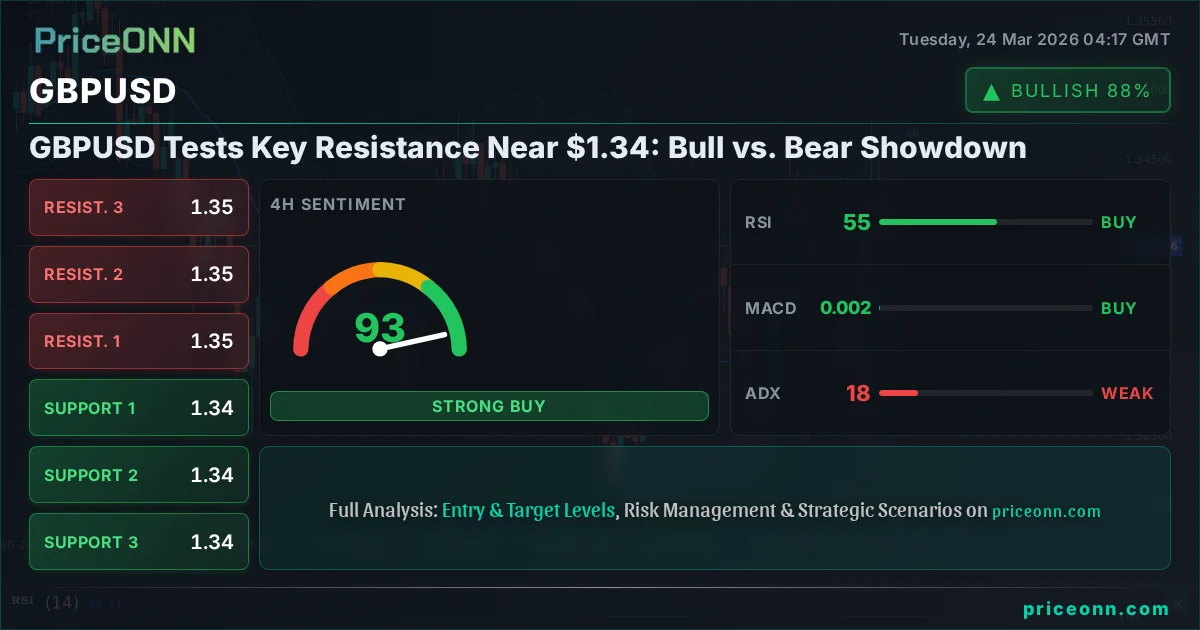
The Pound Sterling, a currency with roots tracing back to 886 AD, demonstrated resilience in early trading on Monday. After an initial dip to approximately 1.3260 against the US Dollar, the GBP/USD pair staged a significant recovery, climbing to trade near the 1.3430 mark by the session's close. This upward movement appears to be closely linked to a de-escalation in geopolitical rhetoric, specifically concerning potential military actions in the Middle East.
Market data shows that the Sterling, the official currency of the United Kingdom, is a major player in global foreign exchange. It ranks as the fourth most actively traded currency worldwide, representing a substantial 12% share of daily transactions, which averaged an impressive $630 billion in 2022. Its most prominent trading relationships include the GBP/USD, colloquially known as ‘Cable’, which constitutes 11% of all FX trades, followed by GBP/JPY, or the ‘Dragon’, at 3%, and EUR/GBP at 2%.
Understanding Sterling's Drivers
The issuance and primary monetary policy decisions for the Pound Sterling are overseen by the Bank of England (BoE). The central bank's mandate revolves around maintaining "price stability," defined as an inflation rate hovering around its 2% target. Interest rate adjustments serve as the BoE's principal instrument to achieve this objective.
When inflationary pressures rise above the target, the BoE typically hikes interest rates. This strategy makes borrowing more costly for individuals and corporations, aiming to cool down an overheating economy. Conversely, higher interest rates can enhance the attractiveness of UK assets for international investors seeking yield, often providing a tailwind for the Sterling.
Should inflation falter and dip below the desired 2% threshold, it signals a potential economic slowdown. In such scenarios, the BoE might consider reducing interest rates. Lowering borrowing costs is intended to stimulate business investment and economic expansion by making capital more accessible for growth-oriented projects. The Sterling's trajectory is thus closely monitored against these policy shifts.
Economic Indicators Shaping Sterling's Value
The release of key economic data plays a critical role in shaping the Pound Sterling's valuation. Indicators such as Gross Domestic Product (GDP) figures, Purchasing Managers' Indexes (PMIs) for both manufacturing and services sectors, and employment statistics offer insights into the UK's economic health. A robust economic performance typically bolsters the Sterling, not only by attracting foreign capital but also by increasing the likelihood of the BoE implementing tighter monetary policy, which directly supports the currency.
Weak economic data, on the other hand, often exerts downward pressure on the Pound Sterling. Another significant data point for Sterling watchers is the Trade Balance. This metric quantizes the difference between the value of a nation's exports and imports over a specific period. A favorable net Trade Balance, where exports exceed imports, typically strengthens a currency due to heightened demand from global buyers acquiring the country's goods. Conversely, a persistent trade deficit can weigh on the currency.
Market Ripple Effects
The recent geopolitical de-escalation, which saw the US President walk back threatened strikes on Iranian infrastructure, provided a much-needed reprieve for global risk sentiment. This shift away from immediate conflict has directly benefited currencies typically sensitive to geopolitical uncertainty, such as the British Pound. The GBP/USD pair's recovery from its early lows highlights this dynamic.
Beyond the Cable, this easing of tensions could also influence other markets. The US Dollar Index (DXY), which had seen some safe-haven strength during periods of heightened risk, may face renewed selling pressure if global risk appetite continues to improve. Furthermore, commodity prices, particularly oil, which had seen a speculative bump on fears of supply disruption, could see some moderation. Traders will be closely watching the UK's own economic data releases, including inflation figures and employment reports, to see if Sterling can maintain its momentum independent of geopolitical sentiment. The Euro (EUR) and the Japanese Yen (JPY), also major currencies often trading inversely to risk sentiment and USD strength respectively, are worth monitoring for potential follow-through moves.
Track markets in real-time
Empower your investment decisions with AI-powered analysis, technical indicators and real-time price data.
Join Our Telegram Channel
Get breaking market news, AI analysis and trading signals delivered instantly to your Telegram.
Join Channel