
Gold Price Plunges Below $4,650 Amid Inflation Fears and Tightening Liquidity


Gold (XAU/USD) has experienced a significant downturn, trading near $4,640 in early Asian trading. This decline marks an extension of recent selling pressure, driven by resurgent inflation fears and a palpable liquidity squeeze in the market.
Market Context
The precious metal's retreat comes as soaring crude oil and energy prices, exacerbated by escalating geopolitical conflicts in the Middle East, are reigniting concerns about persistent inflation. This inflationary outlook, coupled with tightening liquidity conditions, creates a challenging environment for non-yielding assets like gold. Historically, gold has served as a crucial store of value and a hedge against inflation and currency depreciation. However, its inverse correlation with the U.S. Dollar and U.S. Treasuries means that dollar strength and higher interest rates typically weigh on its price. Recent central bank buying, with record purchases in 2022, highlighted gold's appeal as a safe-haven asset and a tool for reserve diversification. Yet, the current market dynamics are overriding these traditional drivers, pushing the yellow metal lower.
Analysis & Drivers
The primary catalyst for gold's recent fall appears to be the dual pressure of renewed inflation expectations and a tightening liquidity environment. The conflict in the Middle East has sent shockwaves through energy markets, with crude oil prices surging. This spike in energy costs has a direct pass-through effect on broader inflation metrics, prompting fears that central banks may need to maintain restrictive monetary policies for longer, or even tighten further. This prospect increases the cost of holding non-yielding assets like gold. Furthermore, market data indicates a general deleveraging trend, leading to reduced liquidity across financial markets. In such an environment, assets perceived as less liquid or more sensitive to interest rate hikes, such as gold, can come under pressure as investors seek safer, yield-bearing alternatives or simply reduce overall risk exposure. The U.S. Dollar's performance also plays a critical role; while not explicitly detailed in recent price action, a stronger dollar typically suppresses gold prices, and any signs of dollar resilience would further dampen sentiment.
Trader Implications
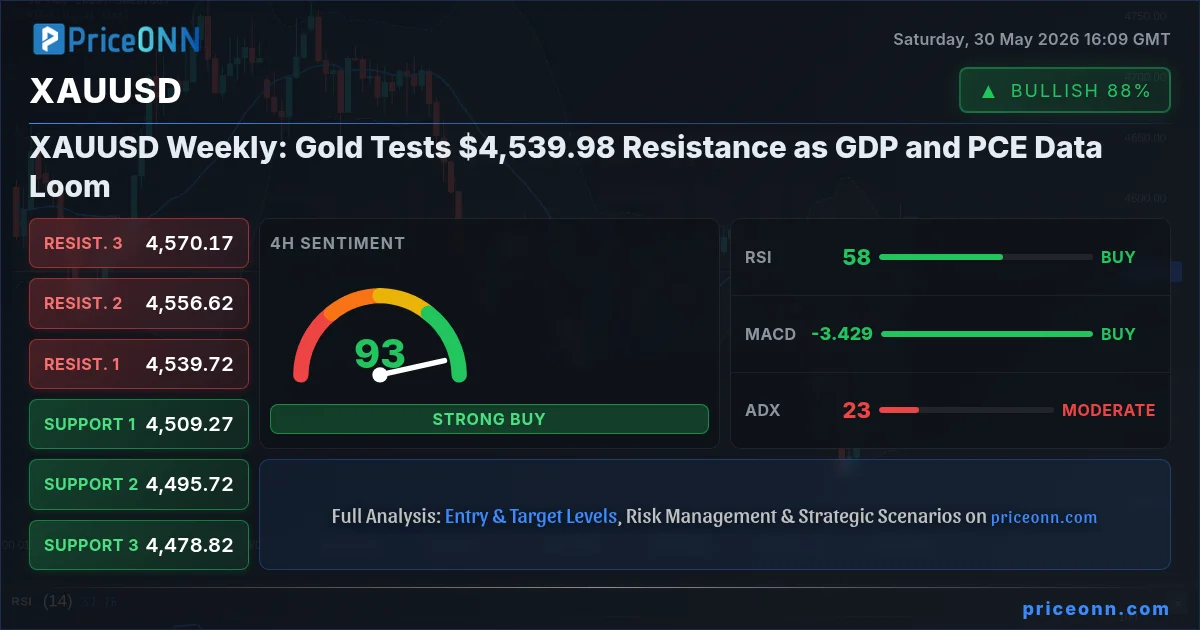
Traders should closely monitor the interplay between energy prices, inflation expectations, and central bank policy signals. The key support level to watch is currently around $4,600. A decisive break below this level could signal further downside potential, with the next significant support seen near $4,550. Conversely, a sustained move back above $4,700 would be required to alleviate immediate bearish pressure. Given the heightened volatility, risk management is paramount. Traders might consider strategies that benefit from falling prices, such as short positions, but should be prepared for potential sharp reversals, especially if geopolitical headlines shift or inflation data deviates significantly from expectations. The current market sentiment suggests caution, with a bias towards downside risk as long as inflation concerns and liquidity constraints persist.
Outlook
The outlook for gold remains cautious in the short term. The persistent inflation fears, fueled by energy market instability, and the ongoing liquidity squeeze are likely to keep the precious metal under pressure. Upcoming economic data releases, particularly inflation reports and central bank commentary, will be crucial in shaping market expectations. If inflation proves stickier than anticipated, it could force central banks into more aggressive tightening, further pressuring gold. However, any signs of de-escalation in geopolitical tensions or a shift in central bank rhetoric towards easing could provide a reprieve. For now, traders should brace for continued choppiness, with the $4,650 level acting as a key indicator of immediate sentiment.
Frequently Asked Questions
What is the current price support level for gold?
The current key support level for gold (XAU/USD) is around $4,600. A break below this could lead to a further decline towards $4,550.
What factors are primarily driving the recent drop in gold prices?
The recent drop is primarily driven by resurgent inflation fears, fueled by rising energy costs due to geopolitical conflicts, and a tightening liquidity environment in financial markets.
What should traders watch for in the coming days regarding gold?
Traders should closely monitor inflation data, central bank statements, and developments in geopolitical hotspots. A sustained move above $4,700 would signal a potential shift in sentiment, while remaining below $4,650 suggests continued bearish pressure.
Track markets in real-time
Empower your investment decisions with AI-powered analysis, technical indicators and real-time price data.
Join Our Telegram Channel
Get breaking market news, AI analysis and trading signals delivered instantly to your Telegram.
Join Channel PriceONN News
Iran's oil exports fell to their lowest level in at least six years in May as the U.S. naval blockade continued to choke off crude shipments and leave tens of millions of barrels stranded at sea. According to shipping data from Vortexa, Iran exported just 209,000 barrels per day (bpd) of crude oil and condensate in May, down from 1.34 million bpd in April and nearly 1.9 million bpd in March. Kpler had estimated May exports slightly higher at 260,000 bpd, but still the lowest level since the...
PriceONN News
South Korea’s state-run utility Korea Electric Power Corp. (KEPCO) has won a $1.4-billion deal with Saudi oil giant Aramco to build and operate Phase 2 of Saudi Arabia’s Jafurah cogeneration power plant at the major gas project estimated to need $100 billion of total investments. KEPCO’s cogeneration project entails building a 331-MW cogeneration facility capable of producing about 465 tons of steam per hour by June 2029. The plant is expected to supply electricity and steam to Aramco for 17...
PriceONN News
The Iran war suddenly turned what had started as a year of oversupply in global oil and LNG markets into the worst oil and gas supply disruption in history. Three months after the U.S.-Israeli strikes on Iran began on February 28, the world has already lost 1 billion barrels of crude oil supply, oil and gas prices have found a new, much higher floor, and whipsaw with violent volatility nearly every day, trade routes have shifted, and tanker rates have spiked. Actual supply shortages are...
PriceONN News
The Iran war has handed the United States a rare opportunity: a new dawn of energy dominance in an increasingly fractured world. With coordinated US-Israeli strikes disrupting the Strait of Hormuz from late February, roughly 20% of global LNG supply has been stripped from the market since early March. Prices have surged across Asia and Europe. And into that vacuum, American gas has flowed. The numbers speak for themselves. US LNG exports to Asia jumped sharply in April, with nearly a quarter of...
PriceONN News
Crude oil prices experienced a significant drop, with WTI futures falling over 1.8% to $87.25, as optimism grew for a U.S.-Iran deal potentially reopening the Strait of Hormuz.
PriceONN News
Crude oil prices experienced a significant downturn as market sentiment shifted towards optimism about a potential US-Iran Memorandum of Understanding that could reopen the Strait of Hormuz. WTI futures fell nearly 2% on the news.
PriceONN News
(RTTNews) - Crude oil prices have tumbled on Friday as expectations of the U.S. and Iran signing a Memorandum of Understanding run high. The MoU would allow for immediate reopening of the Strait of Hormuz and pave the way for the resumption of oil and energy trade.
PriceONN News
Crude oil futures experienced a dramatic intraday reversal on Thursday, soaring overnight on geopolitical fears only to pull back significantly as reports of a potential diplomatic understanding between the U.S. and Iran emerged.
PriceONN News
Crude oil futures experienced a dramatic intraday reversal, soaring to $92.52 before pulling back significantly on Thursday. The volatile session was driven by shifting geopolitical narratives and U.S. inventory data.
PriceONN News
Brent crude prices surged towards the mid-$90s amid fears of supply disruptions from Middle East tensions, only to pare gains later as whispers of a potential US-Iran diplomatic understanding emerged.
PriceONN News
(RTTNews) - Crude oil futures skyrocketed overnight but have shown a significant pullback over the course of the trading day on Thursday.
PriceONN News
(RTTNews) - A report released by the Energy Information Administration on Thursday showed crude oil inventories in the U.S. decreased by less than expected in the week ended May 22nd.