
Gold Tumbles to $4,460 as Inflation Fears Trigger Rate Hike Prospects
Gold prices experienced a significant retreat, trading near the $4,460 mark during early Asian trading hours on Monday. This downward pressure on the yellow metal stems from a potent combination of a strengthening US Dollar, surging US Treasury yields, and ongoing inflation anxieties, particularly those linked to volatile energy prices.
A robust US Dollar makes gold, priced in dollars, more expensive for international buyers, thus dampening demand. Concurrently, rising yields on interest-bearing assets like government bonds present a more attractive alternative to non-yielding gold, drawing capital away from the precious metal. While gold is traditionally viewed as an inflation hedge, the current market sentiment is heavily influenced by the prospect of aggressive monetary policy tightening by central banks to combat rising prices. Higher global borrowing costs typically exert downward pressure on commodities and other assets sensitive to inflation.
Market Context
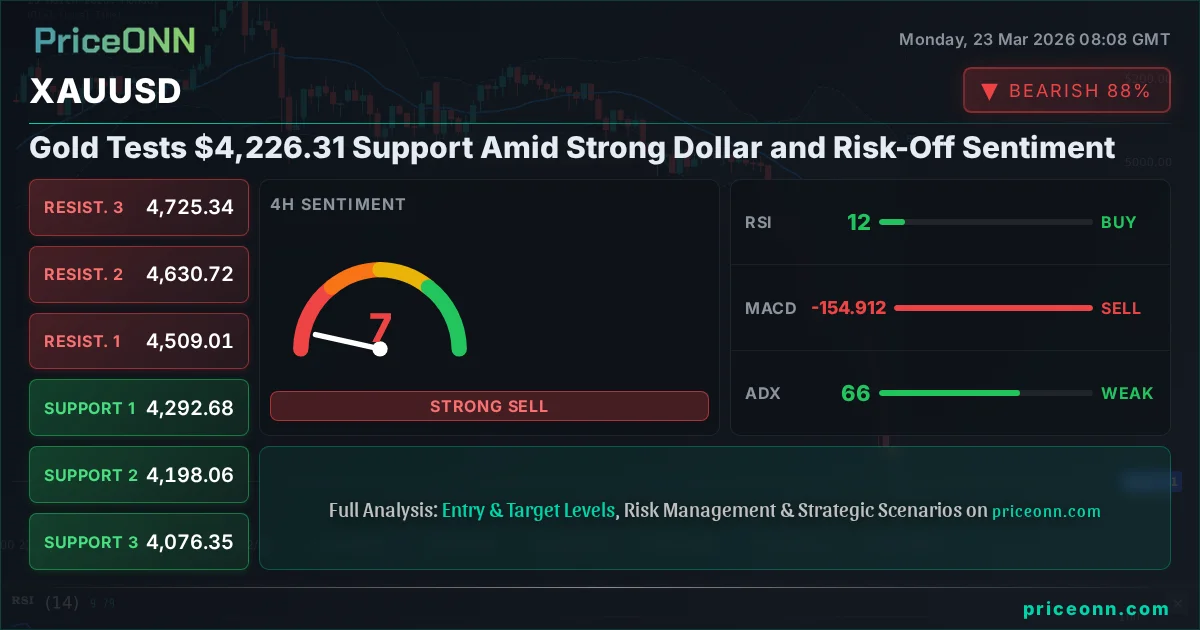
The precious metal has been under considerable selling pressure in recent trading sessions. The decline to the $4,460 area reflects a shift in market focus from inflation hedging to the potential impact of interest rate hikes. This environment often leads to decreased demand for safe-haven assets like gold, as investors prioritize yield-generating investments. The interplay between inflation data, central bank rhetoric, and the subsequent impact on interest rate expectations is dictating gold's short-term trajectory.
Analysis & Drivers
The primary drivers behind gold's recent slide are macroeconomic forces. A stronger dollar, often a consequence of rising US interest rate expectations, directly impacts gold's price inversely. Rising bond yields further diminish gold's attractiveness by offering competitive returns elsewhere. The persistent inflation narrative, fueled by energy market volatility, remains a backdrop, but the immediate concern for many investors is the central bank response. Analysts note that while inflation provides a long-term case for gold, the immediate prospect of higher rates can overshadow this, leading to price depreciation. Despite these headwinds, it is important to acknowledge the enduring strategic importance of gold. Central banks, recognized as significant holders of the precious metal, notably increased their gold reserves by an impressive 1,136 tonnes in 2022, marking a record annual purchase valued at approximately $70 billion. This substantial accumulation, particularly by emerging economies such as China, India, and Turkey, underscores a strategic diversification effort aimed at enhancing economic resilience and currency stability, providing a subtle underlying support for gold.
Trader Implications
Traders should closely monitor the US Dollar Index (DXY) and US Treasury yields for immediate directional cues. A sustained rise in yields above key technical levels could signal further downside pressure on gold. Key support for gold is currently seen around the $4,400 psychological level, with a break below this potentially opening the door for further declines towards $4,350. Conversely, any signs of cooling inflation or a more dovish tone from central banks could trigger a short-covering rally. Traders should remain vigilant for shifts in market sentiment regarding the pace and magnitude of expected interest rate hikes. The strategic buying by central banks, while not immediately impacting daily price action, offers a long-term floor, suggesting significant sell-offs might be met with renewed institutional interest.
Outlook
The outlook for gold remains cautiously bearish in the short term, contingent on continued hawkish signals from major central banks and a firm US Dollar. However, the persistent inflation backdrop and the ongoing diversification into gold by central banks suggest that any significant price weakness could be met with buying interest, potentially limiting downside potential. Upcoming inflation data releases and central bank policy meetings will be critical in shaping market expectations and, consequently, gold's price direction.
Frequently Asked Questions
What is the current price of gold and what is driving its decline?
Gold is currently trading near $4,460. The decline is primarily driven by a stronger US Dollar, rising US Treasury yields making interest-bearing assets more attractive, and concerns that central banks will raise interest rates aggressively to combat inflation.
What are the key support levels for gold in the near term?
Key support for gold is currently observed around the $4,400 psychological level. A decisive breach of this level could lead to further downward movement, potentially targeting the $4,350 mark.
Will central bank actions continue to pressure gold prices?
Yes, if central banks maintain a hawkish stance and signal further interest rate hikes, this will likely continue to pressure gold prices by increasing the attractiveness of yield-bearing investments and strengthening the US Dollar.
Track markets in real-time
Empower your investment decisions with AI-powered analysis, technical indicators and real-time price data.
Join Our Telegram Channel
Get breaking market news, AI analysis and trading signals delivered instantly to your Telegram.
Join Channel

PriceONN