
Gold Dips Below $4,460 as Inflation Fears Spark Rate Hike Speculation

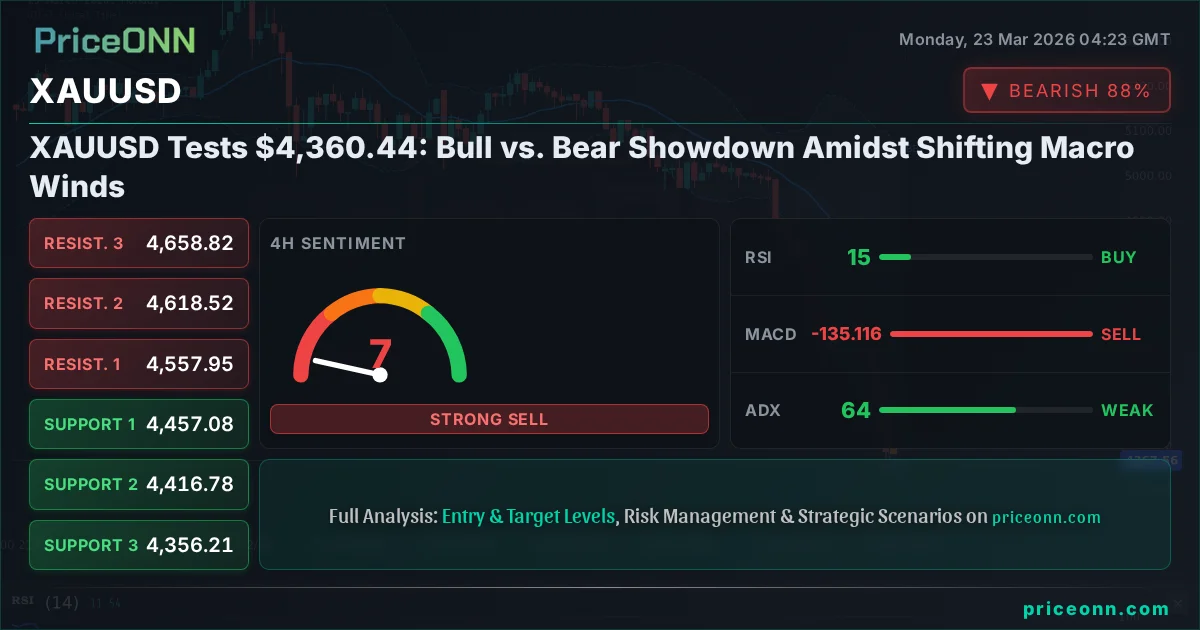
Gold experienced a significant downturn, trading near the $4,460 mark in early Asian trading on Monday. This decline reflects a challenging market environment for the precious metal, influenced by a trifecta of bearish pressures: a strengthening US Dollar, climbing US Treasury yields, and ongoing inflation anxieties fueled by volatile energy prices.
The appreciation of the US Dollar makes gold, priced in dollars, more expensive for international buyers. Concurrently, rising yields on interest-bearing assets like government bonds present a more attractive alternative to non-yielding gold, drawing capital away from the yellow metal. While gold is historically considered a hedge against inflation, current market sentiment is leaning towards the potential for aggressive central bank monetary tightening, which typically dampens demand for commodities.
Market Context
The precious metal's retreat to just above $4,460 signifies a shift in market focus from inflation hedging to the anticipated policy responses from major central banks. The narrative has pivoted towards the likelihood of interest rate hikes, a move that generally pressures commodity prices and other inflation-sensitive assets. This environment challenges gold's traditional safe-haven status, as investors weigh the immediate implications of higher borrowing costs against long-term inflation concerns.
Analysis & Drivers
Several key drivers are contributing to gold's current weakness. The persistent strength of the US Dollar, underpinned by expectations of hawkish central bank policies, remains a primary headwind. Rising bond yields further diminish gold's appeal by offering competitive returns from risk-free assets. Furthermore, while energy price inflation contributes to broader inflationary pressures, the market's interpretation of these pressures is crucial. Instead of driving investors to gold as a hedge, it appears to be accelerating fears of aggressive rate hikes, which could stifle economic growth and reduce demand for many assets, including gold.
Despite these short-term headwinds, the fundamental long-term value of gold remains robust. Central banks, recognizing gold's unique role in reserve diversification and stability, significantly increased their holdings in recent years. Market data indicates that central banks added approximately 1,136 tonnes of gold in 2022, representing the largest annual accumulation on record and highlighting a strategic move, particularly by emerging economies like China, India, and Turkey, to bolster economic strength and currency stability.
Trader Implications
Traders should closely monitor the US Dollar Index (DXY) and US Treasury yields for directional cues. A sustained rise in yields above key technical levels could signal further downside pressure on gold. Conversely, any indication of a less aggressive stance from the Federal Reserve or other major central banks could provide a reprieve for gold prices. Key support levels to watch are currently around $4,400, with significant resistance building near the $4,500 level. A decisive break below $4,400 could open the door for a test of lower price points, while a move back above $4,500 might signal a potential reversal.
Outlook
The near-term outlook for gold remains cautious, contingent on upcoming economic data and central bank communications. Persistent inflation coupled with central bank resolve to combat it via rate hikes will likely keep a lid on gold prices. However, any signs of economic fragility or a pivot in monetary policy could quickly shift sentiment back in favor of the precious metal. Strategic accumulation by central banks suggests a floor may be in place for gold's long-term value, but short-term volatility is expected as markets digest inflation and interest rate dynamics.
Frequently Asked Questions
What is the current price of gold and why is it falling?
Gold is currently trading near $4,460 per ounce. It is falling due to a stronger US Dollar, rising US Treasury yields, and fears that central banks will implement aggressive interest rate hikes to combat inflation.
How have central bank actions influenced gold prices recently?
Central banks have been significant buyers of gold, adding 1,136 tonnes in 2022 to diversify reserves. However, the prospect of their future rate hikes, aimed at controlling inflation, is currently pressuring gold prices downwards by making interest-bearing assets more attractive.
What are the key support and resistance levels for gold traders?
Traders should watch the support level around $4,400. Resistance is building near the $4,500 mark. A break below support could lead to further declines, while a move above resistance might indicate a trend reversal.
Track markets in real-time
Empower your investment decisions with AI-powered analysis, technical indicators and real-time price data.
Join Our Telegram Channel
Get breaking market news, AI analysis and trading signals delivered instantly to your Telegram.
Join Channel

PriceONN