
Why Did Gold Tumble 8.50% This Week as Oil Prices Soared?

Gold (XAU/USD) has experienced a significant downturn, marking its eighth consecutive day of losses and poised to conclude the week with a substantial decline of over 8.50%. This extended sell-off underscores the shifting dynamics in the precious metals market, as a robust rally in crude oil prices enhances the appeal of the US dollar and rising US Treasury yields diminish gold's attractiveness as a safe-haven asset.
Market Context
The precious metal's extended slide highlights a challenging period for bullion investors. Over the past week, gold has shed more than 8.50% of its value, a sharp reversal from its prior status as a primary refuge during times of economic uncertainty. This decline coincides with a strong upward trend in oil prices, which has bolstered the U.S. dollar's safe-haven credentials, directly competing with gold. Furthermore, increasing yields on U.S. Treasury bonds make interest-bearing assets more attractive, drawing capital away from non-yielding commodities like gold.
Analysis & Drivers
Several key factors are converging to pressure gold prices. The rally in oil, driven by supply concerns and geopolitical tensions, has reignited inflation expectations, paradoxically strengthening the dollar as a preferred safe haven due to its global liquidity and the Federal Reserve's monetary policy stance. As oil prices climb, they often signal broader economic stress or supply chain disruptions, scenarios where the dollar typically benefits from its role as the world's reserve currency. Simultaneously, U.S. Treasury yields have been on an upward trajectory, influenced by expectations of continued monetary tightening or persistent inflation. Higher yields on U.S. debt increase the opportunity cost of holding gold, which offers no yield. This makes fixed-income investments relatively more appealing to investors seeking returns. Historically, gold's role as a safe haven is well-established, acting as a hedge against inflation and geopolitical instability. However, its inverse relationship with real yields means that when borrowing costs rise significantly, gold's appeal can wane. Central banks, historically significant buyers, have shown strong accumulation trends, adding over 1,136 tonnes in 2022, but this institutional demand has not been enough to counteract the current market pressures.
Trader Implications
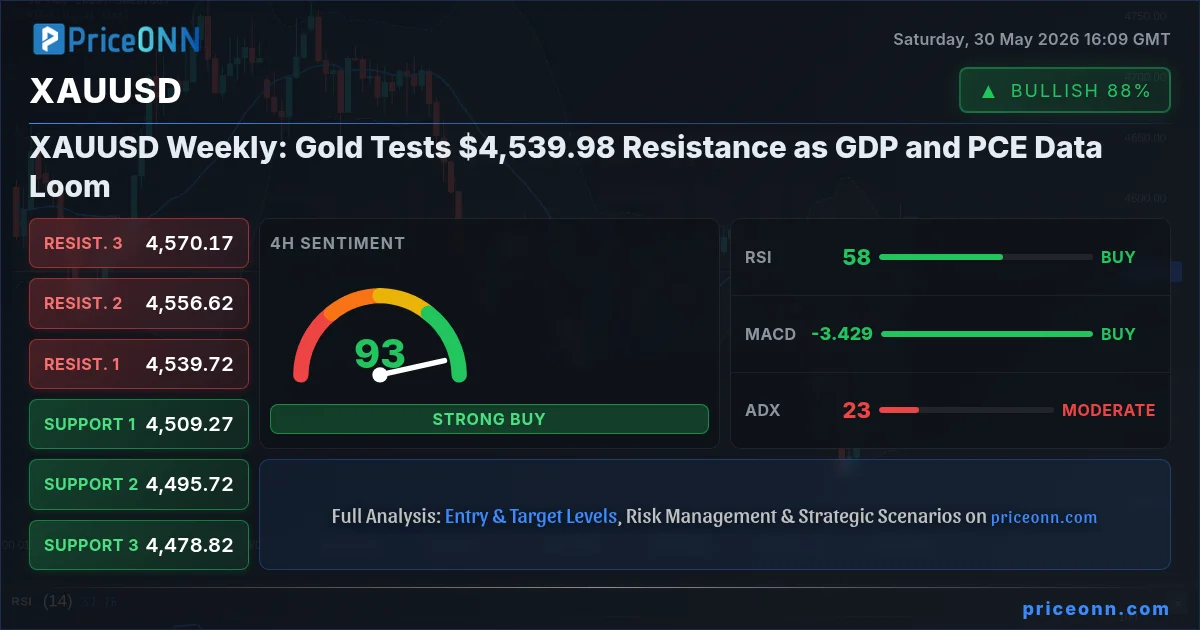
Traders are closely watching the interplay between oil prices, U.S. yields, and the U.S. dollar index (DXY). A sustained surge in oil prices above $85-$90 per barrel could further embolden the dollar and pressure gold lower. Key support levels for gold are being tested, with the next significant psychological floor potentially around the $2,200 mark if current selling pressure persists. Conversely, any signs of de-escalation in geopolitical hotspots or a shift in central bank rhetoric towards a more dovish stance could provide a reprieve for gold. Traders should monitor U.S. inflation data closely; a cooler-than-expected reading could lead to a reassessment of Fed policy, potentially boosting gold. The immediate outlook suggests continued volatility, with a break below $2,300 potentially opening the door for further downside.
Outlook
The immediate future for gold remains under pressure as long as oil prices continue their ascent and U.S. yields hold firm or trend higher. The precious metal's ability to break its losing streak will likely depend on a cooling in energy markets or a shift in global risk sentiment that favors traditional safe havens over the dollar. Upcoming economic data releases, particularly inflation figures and employment reports from the U.S., will be critical in shaping market expectations for Federal Reserve policy, thereby influencing gold's trajectory.
Frequently Asked Questions
What is the main reason for gold's recent price drop?
Gold has fallen over 8.50% this week primarily due to a strong rally in oil prices, which boosts the U.S. dollar's appeal, and rising U.S. Treasury yields, which increase the opportunity cost of holding gold.
Are central banks still buying gold amid this price slump?
Yes, central banks have been significant buyers, adding over 1,136 tonnes in 2022, a record amount. However, this institutional demand has not been sufficient to offset the current market pressures from rising oil and yields.
What are the key levels to watch for gold in the near term?
Traders should watch for support around the $2,300 level. A sustained break below this could lead to further declines, potentially targeting the $2,200 mark if oil prices remain elevated and yields stay firm.
Track markets in real-time
Empower your investment decisions with AI-powered analysis, technical indicators and real-time price data.
Join Our Telegram Channel
Get breaking market news, AI analysis and trading signals delivered instantly to your Telegram.
Join Channel PriceONN News
Gold futures broke above $4,500 per ounce on Friday, driven by increasing optimism for a de-escalation in the U.S.-Iran conflict and the potential reopening of the Strait of Hormuz. Silver also saw significant gains, reflecting a broader shift towards precious metals as geopolitical tensions ease.
PriceONN News
Gold prices retreated to $4,504.30 per troy ounce despite ongoing geopolitical tensions and the closure of the Strait of Hormuz, suggesting a complex market dynamic beyond typical safe-haven demand. Silver, however, managed a modest gain.
PriceONN News
Gold prices surged by 1% to approximately $4,556 on Monday as market participants reacted to developing news of a potential US-Iran peace deal. The speculation weakened the US Dollar and sent oil prices tumbling.
PriceONN News
Gold prices fell on Friday as concerns over crude oil inventories and the prolonged closure of the Strait of Hormuz fueled inflation anxieties, overshadowing U.S.-Iran peace talks. The June Comex Gold contract settled down 0.55% at $4,517.40.
PriceONN News
(RTTNews) - After moving sharply lower earlier in the day, the price of gold has shown a significant turnaround over the course of the trading session on Thursday.
PriceONN News
Gold prices experienced a significant decline on Wednesday, falling over 1% as diplomatic optimism surrounding U.S.-Iran talks grew, despite ongoing military actions. The June gold contract settled at $4,444.50.
PriceONN News
Gold prices experienced a significant downturn, shedding 2% this week to settle near $4,444.50 per ounce. This decline is attributed to evolving U.S.-Iran diplomatic efforts and concerns over potential central bank rate hikes.
PriceONN News
Gold prices fell below the $4500 mark on Wednesday, extending previous losses as oil prices tumbled and geopolitical tensions between the US and Iran remained a key market driver. Investors are weighing inflation concerns against hopes of de-escalation.
PriceONN News
Gold prices are facing intense scrutiny at the critical $4500 per ounce support level, even as industrial metals like copper surge and the US dollar softens amid renewed geopolitical optimism.
PriceONN News
Gold prices are under intense scrutiny as they hover around the critical $4500 per ounce support level. The precious metal faces pressure from a risk-on environment, despite a weaker dollar and strength in industrial commodities like copper.
PriceONN News
(RTTNews) - Gold prices have soared on Friday amid rising optimism about an end to the Middle East war with the chances of reopening of the Strait of Hormuz and resumption of oil and energy trade growing stronger.
PriceONN News
(RTTNews) - Gold held firm above $4,500 an ounce on Friday, the dollar headed for a small weekly loss on improved risk sentiment in markets, and oil prices slipped to a one-month low amid investor optimism that the Middle East conflict is inching toward an end and that the reopen