
Gold Tumbles Below $4,500 as Rising US Yields Dim Safe-Haven Appeal
Gold prices have experienced a significant downturn, breaking below the critical $4,500 mark and reaching lows not seen since early February. This sharp decline, occurring over a two-day period, underscores the diminishing appeal of the precious metal as a safe-haven asset amid shifting global monetary policy expectations.
Market Context
The yellow metal, historically a sanctuary during economic turmoil and a hedge against inflation, is currently struggling to find its footing. Its traditional role as a store of value is being tested by a more appealing environment for interest-bearing assets. While gold's allure extends to its use in jewelry, its primary function in financial markets is as a hedge against currency devaluation and inflationary pressures, offering an uncorrelated asset class to traditional investments. This intrinsic value is further bolstered by its status as a reserve asset for central banks, who often increase holdings during periods of market volatility to signal financial solvency and enhance national currency stability.
The scale of central bank accumulation in recent years has been substantial. In 2022, official institutions amassed a record 1,136 tonnes of gold, a move valued at approximately $70 billion. This aggressive purchasing strategy was particularly pronounced among emerging economies, including China, India, and Turkey, signaling a strategic diversification away from traditional fiat currencies. However, the current market dynamics are painting a different picture, with rising US Treasury yields making the opportunity cost of holding non-yielding gold increasingly prohibitive.
Analysis & Drivers
The primary driver behind gold's recent retreat appears to be the renewed strength in US interest rate expectations. Market data indicates a growing sentiment that the Federal Reserve may adopt a more hawkish stance, potentially delaying or scaling back anticipated interest rate cuts. This outlook is supported by persistent inflation readings and a resilient US labor market, which suggest the economy can withstand higher borrowing costs for longer. As US Treasury yields climb in anticipation of higher rates, they present a more attractive alternative to gold, drawing capital away from the precious metal.
The US Dollar's performance also plays a crucial role. Typically, a weaker dollar correlates with higher gold prices, as it makes dollar-denominated assets like gold cheaper for holders of other currencies. Conversely, a strengthening dollar, often fueled by rising US interest rates and perceived economic outperformance, exerts downward pressure on gold. The current environment, characterized by robust US economic data and hawkish Fed rhetoric, has bolstered the dollar, further amplifying the headwinds for gold.
Furthermore, the inverse relationship between gold and riskier assets like equities is also at play. When equity markets are buoyant and investor confidence is high, demand for safe-haven assets like gold tends to wane. Conversely, significant market downturns or heightened geopolitical risks typically boost gold's appeal. The current market sentiment, while facing some uncertainty, has not yet tipped into a full-blown risk-off scenario that would unequivocally favor gold.
Trader Implications
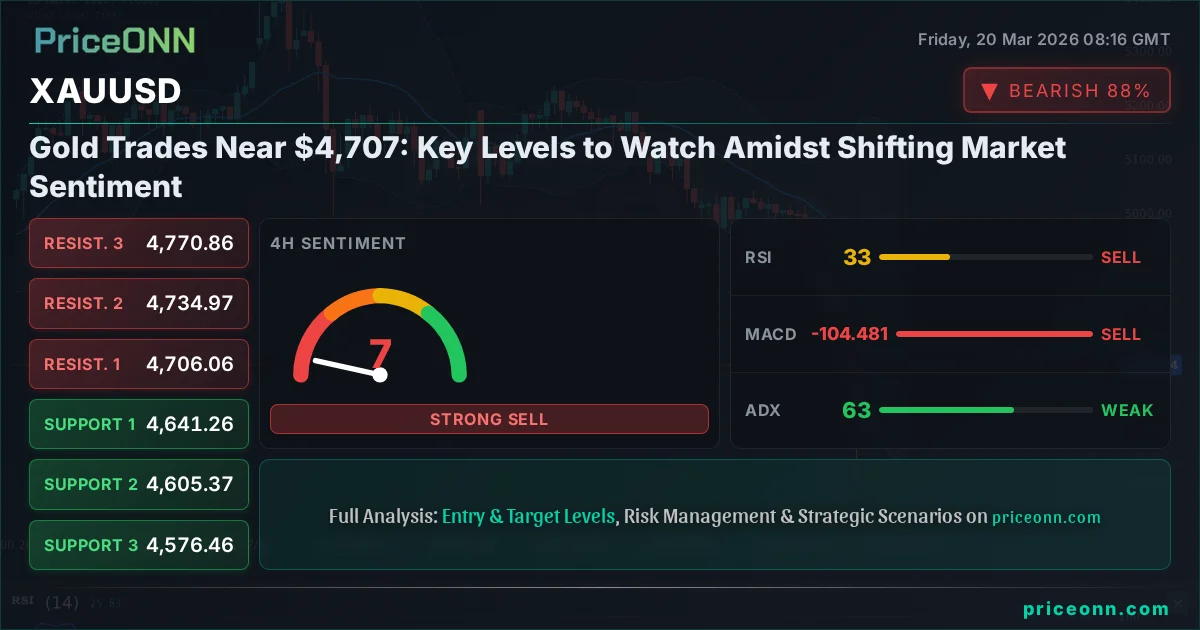
Traders are closely watching the $4,500 level, which has now transitioned from a support area to a potential resistance zone. A sustained break below this psychological threshold could signal further downside potential, with the next significant support level being the early February lows near $4,450. Key indicators to monitor include the US Dollar Index (DXY), US Treasury yields, and equity market performance.
A decisive upward move in the DXY above 105.00 would likely continue to pressure gold prices. Similarly, if 10-year US Treasury yields push towards the 4.75% mark, it would reinforce the narrative of higher-for-longer interest rates and weigh on the precious metal. Traders should consider implementing defensive strategies, such as utilizing stop-loss orders to mitigate potential losses on long positions or exploring short opportunities if a clear bearish technical pattern emerges.
The Federal Reserve's upcoming meeting minutes and speeches from key Fed officials will be critical in shaping market expectations regarding interest rate policy. Any hawkish commentary or data suggesting sticky inflation could lead to further price declines in gold. Conversely, dovish signals or unexpected economic weakness could provide a reprieve for the yellow metal.
Outlook
The near-term outlook for gold remains cautious. The confluence of rising US interest rates, a strong dollar, and relatively stable risk appetite suggests that the headwinds for gold are likely to persist. While central bank buying provides a structural floor, short-term price action will be heavily dictated by macroeconomic data and central bank policy signals. A break below $4,450 could trigger a more rapid sell-off towards the $4,300-$4,350 range. However, any signs of renewed inflation or unexpected geopolitical escalation could quickly reverse this trend, reigniting demand for gold as a safe haven. Traders should remain vigilant and prepared for volatility as the market digests incoming economic data.
Frequently Asked Questions
What is the immediate support level for gold after breaking $4,500?
Following the breach of $4,500, the next key support level for gold is near the early February lows around $4,450. A sustained move below this could signal further downside risk.
What are the main drivers causing gold prices to fall?
The primary drivers are the expectation of higher-for-longer US interest rates, which increases the attractiveness of yield-bearing assets like US Treasuries, and a strengthening US Dollar. These factors reduce gold's appeal as a safe haven.
What should traders watch for a potential gold price rebound?
Traders should monitor US inflation data, Federal Reserve commentary for dovish signals, and any signs of escalating geopolitical tensions or significant downturns in global equity markets. A weakening dollar or falling US Treasury yields could also support a rebound.
Track markets in real-time
Empower your investment decisions with AI-powered analysis, technical indicators and real-time price data.
Join Our Telegram Channel
Get breaking market news, AI analysis and trading signals delivered instantly to your Telegram.
Join Channel

PriceONN