
Why Did Gold Prices Plunge 4.5% This Week?
The precious metal gold, often seen as a bastion of value and a hedge against economic uncertainty, has experienced a dramatic reversal this week, with prices plummeting by more than 4.5% on Thursday. The benchmark XAU/USD pair shed significant ground, breaking below the critical $4,600 level as market dynamics shifted sharply.
Market Context
On Thursday, gold prices saw a significant retreat, losing over 4.5% of their value. This sharp decline occurred as US Treasury yields experienced a notable spike. Simultaneously, market participants recalibrated their expectations for Federal Reserve monetary policy. A robust US jobs report released recently has led traders to largely price out any possibility of a rate cut in 2026, with the first anticipated move now being pushed back to 2027. This change in outlook directly impacts gold, which, as a non-yielding asset, becomes less attractive when higher yields are available elsewhere.
Analysis & Drivers
The primary catalyst for gold's sharp decline appears to be the confluence of rising Treasury yields and a recalibration of Federal Reserve policy expectations. Historically, gold has an inverse relationship with US Treasury yields; as yields rise, the opportunity cost of holding a non-yielding asset like gold increases, making it less appealing to investors. The recent solid US employment figures have bolstered the narrative that the Federal Reserve may need to maintain higher interest rates for longer to combat persistent inflationary pressures, particularly those exacerbated by high energy prices. This shift away from anticipated rate cuts in 2026, pushing them into 2027, significantly strengthens the US dollar and bond yields, both of which typically act as headwinds for gold prices.
Furthermore, gold's correlation with risk assets also plays a role. While typically a safe-haven, periods of strong economic data and rising yields can sometimes coincide with market confidence, reducing demand for safe havens. Central bank activity, traditionally a strong support for gold, saw significant purchases in previous years, with emerging economies leading the charge. However, even substantial central bank reserves, which historically bolstered currency strength and economic confidence, could not offset the immediate pressure from shifting yield expectations and a strengthening dollar this week.
Trader Implications
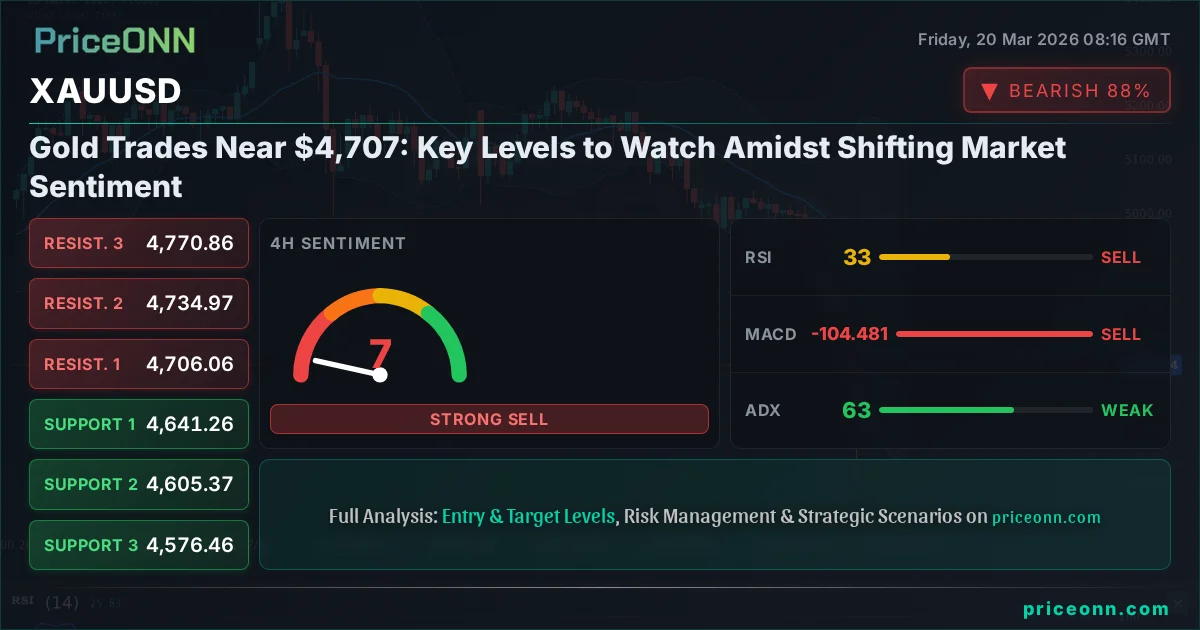
The sharp drop below $4,600 signals a significant shift in market sentiment for gold. Traders should closely monitor US Treasury yields and Federal Reserve commentary for further direction. Key support levels to watch are now likely to be tested, with a sustained move below this psychological threshold indicating potential for further downside. The strengthening US dollar also remains a critical factor; any signs of dollar weakness could offer a temporary reprieve for gold, but the dominant narrative currently favors higher yields and a stronger dollar.
Key levels to watch:
- Support: Watch for potential bounces around $4,500 and then $4,400.
- Resistance: Previous support at $4,600 now becomes a resistance level. A move back above this could signal a short-term reversal.
- Volatility: Expect continued volatility as markets digest the implications of delayed rate cuts and potential inflation persistence.
Traders looking to capitalize on this move might consider short positions, targeting lower support levels, provided risk management protocols are strictly adhered to. Conversely, opportunistic buyers might look for signs of stabilization and a potential technical rebound, but the current fundamental backdrop suggests caution.
Outlook
The immediate outlook for gold appears challenging. The expectation of higher-for-longer interest rates in the US, coupled with elevated Treasury yields and a strong dollar, creates a bearish environment. Until there are clear signals of a pivot from the Federal Reserve or a significant escalation in geopolitical risks that would bolster gold's safe-haven appeal, further price depreciation is a distinct possibility. Traders and investors will be keenly awaiting upcoming economic data and central bank communications for any indication of a change in this trend.
Frequently Asked Questions
What caused the significant drop in gold prices below $4,600?
Gold prices fell over 4.5% on Thursday, breaking below $4,600 primarily due to rising US Treasury yields and a shift in Federal Reserve rate cut expectations. Traders now anticipate the first rate cut in 2027, following a strong US jobs report.
How do US Treasury yields and the US Dollar impact gold?
Gold typically has an inverse correlation with US Treasury yields and the US Dollar. Higher yields increase the opportunity cost of holding gold, while a stronger dollar makes the asset, priced in dollars, more expensive for foreign buyers, both pressuring prices lower.
What is the short-term outlook for gold prices?
The short-term outlook for gold remains cautious. The expectation of sustained high interest rates and a strong dollar presents headwinds. Key resistance is now seen at $4,600, with potential support levels at $4,500 and $4,400.
Track markets in real-time
Empower your investment decisions with AI-powered analysis, technical indicators and real-time price data.
Join Our Telegram Channel
Get breaking market news, AI analysis and trading signals delivered instantly to your Telegram.
Join Channel

PriceONN