
Why Did Gold Plunge 4.5% This Week as Yields Soared?
The precious metal gold experienced a dramatic sell-off this week, tumbling more than 4.5% and breaking below the $4,600 mark. This significant retreat comes as US Treasury yields surged, prompting a reassessment of Federal Reserve monetary policy expectations.
Market Context
Thursday saw gold prices take a substantial hit, marking one of the steepest declines in recent memory. The retreat was directly linked to a sharp rise in US Treasury yields, which increased the opportunity cost of holding non-yielding assets like gold. Furthermore, a robust US jobs report released recently has led traders to push back their expectations for the first Federal Reserve interest rate cut, with many now anticipating a move in 2027 rather than the previously expected 2026.
Analysis & Drivers
The primary driver behind gold's sharp decline appears to be the recalibration of interest rate expectations. As the US economy demonstrates resilience, particularly with a strong labor market, the Federal Reserve is less pressured to initiate a cycle of rate cuts. This scenario boosts the attractiveness of yield-bearing assets like Treasury bonds, which compete directly with gold for investor capital. Historically, gold has an inverse relationship with interest rates; as borrowing costs rise and yields on fixed-income securities become more appealing, demand for the yellow metal tends to wane.
Additionally, market data indicates that concerns over persistent high energy prices may also be contributing to the upward pressure on yields. While inflation hedges like gold typically benefit from rising price levels, the immediate impact of higher yields can overshadow this characteristic. The inverse correlation between gold and the US Dollar also plays a role; a strengthening dollar, often a byproduct of higher US rates, tends to suppress gold prices as the commodity becomes more expensive for holders of other currencies.
Trader Implications
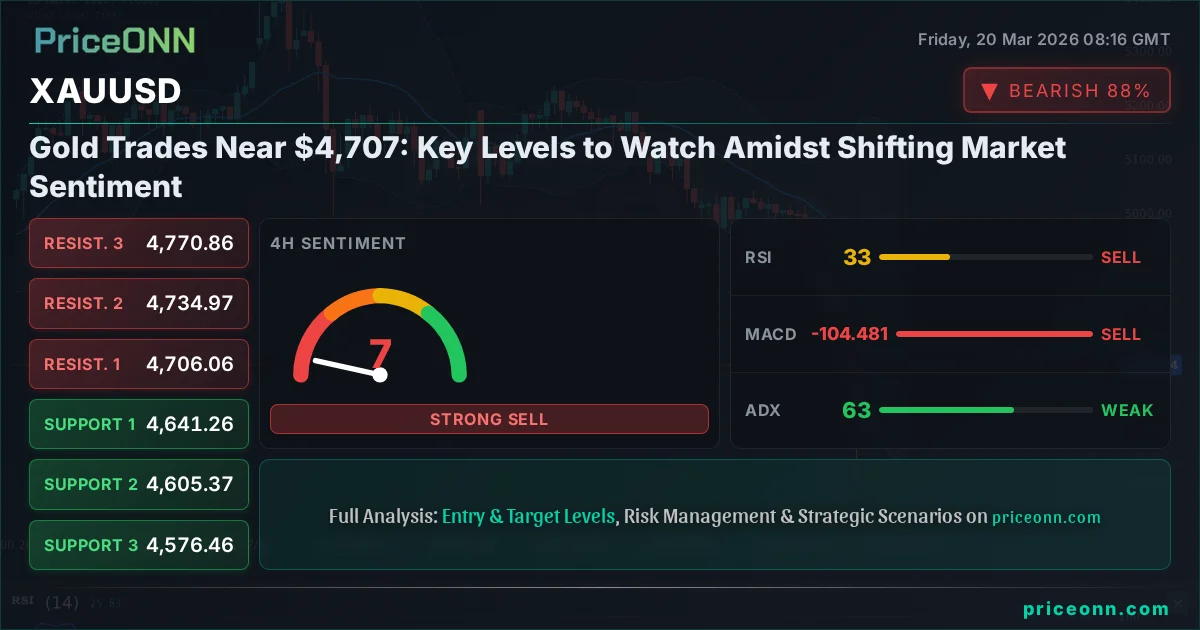
For traders, the current environment signals a shift in sentiment away from safe-haven assets towards yield-driven investments. Key levels to watch include the recent lows around $4,600, which now represent a significant support area. A sustained break below this level could signal further downside. Conversely, any signs of cooling inflation or a dovish pivot from the Federal Reserve could reignite interest in gold. Traders should closely monitor upcoming economic data releases, particularly inflation figures and employment reports, as well as any commentary from Federal Reserve officials for clues on future monetary policy direction.
The recent price action suggests that while gold's safe-haven status remains, its appeal is being challenged by rising real yields. Investors who were betting on imminent rate cuts to boost gold may need to adjust their strategies. The significant outflow from gold ETFs in recent weeks, as indicated by market flows, further supports the narrative of waning investor enthusiasm in the short term.
Outlook
Looking ahead, gold prices are likely to remain sensitive to shifts in monetary policy expectations and US Treasury yields. Unless inflation resurfaces unexpectedly or geopolitical risks escalate dramatically, the path of least resistance for gold appears to be downwards in the near term, especially if yields continue to climb. The strong purchasing by central banks in recent years provides a fundamental floor, but the current macroeconomic backdrop favors higher interest rates and a stronger dollar, posing headwinds for the yellow metal.
Frequently Asked Questions
What caused the recent sharp drop in gold prices?
Gold (XAU/USD) dropped over 4.5% this week, falling below $4,600 primarily due to a significant spike in US Treasury yields and a strong US jobs report that delayed expectations for Federal Reserve rate cuts to 2027.
What are the key support and resistance levels for gold now?
The immediate support level to watch for gold is around $4,600, the recent low. A break below this could lead to further declines. Key resistance levels will depend on any potential shifts in Fed policy or economic data, but traders will be watching for a sustained move back above $4,700.
What is the outlook for gold prices in the coming months?
The outlook for gold remains cautious as long as US Treasury yields are elevated and the Federal Reserve signals a delayed approach to rate cuts. Significant upward price pressure would likely require a resurgence of inflation concerns or a sharp increase in geopolitical instability.
Track markets in real-time
Empower your investment decisions with AI-powered analysis, technical indicators and real-time price data.
Join Our Telegram Channel
Get breaking market news, AI analysis and trading signals delivered instantly to your Telegram.
Join Channel


PriceONN