
International Week Ahead
 PriceONN Editorial Desk
Multi-source verification
PriceONN Editorial Desk
Multi-source verification

International Week Ahead
- European Central Bank: Focus On Communication, Not Near-Term Action
- Bank of Canada: On Hold, Policy Asymmetry Shift Away from Near-Term Easing
- Bank of Japan: Tightening Bias Intact, Yet Bar for Immediate Action Is High
- Canada CPI: Large Drop in Headline Inflation Reflects Base Effects
- Bank of England Bank Rate: On Hold, Easing Not Over
- Reserve Bank of Australia Cash Rate: Rate Hike Likely Brought Forward
- Brazilian Central Bank Selic Rate: Tempered Easing to Start
G10
European Central Bank Policy Rate Decision • (3/19)
Focus on Communication/Updated Staff Forecasts, Not Near-Term Action
February inflation surprised to the upside, driven by core components (firmer services, fading goods disinflation, hotter food and a diminished energy drag). The recent oil shock shifts risks away from undershooting inflation toward guarding against persistence. European Central Bank (ECB) staff forecasts should show meaningful upward revisions to 2026 inflation, with any lift to 2027 a key signal for second round effects. Activity looks more resilient than feared, but confidence remains fragile amid geopolitics, trade uncertainty and energy volatility. Expect a less relaxed tone, potentially retiring the long-standing “policy in a good place” language. This is intended to harden rhetoric without signaling imminent rate moves. Overall, we expect optionality to be preserved, but the asymmetry has shifted away from cuts. If energy prices remain elevated, H2 tightening risk creeps back into the distribution, even if near term action is unlikely. Financial conditions have already tightened via repricing in rates. We expect the euro may be negatively correlated with the oil shock as growth headwinds offset firmer rate expectations.
Bank of Canada Policy Rate Decision • (3/18)
On Hold, but Policy Asymmetry Has Shifted Away from Near-Term Easing
We expect the Bank of Canada (BoC) to leave rates unchanged at this meeting. March is too early for a material change in guidance, particularly with USMCA related trade risks still unresolved. That said, the tone should be less dovish than in recent months. The bar for additional cuts has risen, and the BoC is likely to emphasize two-sided risks rather than a clean easing bias. The external impulse from higher oil prices is a game changer relative to our previous views. We detailed this change in our recent Monthly. If sustained, higher energy prices support nominal income, bolster parts of the growth mix and keep inflation uncomfortably above target. This undermines the earlier logic for Q2–Q3 cuts that rested on soft labor markets, trade exposed sectors and easing underlying inflation. While core inflation had been cooling, the energy shock raises the risk of renewed persistence, especially via headline inflation and inflation expectations. On growth, Canada is relatively insulated versus other advanced economies given its energy exposure, which reduces downside risks relative to peers. The BoC is likely to frame policy as “wait-and-see,” stressing data dependence and uncertainty around the durability of the oil move. Importantly, the asymmetry now points away from cuts. Even if energy prices retrace modestly near term, the threshold for restarting easing is higher than it was earlier this year. We no longer expect near-term cuts, and our baseline now incorporates a 25 bps hike in Q3-2026, with scope for more if oil prices extend higher, USMCA risks fail to materialize (i.e. tariff weighted averages remain broadly unchanged) and/or fiscal rollout accelerates. The shift in policy asymmetry should be mildly supportive for front-end Canada rates and limits downside for the CAD, especially against currencies where policy trade-offs are acute and growth risks severe.
Bank of Japan Policy Rate Decision • (3/19)
Tightening Bias Intact, yet Bar for Immediate Action Is High
We expect the Bank of Japan (BoJ) to keep rates unchanged at this meeting. While recent market pricing and JPY dynamics keep March “in play,” the BoJ is more likely to use this meeting to reinforce its normalization bias. Communication should lean on gradualism, data dependence and vigilance around FX and financial conditions. Business activity has improved, with manufacturing and services indicators firming, but household demand remains fragile as real wage growth is only slowly stabilizing. Inflation has eased from recent peaks, yet core and underlying measures remain at or above target, leaving the BoJ comfortable that underlying inflation dynamics are broadly consistent with its objective. JPY weakness and JGB volatility remain key constraints. The BoJ is acutely sensitive to the risk that prolonged inaction could reignite currency depreciation and undermine policy credibility. That said, with the JPY relatively range bound in recent weeks and market conditions somewhat calmer, the urgency to act immediately has diminished. We continue to expect one additional hike later this year, with the timing skewed toward the latter part of the year (October). An earlier move would require clearer signs of renewed JPY dislocation and/or a further acceleration in services inflation and wage growth, while a delay would be more likely if growth softens again and inflation persistence fades. A hold with hawkish leaning guidance should limit near term downside in the JPY, but absent concrete action, the currency is likely to remain on a depreciating trend, pressured by a large negative terms-of-trade shock, weak fiscal dynamics and a still wide rate gap with the US.
Canada February CPI • (3/16)
Large Drop in Headline Inflation Reflects Base Effects
We expect headline inflation in February to decline to 1.8% year-over-year from 2.3% in January. This largely reflects base effects related to the GST/HST holiday related boost last year as month-over-month inflation is expected to accelerate to 0.6% month-over-month from a flat reading in the previous month. We expect underlying core inflation to continue to moderate with weighted median and trimmed mean inflation moving down to 2.4% and 2.3% year-over-year, respectively. If oil prices evolve as suggested by futures markets, the potential boost to Canada inflation is likely to be sizable-adding up to 1pp to headline inflation over a 1-year horizon. We expect most of this inflationary impulse to pass through into year-end 2026. Greater persistent in oil prices and/or higher levels imply a much larger inflationary surge. For example, if oil prices average above $130/bbl, the boost to inflation is in excess of 3pp. We recently upgraded our Canada inflation forecast for 2026 and 2027 higher to 2.4% and 2.3% from 1.6% and 2.0%, respectively (see here).
Reserve Bank of Australia Policy Rate Decision • (03/17)
Rate Hike Likely Brought Forward
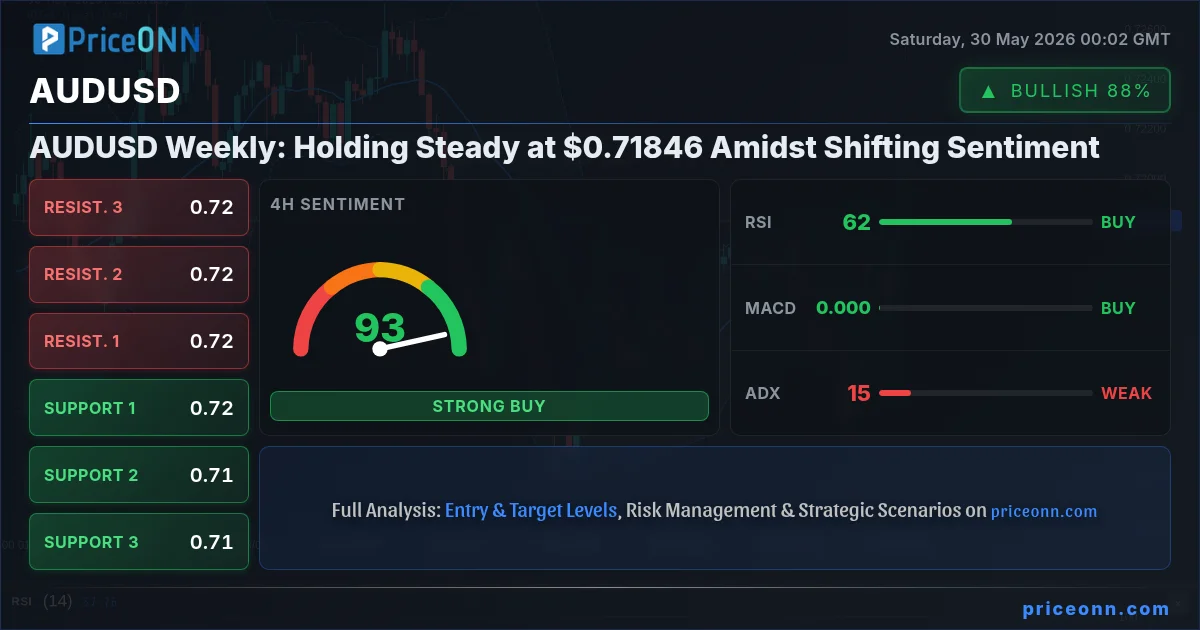
We expect the Reserve Bank of Australia (RBA) to raise the cash rate by 25 bps to 4.10% at next week’s meeting, marking the second hike this year after February and pulling forward our previous expectation of a May move. While uncertainty tied to Middle East tensions and higher energy prices will factor into the decision, this is largely a domestic inflation story, with inflation trending higher since Q2-2025 and January headline and trimmed mean readings of 3.8% year-over-year and 3.4%, both exceeding expectations. With solid growth, low unemployment and rising inflation expectations, the RBA has scope to respond to mounting price pressures. We expect this to be the final hike as growth slows, though risks skew toward further tightening if inflation continues to rise, labor markets tighten further or higher oil prices and geopolitical uncertainty persist.
Bank of England Policy Rate Decision • (03/19)
On Hold, Easing Not Over
Next week, when the Bank of England (BoE) announces its latest policy decision, we expect the Bank Rate to remain unchanged at 3.75%, marking a shift from our prior call for a cut. This change does not reflect a view that easing is over but rather that elevated uncertainty may lead the Monetary Policy Committee to proceed cautiously until there is greater clarity on the duration of Middle East conflict and higher energy prices. The meeting comes without updated forecasts or a press conference and we expect neutral forward guidance that preserves optionality for the BoE. Given subdued growth, as reinforced by January’s GDP data, and elevated unemployment, we look for rate cuts in Q2 and Q3, taking Bank Rate to 3.25%, though risks are skewed toward a longer hold, not tightening, if the conflict persists.
EM
Brazilian Central Bank Policy Rate Decision • (03/18)
Tempered Easing to Start
We expect the Brazilian Central Bank (BCB) to begin its easing cycle with a 25 bps cut next week, taking the Selic Rate to 14.75%. Even before the Middle East conflict, election‑related fiscal risks and BRL volatility underpinned our more cautious view on easing. Pre-election populism alongside Lula’s still competitive polling is likely to strain Brazil’s limited fiscal flexibility and renew pressure on local financial markets. While higher oil prices can be a net positive for Brazil’s economy (keeping near-term growth prospects supported), the sharp rise in energy prices will keep inflation expectations uncomfortably elevated for policymakers. Lingering fiscal concerns and evidence of economic resilience pre-Iran reinforces our view for a more gradual and tempered BCB monetary easing cycle than forecast by economists’ consensus. We forecast BCB’s policy rate at 13.25% by end-2026 vs. 12.125% median forecast per the BCB’s FOCUS Survey. Market expectations for the policy rate have moved higher in recent days with interest rate futures suggesting 13.5% by year-end vs. 12.16% at the start of March. Risk premium in interest rate markets may continue to widen as oil moves higher, inflation expectations show signs of becoming de-anchored and/or economic populism efforts are renewed.
Track markets in real-time
Empower your investment decisions with AI-powered analysis, technical indicators and real-time price data.
Join Our Telegram Channel
Get breaking market news, AI analysis and trading signals delivered instantly to your Telegram.
Join Channel PriceONN News
Financial markets traded with a mixed tone today as investors tried to balance fresh signs of diplomatic progress in the Middle East against lingering concerns that the region’s energy and security risks are far from resolved. The shift in sentiment was reflected most clearly in currency markets, where Dollar weakened broadly as traders scaled back […] The post Dollar Falls as Peace Hopes Return, But Risks Haven’t Gone Away appeared first on ActionForex.
PriceONN News
USDJPY has returned to the area of previous interventions. The ECB is moving towards a rate hike in June. The US dollar retreated on Friday amid new record highs for stock indices and rumours of amendments to the US-Iran agreement. However, tit-for-tat exchanges between the adversaries pushed the dollar index back into the support zone […] The post Yen Braces for a New Storm appeared first on ActionForex.
PriceONN News
For a market supposedly obsessed with geopolitics, investors appear remarkably calm. The proposed US-Iran agreement remains unsigned, key details are still unresolved, and military exchanges between the two sides continue. Yet financial markets are behaving as though a lasting settlement is only a matter of time. Oil remains well below recent highs, Treasury yields are […] The post Trump Says “Relax”, Markets Appear To Be Listening Despite Ongoing Iran Tensions appeared first on ActionForex.
PriceONN News
USD/CAD is showing signs of potential weakness as Canada's economy struggles with a -0.1% Q1 GDP contraction and the specter of renewed trade uncertainties, while global oil prices react to Middle East truce hopes.
PriceONN News
The US Dollar experienced a notable decline last week as markets priced in a potential diplomatic resolution to the US-Iran conflict, leading to a drop in oil prices and Treasury yields. This shift in sentiment suggests a move away from stagflation fears towards a more stable economic outlook.
PriceONN News
Canada's labor market is showing signs of stabilization, with analysts predicting a dip in the unemployment rate to 6.8% in May, driven by an expected 25,000 new jobs. This follows a period of sluggish GDP growth and rising joblessness earlier in the year.
PriceONN News
The Canadian dollar faces headwinds as domestic demand cools and investment remains sluggish. However, upcoming trade negotiations could offer a much-needed catalyst for a rebound.
PriceONN News
Markets are pricing in a potential de-escalation in the US-Iran conflict, leading to a significant drop in crude oil prices and a weakening US Dollar as diplomatic efforts appear to be gaining traction.
PriceONN News
Canada's economy showed signs of a slowdown in early 2026, but upcoming May jobs data is expected to reveal a modest uplift. Analysts anticipate the unemployment rate to fall to 6.8%.
PriceONN News
The dominant story across financial markets last week was not artificial intelligence, central banks, or economic data. It was a dramatic shift in expectations regarding the future of the US-Iran conflict. Investors increasingly embraced the view that the three-month war is moving toward a diplomatic resolution after reports emerged that negotiators had drafted a 60-day […] The post US-Iran Endgame in Sight? Markets Vote for Peace as Oil, Yields and Dollar Fall appeared first on ActionForex.
PriceONN News
USD/CAD faces pressure as Canada's economy shows signs of stalling, with Q1 GDP contracting 0.1% and domestic demand weakening. This comes as trade negotiations and geopolitical shifts add layers of uncertainty.
PriceONN News
Canada's economy showed signs of life in early 2026, with analysts expecting a moderate job growth of around 25,000 positions and a potential dip in the unemployment rate to 6.8% for May.