Iran and Israel trade strikes on energy facilities
Geopolitical Storm Brews Over Energy Assets
The delicate balance of power in the Middle East has been dramatically underscored as Iran and Israel engaged in direct strikes targeting key energy infrastructure. This significant escalation injects a fresh wave of uncertainty into a region already navigating complex political currents. The ramifications of such actions reverberate far beyond the immediate vicinity, sending ripples through global commodity markets and strategic planning for energy-dependent nations.
The precise nature and extent of the damage remain under close scrutiny, but initial reports indicate that vital oil production and processing facilities were within the crosshairs. Such disruptions, even if temporary, carry the potential to significantly constrict the flow of crude oil, a commodity fundamental to the world's economic engine. The immediate aftermath saw market participants scrambling to assess the potential impact on supply chains and price stability.
Understanding the Benchmark: West Texas Intermediate
At the heart of global oil benchmarks lies West Texas Intermediate (WTI) crude. This designation refers to a specific grade of crude oil sourced from the United States, recognized for its relatively low sulfur content and high API gravity, qualities that classify it as 'light' and 'sweet'. These characteristics make WTI exceptionally easy to refine into valuable petroleum products, establishing it as a premium grade in international trade. Its primary distribution point is the Cushing hub in Oklahoma, a critical nexus often dubbed the 'Pipeline Crossroads of the World'.
The price of WTI serves as a vital indicator for the broader oil market, frequently cited in financial news and analyses. Its value is intrinsically linked to the fundamental economic principles of supply and demand. Robust global economic expansion typically fuels increased demand for energy, pushing WTI prices upward. Conversely, economic slowdowns tend to dampen demand and exert downward pressure on prices.
However, the oil market is not solely dictated by economic cycles. Political instability, armed conflicts, and international sanctions can severely disrupt supply routes and availability, leading to price volatility. Decisions made by major oil-producing nations, particularly those organized under the banner of OPEC, also play a pivotal role in shaping WTI prices. Furthermore, the fluctuating strength of the US Dollar exerts considerable influence. Given that crude oil is predominantly traded in USD, a weaker dollar generally makes oil more affordable for holders of other currencies, potentially boosting demand and prices, while a stronger dollar can have the opposite effect.
Key Data Drivers for Oil Prices
Market watchers closely follow weekly inventory reports released by the American Petroleum Institute (API) and the Energy Information Administration (EIA). These reports provide crucial insights into the balance of supply and demand by detailing changes in crude oil stockpiles. A notable decrease in inventories often signals robust demand, which can propel WTI prices higher. Conversely, an unexpected build-up in stored oil suggests increased supply or weaker demand, potentially leading to price declines.
The API typically releases its data every Tuesday, with the EIA following suit the next day. While their findings are generally correlated, with results often within 1% of each other approximately 75% of the time, the EIA's figures are generally considered more authoritative due to its status as a government agency. These inventory fluctuations are a critical barometer for traders and analysts alike.
Beyond inventory levels, the strategic output decisions of the Organization of the Petroleum Exporting Countries (OPEC) remain a significant market force. This cartel of 12 major oil-producing nations convenes biannually to set production quotas for member states. When OPEC agrees to curtail production, it can artificially tighten global supply, thereby driving up oil prices. Conversely, increased production targets by OPEC members tend to flood the market, exerting downward pressure on prices. The influence of OPEC is further amplified through its cooperation with allied non-OPEC nations, collectively known as OPEC+, which includes key producers like Russia.
Market Ripple Effects
The recent exchange of strikes between Iran and Israel injects a significant geopolitical risk premium into the oil market. Traders and investors must now contend with the heightened possibility of supply disruptions, which could lead to sharp price increases in the short to medium term. The immediate focus will be on monitoring any confirmed damage to production facilities or critical export terminals in the region.
This development has direct implications for several key markets. Firstly, Brent Crude, the other major global oil benchmark, will likely move in tandem with WTI, reflecting the broader supply concerns. Secondly, currencies of oil-exporting nations, such as the Canadian Dollar (CAD), could see volatility as oil prices fluctuate. Thirdly, the US Dollar Index (DXY) may react to shifts in global risk sentiment and inflation expectations, which are often influenced by energy price movements. Finally, broader equity markets, particularly energy sector stocks, will be sensitive to any sustained upward trend in oil prices, which could impact corporate earnings and consumer spending.
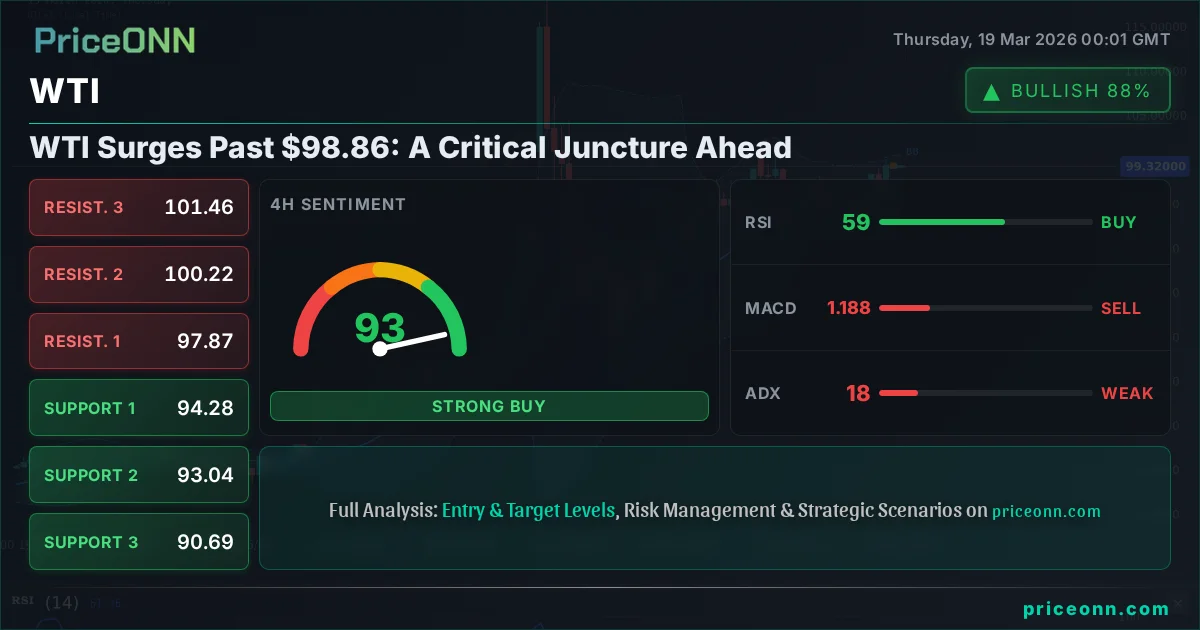
Key levels to watch include the psychological $90 per barrel mark for WTI, which has been a significant resistance and support area. A decisive breach above this level, sustained by tangible supply fears, could signal further upside. Conversely, a de-escalation of tensions or confirmation of minimal damage could see prices retreat. Investors should remain vigilant for official statements from involved nations and major energy organizations, as these will heavily influence market direction.
Track markets in real-time
Empower your investment decisions with AI-powered analysis, technical indicators and real-time price data.
Join Our Telegram Channel
Get breaking market news, AI analysis and trading signals delivered instantly to your Telegram.
Join Channel