Jet Fuel Prices Soar as War in Iran Ripples Through Global Aviation
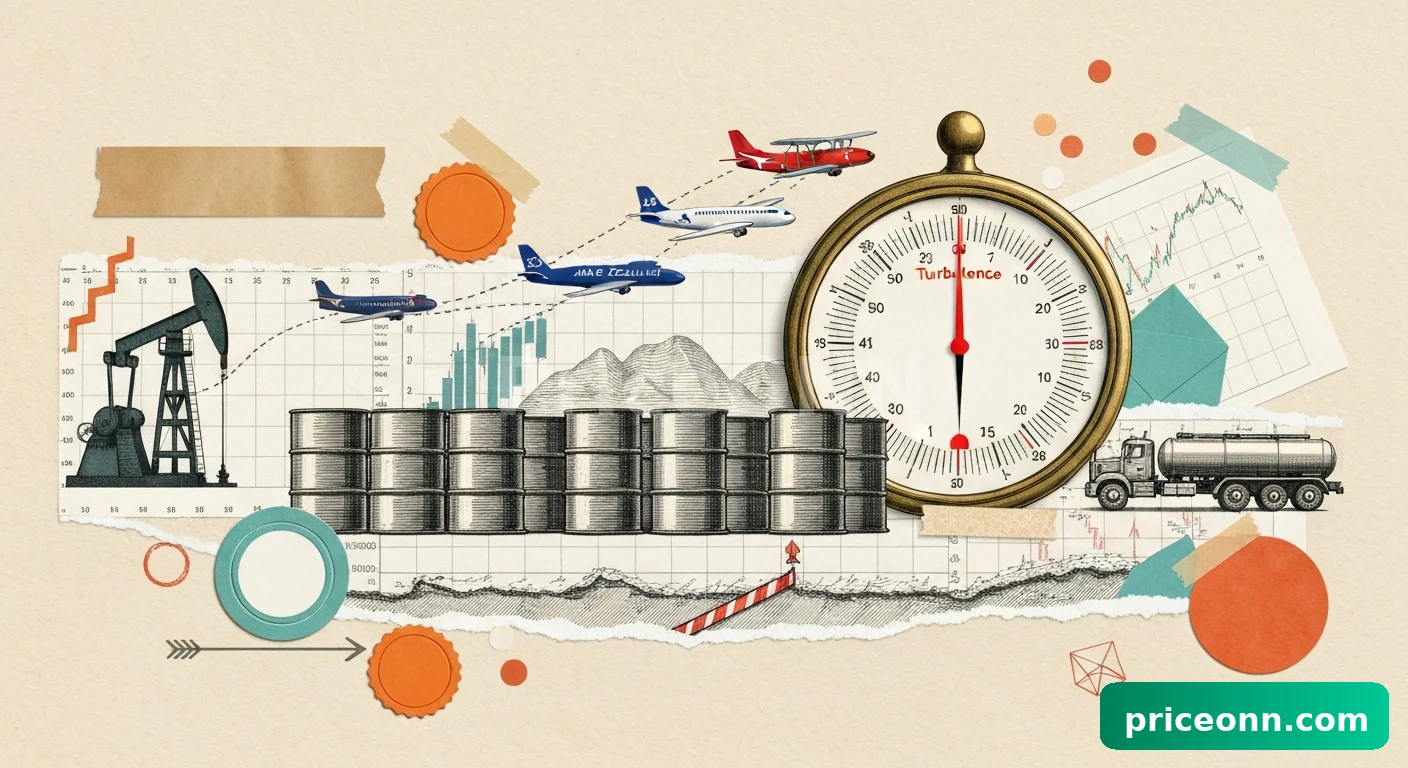
Aviation Industry Braces for Turbulence
The war in Iran is sending shockwaves through the global aviation industry, with energy experts predicting significant price increases for oil and gas products due to supply disruptions; these shortages are expected to directly impact flight prices, prompting warnings from airlines about impending fare hikes, raising the specter of a potential travel slump as consumers delay travel plans in anticipation of lower prices.
Several airlines, including Qantas Airways, SAS, and Air New Zealand, have already announced increases in airfares, citing the sudden surge in fuel costs following the U.S.-Israel attack on Iran; jet fuel prices have skyrocketed from a range of $85 to $90 a barrel before the conflict to between $150 and $200 a barrel this week, compelling airlines to reassess their financial projections for 2026 amidst growing uncertainty about future fossil fuel prices.
The closure of the Strait of Hormuz, a vital trade artery connecting the Persian Gulf to the Gulf of Oman and the Arabian Sea, has further exacerbated the situation; considered a critical chokepoint due to limited alternative transport options beyond regional pipelines, the dramatic reduction in fossil fuel shipments through the strait has triggered the most significant oil supply disruption in history, resulting in sharp increases in oil and gas prices over recent weeks.
Hedging Strategies Under Pressure
The impact of rising jet fuel prices will vary across airlines; while some, such as Lufthansa and Ryanair, have implemented oil hedging strategies to secure a portion of their fuel supply at fixed rates, concerns are mounting that even these hedged reserves may be at risk; Finnair, which hedged over 80 percent of its first-quarter fuel purchases, now fears that its fuel supply may be jeopardized if the conflict continues.
Adding to the challenges, major jet fuel producers like Kuwait have been forced to curtail production and export volumes in recent weeks; the closure of several airspaces due to the ongoing conflict is also driving up airfares, particularly on Asia-Europe routes, forcing airlines to reroute flights and increasing capacity on already popular routes.
“Absent near-term relief, airlines around the world could be forced to ground thousands of aircraft while some of the industry’s financially weakest carriers could halt operations,” analysts have warned, highlighting the severity of the situation.
Despite the widespread concern, some airlines, such as British Airways, remain confident in their ability to maintain current ticket prices in the short term, pending further clarity on the conflict's long-term implications; however, British Airways has already reduced certain routes, including seasonal flights to Abu Dhabi, due to the prevailing uncertainty.
Across Asia, Europe, and North America, airline stocks are experiencing significant declines; Lorraine Tan, director of equity research, Asia at Morningstar, notes that
Track markets in real-time
Empower your investment decisions with AI-powered analysis, technical indicators and real-time price data.