Market analyst sees further Bitcoin downside, flags $60K as key level

Is the Bitcoin Bottom Already In?
The digital asset market is buzzing with speculation about Bitcoin's (BTC) next significant price movement. Has the cryptocurrency already navigated its deepest lows, or is there a further descent on the horizon? A seasoned market commentator recently shared insights, indicating that the prevailing upward momentum might be deceptive. Despite a degree of recovery seen earlier in the year, the structure of these gains is reportedly not robust enough to confirm a sustained bull run.
Instead, the prevailing sentiment leans towards a higher probability of further price depreciation. This outlook suggests that Bitcoin could retest levels below $60,000 before finding a more solid foundation for a substantial recovery. However, this potential downturn may not be as severe as some anticipate, with critical support areas identified within a defined range.
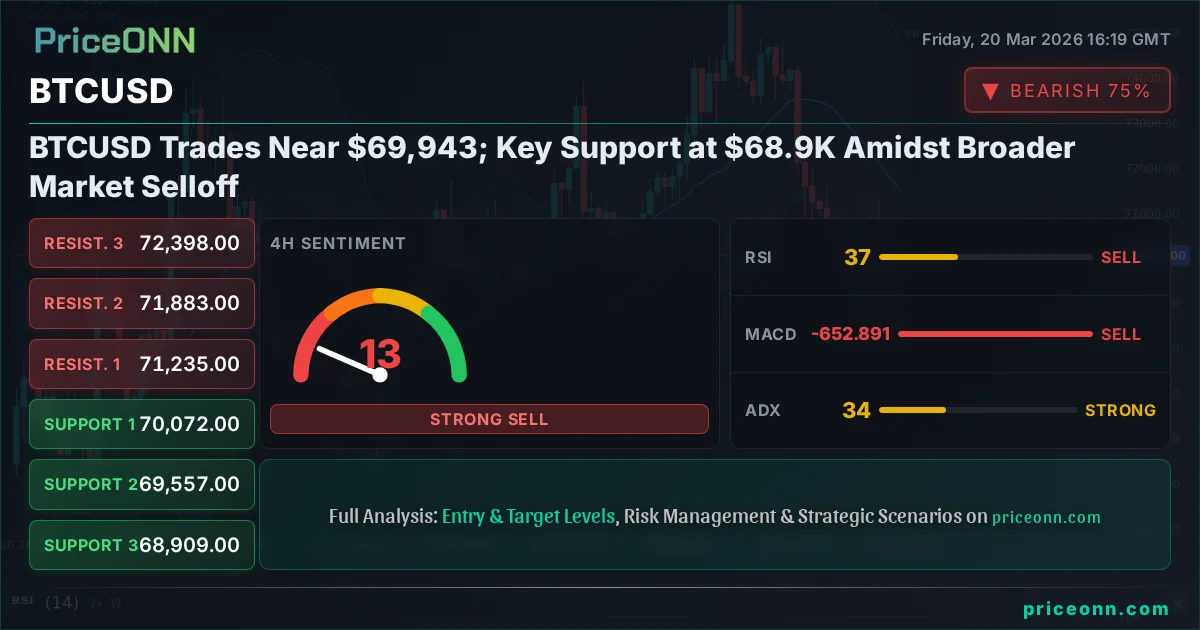
Key Levels and Long-Term Outlook
The analysis points to specific price corridors that warrant close observation. Should Bitcoin indeed experience further declines, significant buying interest is expected to emerge between approximately $59,000 and $46,000. These zones are flagged as potentially attractive entry points for investors with a longer time horizon, hinting at opportunities even amidst broader market uncertainty.
Looking further ahead, the prospect of Bitcoin reaching new record highs in 2026 appears less likely according to this perspective. The projected timeline for a full market recovery seems to be extended, suggesting a more gradual ascent rather than an immediate surge to unprecedented territory. This contrasts with simpler, cyclical models that some traders rely upon.
Broader Economic Currents
The discussion extends beyond the cryptocurrency sphere to encompass the wider macroeconomic environment. The analyst expressed a cautious outlook on the traditional stock market, suggesting that a potential peak may be forming in the coming months. This view highlights the interconnectedness of global financial markets and the influence of macro factors on asset valuations across the board.
Furthermore, a critical perspective was offered on the reliance on rigid, pre-defined market cycles, such as the four-year Bitcoin halving pattern. The argument is that in today's dynamic and often unpredictable financial landscape, adhering too strictly to such frameworks can lead to miscalculations and missed opportunities. The real value, it seems, lies in adapting to evolving market conditions and identifying shifts in underlying structures.
Reading Between the Lines
The current price action in Bitcoin presents a classic dilemma for traders: is this a pause before a renewed rally or a precursor to a deeper correction? The observed bounce, while positive on the surface, lacks the conviction of a true trend reversal. Market data shows that volume and breadth supporting the recent gains have been relatively weak, suggesting that institutional players may not yet be fully committed to a bullish stance.
The $60,000 level is more than just a round number; it represents a significant psychological and technical threshold. A decisive break below this point could trigger stop-loss orders and accelerate selling pressure, potentially pushing the price towards the lower support zones identified. Conversely, holding above this level could maintain the possibility of a near-term continuation of an uptrend, albeit one that still requires validation through stronger price action and increased demand.
The projected timeline for a return to all-time highs, potentially pushed back to 2027 or later, underscores a more cautious medium-term outlook. This suggests that while long-term accumulation phases might be developing in the $46,000 to $59,000 range, traders should temper expectations for explosive gains in the immediate future. The focus may need to shift from chasing quick profits to strategic accumulation and risk management.
The commentary on the stock market's potential topping formation adds another layer of complexity. If traditional equities enter a downturn, it could correlate with a broader risk-off sentiment, potentially exacerbating any downward pressure on riskier assets like Bitcoin. Investors will need to monitor equity indices like the S&P 500 closely, as well as the performance of the US Dollar Index (DXY), which often moves inversely to risk assets.
Track markets in real-time
Empower your investment decisions with AI-powered analysis, technical indicators and real-time price data.
Join Our Telegram Channel
Get breaking market news, AI analysis and trading signals delivered instantly to your Telegram.
Join Channel