
Middle East Tensions Propel Crude Oil Prices Past $105 Amid Supply Fears
Crude oil benchmarks experienced a sharp ascent in early trading, with West Texas Intermediate (WTI) pushing past $105 per barrel and Brent crude climbing precariously close to $114 per barrel. This significant price jump was triggered by a dangerous escalation of regional conflict that now directly imperils some of the planet's most vital energy supply routes.
Market Context
The immediate catalyst for this market jolt was a series of aggressive actions targeting energy infrastructure, followed by retaliatory threats. Reports indicated Israeli airstrikes impacting Iran's South Pars gas field. In a move that sent immediate shockwaves through financial markets, Iran's Islamic Revolutionary Guard Corps (IRGC) issued a stark warning: they would target oil facilities in Saudi Arabia, the United Arab Emirates (UAE), and Qatar. These three nations collectively account for an estimated 20-25% of global crude exports, transforming a localized dispute into a systemic risk for the worldwide economy.
Recent weeks have seen a disturbing pattern of missile and drone assaults causing significant damage to energy installations across multiple nations. In Qatar, strikes impacted the world's largest LNG plants and a major facility operated by Shell, leading to production halts and a notable spike in European natural gas prices. Saudi Arabia's defenses intercepted several projectiles, but an aerial assault on a refinery in Yanbu caused a temporary disruption to oil shipments. Kuwait also experienced a drone strike that ignited a fire at a refinery, though it was quickly brought under control. QatarEnergy has since declared force majeure on its entire LNG output following earlier attacks on its Ras Laffan production hub.
Analysis & Drivers
The primary driver behind the current oil price surge is geopolitical instability. The threat to key export hubs, particularly the Strait of Hormuz which is a critical chokepoint for global oil transit, has instilled significant anxiety in the market. Analysts note that any actual disruption to shipments from Saudi Arabia, the UAE, or Qatar would have immediate and severe consequences on global supply, likely pushing prices much higher.
The market is now keenly focused on the potential for further escalation. The IRGC's threat to target oil facilities is a significant departure from previous regional skirmishes, indicating a willingness to directly impact energy production. This heightened risk premium is being rapidly priced into crude futures. Furthermore, the vulnerability of LNG infrastructure in Qatar has added another layer of concern, impacting not only oil but also natural gas markets and potentially influencing energy security discussions in Europe.
Trader Implications
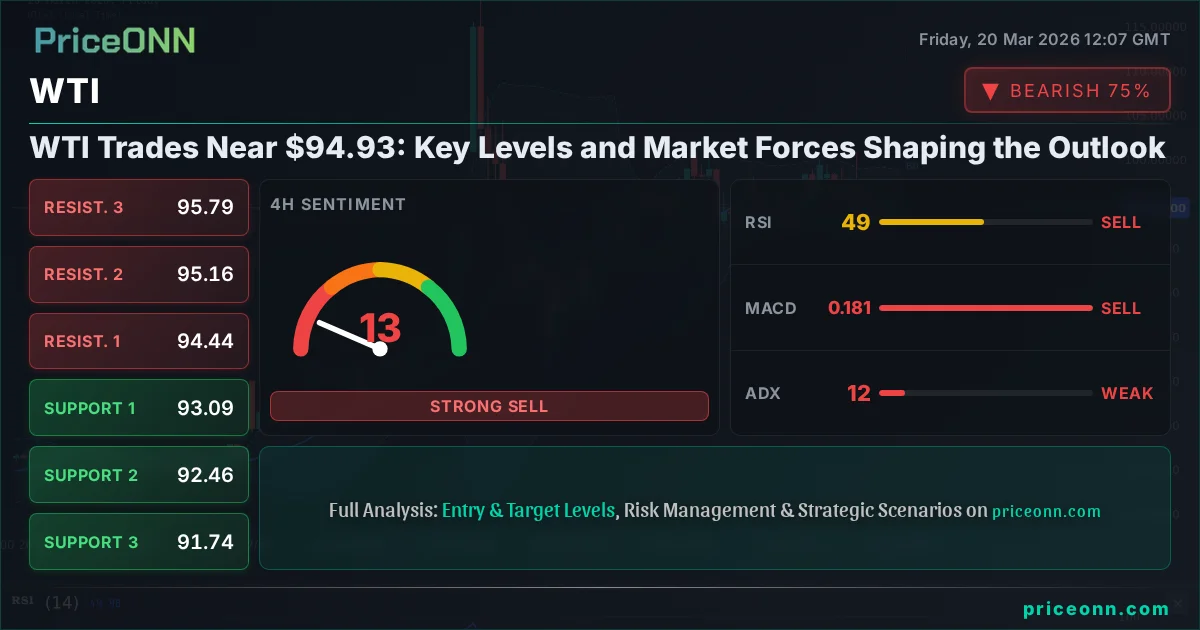
Traders should closely monitor developments in the Middle East. Key levels to watch for WTI are the recent highs around $105 and potential resistance near $110. For Brent, the psychological $114 mark is critical, with further upside targets potentially extending to $120 if tensions continue to mount. Conversely, a de-escalation of hostilities or effective containment of the conflict could see prices retreat rapidly, with immediate support for WTI seen around $100 and for Brent near $110.
The risk of supply disruptions remains paramount. Traders should be prepared for increased volatility and potential sharp price swings based on news flow. The declaration of force majeure by QatarEnergy on LNG output highlights the tangible impact these events can have on energy markets. Given the current geopolitical climate, a bullish bias may be warranted, but with extreme caution due to the unpredictable nature of conflict. Key risk factors include direct attacks on major export terminals or shipping lanes, and the potential for wider regional involvement.
Outlook
The outlook for crude oil prices remains highly sensitive to geopolitical developments. While the current trajectory points towards higher prices, driven by fear of supply disruptions, any sign of diplomatic de-escalation or successful defense against attacks could lead to a swift correction. Market data suggests a bullish case towards $120-$150 if the conflict significantly impacts supply, versus a bearish threat to $95 if tensions subside or are contained. The coming days and weeks will be crucial in determining the sustained direction of oil prices as the market digests the evolving situation in the Middle East.
Frequently Asked Questions
What is the current price range for crude oil?
As of the latest market data, West Texas Intermediate (WTI) crude oil has surpassed $105 per barrel, while Brent crude is trading near $114 per barrel due to escalating Middle East tensions.
What are the main geopolitical risks affecting oil prices?
The primary geopolitical risks include threats to oil facilities in Saudi Arabia, the UAE, and Qatar, which together supply 20-25% of global crude exports, and potential disruptions to the Strait of Hormuz shipping lane.
What is the potential price forecast for crude oil if tensions escalate further?
Analysts suggest a bullish case for crude oil prices, with potential targets ranging from $120 to $150 per barrel if the conflict significantly impacts global supply and continues to escalate.
Track markets in real-time
Empower your investment decisions with AI-powered analysis, technical indicators and real-time price data.
Join Our Telegram Channel
Get breaking market news, AI analysis and trading signals delivered instantly to your Telegram.
Join Channel



PriceONN