Oil Jumps on Strait of Hormuz Fears as Goldman Revises Price Forecast
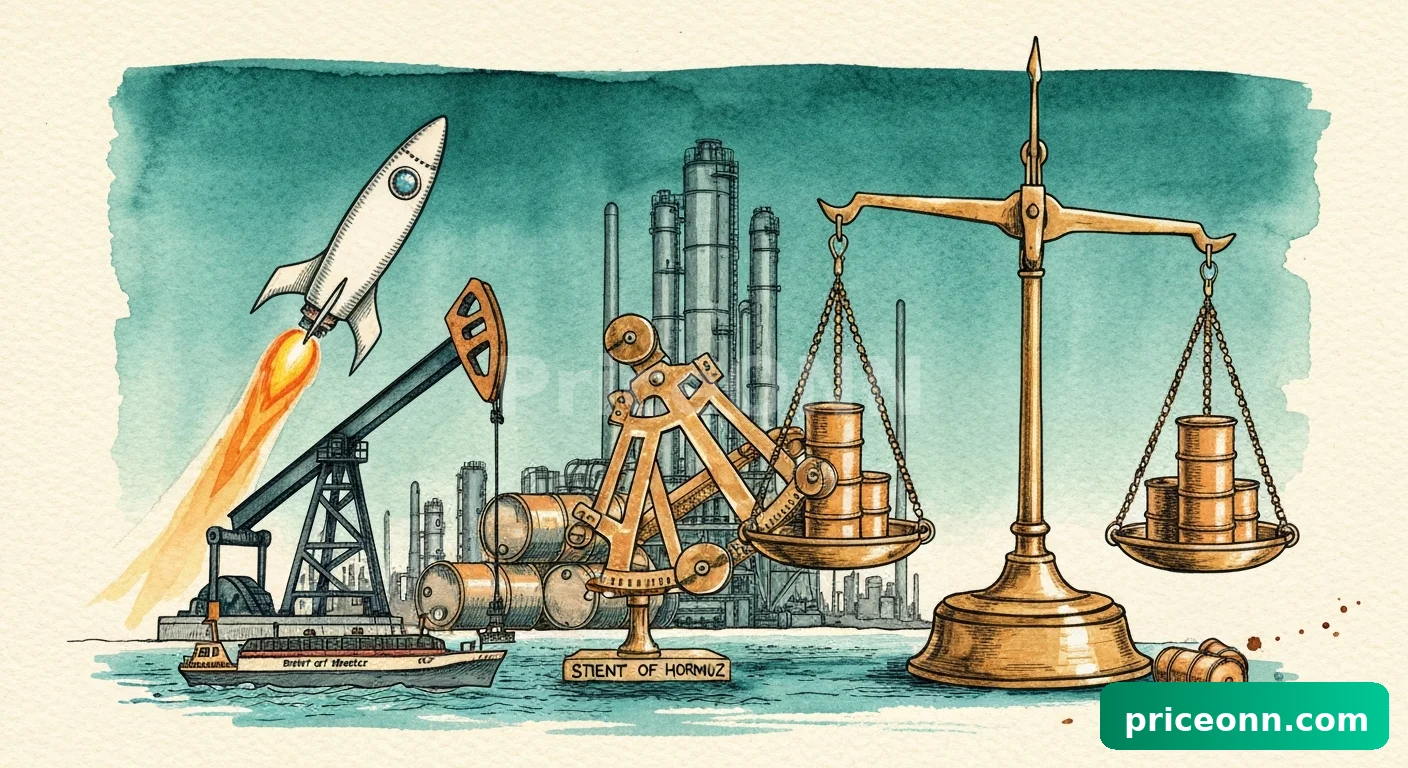
Oil prices are surging amid escalating tensions surrounding the Strait of Hormuz, a critical chokepoint for global oil supplies. Brent crude is trading near $100 per barrel, while West Texas Intermediate (WTI) is above $90, fueled by fears of prolonged disruptions to maritime traffic.
Market Context
The Strait of Hormuz, a narrow waterway through which approximately one-fifth of the world's oil supply passes, has become a focal point of geopolitical risk. Recent events, including conflicting reports about safe passage for tankers and escalating attacks on commercial shipping, have heightened concerns about potential supply shortages. One report indicated Iran might allow India-flagged tankers through the Strait, while another source denied any such agreement. This uncertainty, coupled with attacks on vessels, has created significant volatility in the oil market. One day saw Brent crude swing 17%, briefly crashing below $80 before recovering towards $90 after a false report of a US Navy escort.
Analysis & Drivers
The primary driver behind the recent price surge is the perceived threat to oil supplies transiting the Strait of Hormuz. War-risk insurers have reportedly pulled coverage, significantly reducing the number of vessels willing to navigate the waterway. This constriction of supply, combined with ongoing geopolitical tensions, has prompted investment banks to revise their price forecasts. One major investment bank has updated its outlook, now projecting Brent crude to average $71 per barrel and WTI at $67 per barrel in the final quarter of 2026. This represents an increase from their previous forecasts of $66 and $62 respectively. The revision reflects an expectation of a more prolonged disruption to oil flows through the Strait, with analysts now anticipating significant restrictions for at least 21 days. India, which relies on the Middle East for about 40% of its oil imports, has expressed concerns over the targeting of commercial shipping in the region.
Trader Implications
Traders should closely monitor developments in the Strait of Hormuz, as any escalation could trigger further price spikes. Key levels to watch include:
- $100 for Brent crude: A sustained break above this level could signal further upside potential.
- $95 for Brent crude: Immediate resistance.
- $90 for WTI: A key psychological level that, if breached, could lead to further gains.
- Support levels: Monitor potential support levels for both Brent and WTI to identify buying opportunities during pullbacks.
Risk factors include:
- Geopolitical escalations: Any increase in military activity in the region could further disrupt shipping and drive prices higher.
- Supply disruptions: Unexpected outages or attacks on oil infrastructure could exacerbate supply concerns.
- Official statements: Traders should treat breaking news and social media posts with caution after a false report caused a 17% intraday swing.
Outlook
The outlook for oil prices remains highly uncertain, with geopolitical risks continuing to dominate market sentiment. Upcoming events to watch include any diplomatic efforts to de-escalate tensions in the Middle East, as well as official statements from major oil-producing nations. Market sentiment is likely to remain bullish as long as the threat to oil supplies through the Strait of Hormuz persists.
Track markets in real-time
Empower your investment decisions with AI-powered analysis, technical indicators and real-time price data.
Join Our Telegram Channel
Get breaking market news, AI analysis and trading signals delivered instantly to your Telegram.
Join Channel