
Oil Prices Tumble as US Taps Strategic Reserve Amid Iran Tensions


WTI crude oil prices are under pressure after the White House announced a significant release of oil from the U.S. Strategic Petroleum Reserve (SPR). The decision to release 172 million barrels is a direct response to escalating geopolitical tensions involving Iran and potential disruptions to global oil supply routes. This intervention aims to mitigate price spikes and ensure market stability amid growing uncertainty.
Market Context
The release from the SPR comes at a critical time, as tensions in the Middle East have intensified, raising concerns about the security of oil shipments through the Strait of Hormuz, a vital chokepoint for global oil trade. Recent attacks on commercial vessels have heightened these fears, prompting the U.S. and its allies to take decisive action. The coordinated effort also involves the International Energy Agency (IEA), which has authorized a release of up to 400 million barrels from its member nations' reserves. This collective action underscores the international community's commitment to stabilizing energy markets in the face of geopolitical risks.
The current SPR level stands at approximately 415 million barrels, significantly below its total capacity of 714 million barrels. This reflects previous drawdowns, particularly in 2022, to address supply disruptions caused by the Russia-Ukraine conflict. While the SPR can initially supply oil at a rate of 4.4 million barrels per day for up to 90 days, the extraction rate will decrease as reserves are depleted. The planned release of 172 million barrels over 120 days indicates a measured and sustained approach to managing market volatility.
Analysis & Drivers
Several factors are driving the current market dynamics. Geopolitical instability in the Middle East remains a primary concern, with the potential for further disruptions to oil supply routes. Iran's actions in the Strait of Hormuz have created a climate of uncertainty, prompting the U.S. to intervene and reassure markets. The SPR release is intended to offset any potential supply shocks and prevent prices from spiraling out of control.
The IEA's coordinated effort further reinforces the commitment to market stability. By releasing reserves in a coordinated manner, member nations aim to prevent individual countries from being disproportionately affected by supply disruptions. This collective approach underscores the importance of international cooperation in addressing energy security challenges.
Market data indicates that WTI crude oil prices have reacted negatively to the SPR announcement, reflecting increased supply expectations. However, the long-term impact on prices will depend on several factors, including the duration and intensity of geopolitical tensions, the effectiveness of the SPR release in mitigating supply disruptions, and the overall balance of supply and demand in the global oil market.
Trader Implications
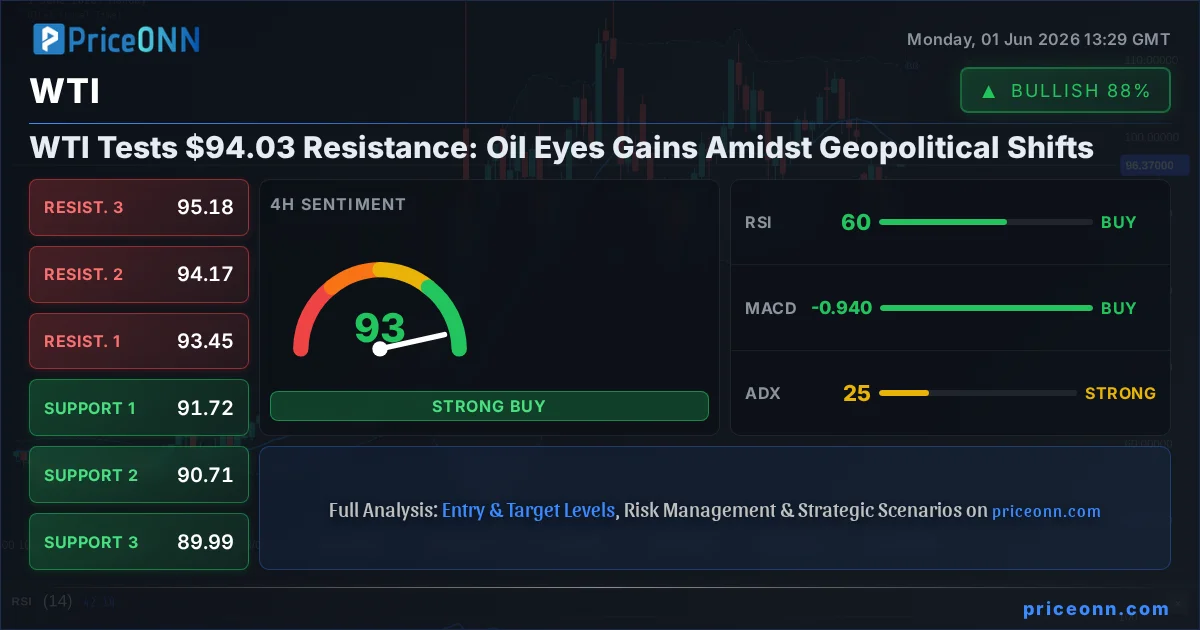
Traders should closely monitor geopolitical developments in the Middle East, as any escalation of tensions could lead to further price volatility. Key levels to watch for WTI crude oil include support around $70 per barrel and resistance near $80 per barrel. A break below support could signal further downside potential, while a move above resistance could indicate renewed upward momentum.
The weekly oil inventory reports from the American Petroleum Institute (API) and the Energy Information Administration (EIA) will also provide valuable insights into supply and demand dynamics. A decrease in inventories could suggest increased demand, potentially supporting prices, while an increase in inventories could indicate oversupply, putting downward pressure on prices. Traders should pay close attention to these reports and adjust their positions accordingly.
Consider these factors when assessing risk:
- Geopolitical risk in the Middle East
- The effectiveness of the SPR release
- Global economic growth and demand for oil
- OPEC production decisions
Traders should also be aware of the potential for unexpected events, such as further attacks on oil tankers or disruptions to production facilities. A diversified trading strategy and prudent risk management are essential in navigating the current market environment.
The release of 172 million barrels into the market over 120 days equates to roughly 1.4 million barrels per day. This influx of supply should, theoretically, ease upward price pressure. However, the market's reaction will depend on its perception of the severity and longevity of the supply risk from the Middle East. If traders believe the geopolitical risk is short-lived, the SPR release could lead to a sustained period of lower prices. Conversely, if tensions escalate, the impact of the SPR release could be limited.
Outlook
Looking ahead, the outlook for oil prices remains uncertain. Geopolitical tensions are likely to persist, creating ongoing volatility in the market. The effectiveness of the SPR release in mitigating supply disruptions will be a key factor in determining price direction. Traders should remain vigilant and adapt their strategies to changing market conditions. Upcoming OPEC meetings and any shifts in global economic growth will also play a significant role in shaping the future of oil prices.
Track markets in real-time
Empower your investment decisions with AI-powered analysis, technical indicators and real-time price data.
Join Our Telegram Channel
Get breaking market news, AI analysis and trading signals delivered instantly to your Telegram.
Join Channel PriceONN News
Crude oil prices experienced a significant drop, with WTI futures falling over 1.8% to $87.25, as optimism grew for a U.S.-Iran deal potentially reopening the Strait of Hormuz.
PriceONN News
(RTTNews) - Crude oil prices have tumbled on Friday as expectations of the U.S. and Iran signing a Memorandum of Understanding run high. The MoU would allow for immediate reopening of the Strait of Hormuz and pave the way for the resumption of oil and energy trade.
PriceONN News
Crude oil futures experienced a dramatic intraday reversal on Thursday, soaring overnight on geopolitical fears only to pull back significantly as reports of a potential diplomatic understanding between the U.S. and Iran emerged.
PriceONN News
Global oil prices are treading water after a significant 5% slump, as market sentiment grapples with cautious optimism over Middle East de-escalation efforts versus lingering geopolitical uncertainties. Brent crude hovers near $104.72 and WTI near $98.07.
PriceONN News
Crude oil prices experienced a sharp decline, with WTI futures for July delivery falling 5.66% to $98.26. This drop is largely attributed to renewed diplomatic efforts aimed at de-escalating the U.S.-Iran conflict and easing tensions around the Strait of Hormuz.
PriceONN News
Crude oil prices experienced a significant downturn as market sentiment shifted towards optimism about a potential US-Iran Memorandum of Understanding that could reopen the Strait of Hormuz. WTI futures fell nearly 2% on the news.
PriceONN News
Crude oil futures experienced a dramatic intraday reversal, soaring to $92.52 before pulling back significantly on Thursday. The volatile session was driven by shifting geopolitical narratives and U.S. inventory data.
PriceONN News
(RTTNews) - Crude oil futures skyrocketed overnight but have shown a significant pullback over the course of the trading day on Thursday.
PriceONN News
(RTTNews) - Extending the losses from yesterday's session, crude oil prices have gone into freefall on Wednesday as investor expectations on a potential U.S.-Iran agreement continue to rise despite the U.S. refusing to ease its demands.
PriceONN News
(RTTNews) - Crude oil prices have tumbled on Tuesday as optimism about a U.S.-Iran peace deal that could lead to reopening of the Strait of Hormuz soon grows despite reports of fresh U.S. strikes on Iran yesterday.
PriceONN News
(RTTNews) - After surging early in the day, crude oil prices have tumbled over the course of the trading session on Thursday. With the downturn, crude oil is extending the losses from the two previous sessions, as investors watch the developments in U.S.-Iran peace talks.
PriceONN News
WTI Crude Oil futures experienced a sharp decline of over 5.6%, falling to $98.26 per barrel as diplomatic efforts between the U.S. and Iran gained significant momentum, easing supply disruption fears.