Oil Market Volatility Persists as Middle East Tensions Clash With Supply Restorations
Oil markets continue to exhibit significant volatility, with Brent crude hovering around $100 per barrel and WTI above $90 per barrel. These elevated prices reflect ongoing anxieties surrounding supply disruptions stemming from escalating tensions in the Middle East. The situation is further complicated by conflicting reports regarding the safe passage of oil tankers through the Strait of Hormuz, a critical chokepoint for global oil trade.
Market Context
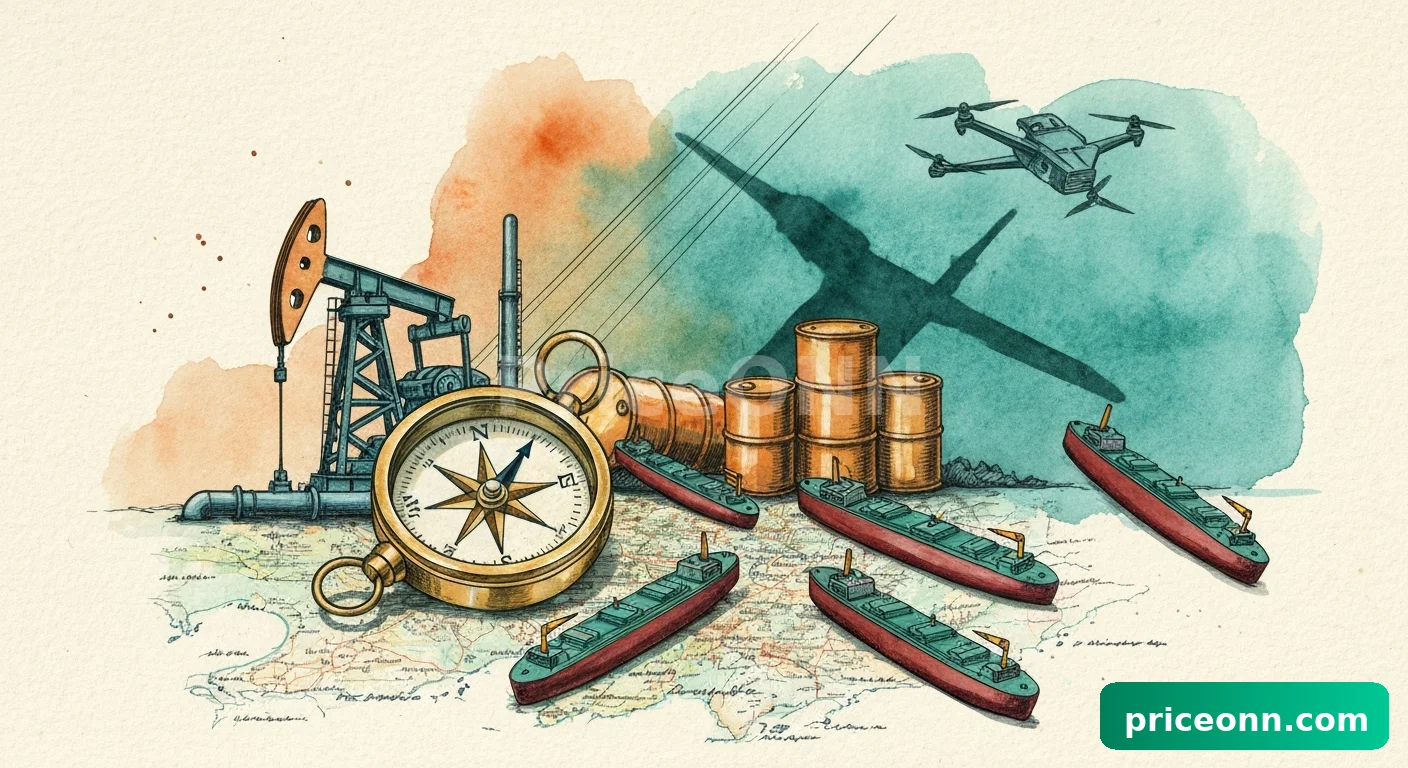
The market is reacting to a confluence of factors. On one hand, attacks on key oil infrastructure, such as the recent drone strike impacting the Fujairah Oil Tanker Terminal (FOTT) in the UAE, have raised concerns about potential supply bottlenecks. Operations at Fujairah are gradually returning to normal, but the incident served as a stark reminder of the vulnerability of energy infrastructure in the region. FOTT has a storage capacity of approximately 1.18 million cubic meters.
Simultaneously, conflicting reports regarding the Strait of Hormuz are adding to the uncertainty. India, which sources roughly 40% of its oil imports from the Middle East via this strait, is seeking assurances of safe passage for its tankers. While some sources suggest an agreement has been reached with Iran, others deny its existence, leaving the market on edge.
Analysis & Drivers
The primary driver behind the current price volatility is geopolitical risk. The potential for disruptions to oil flows through the Strait of Hormuz, which is critical for global oil transit, is a major concern. The market is also sensitive to attacks on oil infrastructure, as demonstrated by the temporary shutdown of operations at Fujairah following the drone strike.
Goldman Sachs recently revised its oil price forecast, anticipating Brent crude to average $71 per barrel and WTI at $67 per barrel in the final quarter of 2026. This revision considers a scenario where oil flows via the Strait of Hormuz are significantly constrained for a period. This forecast is predicated on a release of some 254 million barrels plus 31 million barrels from Russia.
Trader Implications
Traders should closely monitor developments in the Middle East, particularly any news regarding maritime security in the Strait of Hormuz and the operational status of key oil terminals. Key levels to watch include:
- Brent Crude: Support around $90 per barrel, resistance near $105 per barrel.
- WTI Crude: Support around $85 per barrel, resistance near $95 per barrel.
Risk factors include further escalation of regional conflicts, which could lead to more significant supply disruptions, and any unexpected changes in OPEC+ production policy. Traders should also be aware of the potential for increased volatility due to conflicting reports and rapidly evolving geopolitical dynamics.
Outlook
The near-term outlook for oil prices remains uncertain, with geopolitical risks likely to continue driving volatility. The market will be closely watching for any signs of de-escalation in the Middle East, as well as any concrete steps taken to ensure the safe passage of oil tankers through the Strait of Hormuz. The resumption of operations at Fujairah is a positive sign, but the underlying vulnerability of energy infrastructure in the region remains a concern.
Track markets in real-time
Empower your investment decisions with AI-powered analysis, technical indicators and real-time price data.
Join Our Telegram Channel
Get breaking market news, AI analysis and trading signals delivered instantly to your Telegram.
Join Channel