Oil Prices Spike as Saudi Arabia Cuts Output Amid Persian Gulf Crisis
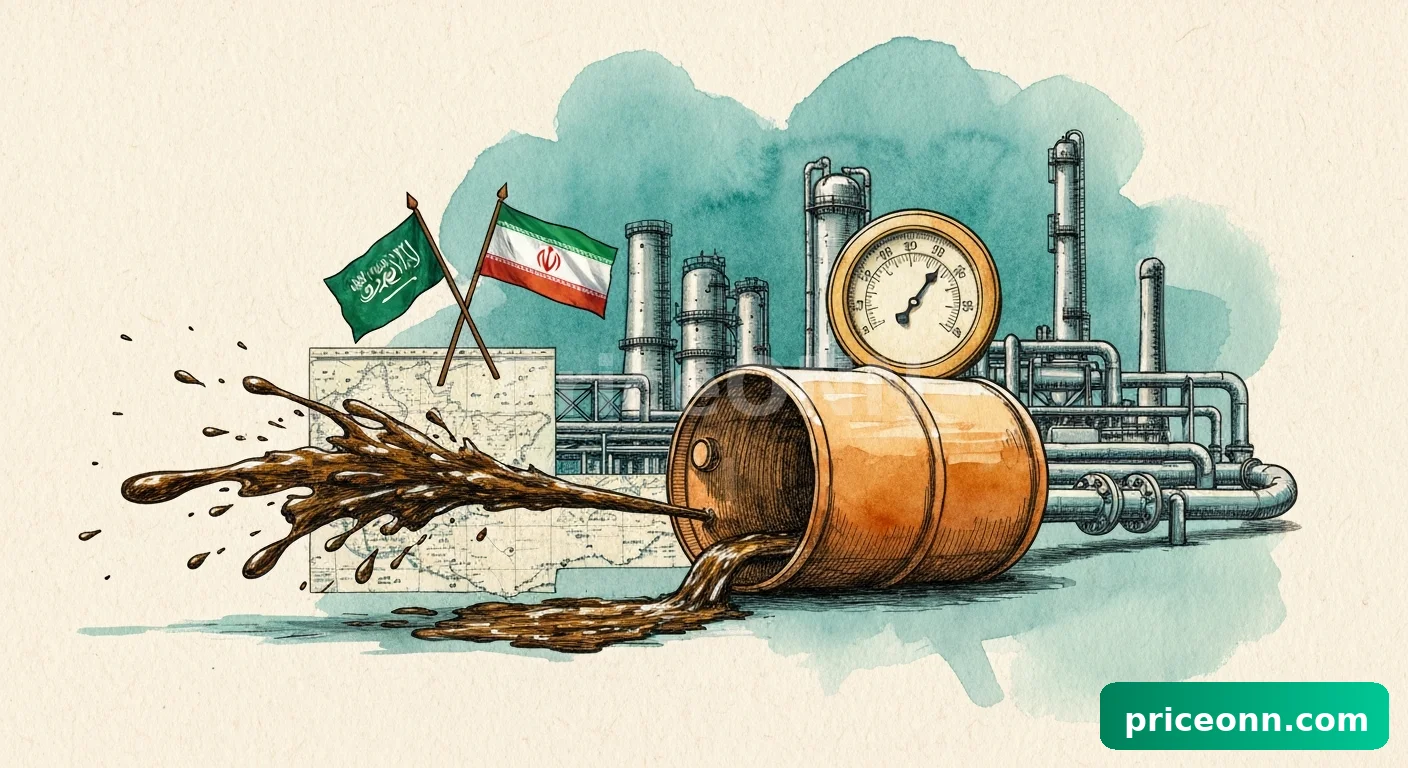
Oil markets are reeling as Saudi Arabia has significantly reduced its crude oil production in response to escalating tensions and disruptions in the Persian Gulf. The kingdom's output has been cut by approximately 2 million barrels per day (bpd), a staggering 20% reduction, bringing production down to around 8 million bpd. This dramatic move comes as the Strait of Hormuz, a critical chokepoint for global oil shipments, remains largely impassable due to the ongoing regional conflict.
Market Context
The production cut is the direct result of the escalating crisis in the Persian Gulf, which has seen commercial tanker traffic severely hampered. The conflict, which began with airstrikes on Iran on February 28th, has effectively blockaded the Strait of Hormuz, preventing the free flow of oil from major producers in the region. This disruption has forced Saudi Arabia to halt production at its massive Safaniya and Zuluf offshore fields, which together contribute over 2 million bpd to the kingdom's total output.
Prior to the crisis, Saudi Arabia had been ramping up production in anticipation of potential disruptions. In February, the kingdom increased output to 10.882 million bpd and supplied 10.111 million bpd to the market. This proactive measure was part of a contingency plan to ensure stable supply in the face of regional instability. However, the severity of the current situation has forced a complete reversal, with Saudi Arabia now pulling barrels off the market.
The impact of the Strait of Hormuz blockade is widespread, affecting not only Saudi Arabia but also other major oil producers in the region, including Iraq, Kuwait, Qatar, and the United Arab Emirates. Industry reports indicate that these countries have collectively cut at least 10 million bpd of oil production, representing approximately 10% of global supply. The International Energy Agency (IEA) has warned that further supply losses are possible if shipping routes do not reopen soon, potentially leading to a significant spike in oil prices as refiners scramble to secure alternative supplies.
Analysis & Drivers
Saudi Arabia's attempt to mitigate the impact of the Gulf crisis by rerouting some exports westward through the East-West Petroline pipeline to the Red Sea port of Yanbu faces limitations. While the pipeline has a capacity of 7 million bpd, it primarily handles lighter crude grades and cannot fully compensate for the loss of offshore production, which is typically heavier. Furthermore, Yanbu's export capacity is constrained by its terminal loading capabilities, estimated at a maximum of 3 million bpd, according to Vortexa data. This infrastructure bottleneck limits the kingdom's ability to offset the disruption in the Persian Gulf.
The shift towards the Red Sea is evident in tanker traffic, with a significant increase in vessels heading to Yanbu. Current data shows 27 supertankers en route to Yanbu, compared to 18 heading for Jeddah and only a few for other Red Sea ports. This surge in traffic highlights the strategic importance of Yanbu as an alternative export hub.
The ongoing conflict and its impact on oil production are driven by a complex interplay of geopolitical factors. The airstrikes on Iran have heightened tensions in the region, leading to retaliatory actions and increased security risks in the Strait of Hormuz. The involvement of the United States and Israel further complicates the situation, raising concerns about a wider regional conflict and its potential impact on global energy markets.
Trader Implications
Traders should closely monitor developments in the Persian Gulf and the Strait of Hormuz. Any further escalation of the conflict or prolonged disruption of shipping routes could lead to a significant surge in oil prices. Key levels to watch include resistance at $90 per barrel for Brent crude and $85 per barrel for West Texas Intermediate (WTI). A break above these levels could signal further upside potential.
Conversely, a de-escalation of tensions and the reopening of shipping lanes could trigger a sharp correction in oil prices. Support levels to watch include $80 per barrel for Brent and $75 per barrel for WTI. A break below these levels could indicate a shift in market sentiment.
Traders should also pay attention to inventory data and refinery activity. A decline in crude oil inventories and an increase in refinery utilization rates could support higher prices. Conversely, a build-up in inventories and a slowdown in refinery activity could put downward pressure on prices.
Outlook
The near-term outlook for oil prices remains highly uncertain, with the potential for both significant upside and downside volatility. The key factor will be the duration and intensity of the conflict in the Persian Gulf and its impact on oil production and shipping routes. Upcoming events to watch include diplomatic efforts to de-escalate tensions, announcements from OPEC+ regarding potential production adjustments, and weekly inventory reports from the U.S. Energy Information Administration (EIA). Market sentiment is currently skewed towards the bullish side, but a swift resolution to the crisis could quickly change the narrative.
Track markets in real-time
Empower your investment decisions with AI-powered analysis, technical indicators and real-time price data.
Join Our Telegram Channel
Get breaking market news, AI analysis and trading signals delivered instantly to your Telegram.
Join Channel