
Are Recession Odds Surging Past 45% as Geopolitical Risk Mounts?


The specter of an economic contraction in the United States is gaining traction, with market analysts and economists on Wall Street markedly elevating their recession risk assessments. This surge in concern is driven by a combination of escalating geopolitical instability and noticeable strains within the domestic labor market, painting a somber picture for the near-term economic outlook.
Industry reports indicate that Moody's Analytics has revised its 12-month recession outlook to a notable 48.6%. Goldman Sachs has adjusted its estimate to 30%, while Wilmington Trust places the odds at a significant 45%. EY Parthenon further suggests these probabilities could accelerate rapidly if the Middle East conflict intensifies or becomes protracted. For context, the baseline risk of a recession in any given year typically hovers around 20%, underscoring the substantial departure from historical norms and signaling heightened economic vulnerability.
Market Context
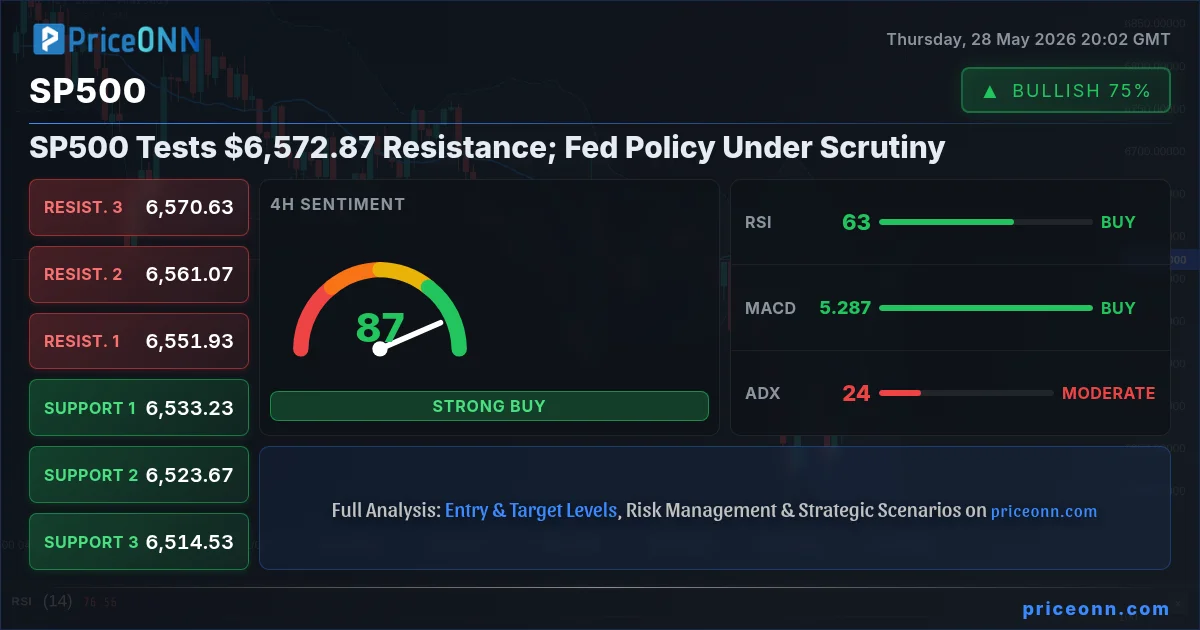
The current economic climate presents a complex challenge for policymakers attempting to balance employment protection with persistent inflation concerns. Discussions surrounding a potential downturn have intensified, largely influenced by the ongoing conflict in the Middle East. Historically, major oil price shocks have preceded nearly every U.S. recession since the Great Depression, with the exception of the unique circumstances of the COVID-19 pandemic.
Recent data highlights a concerning trend in energy prices. AAA reports show a significant jump in gasoline prices, which have climbed approximately 35%, or $1.02 per gallon, over the past month. While the full economic ramifications of these elevated energy costs are still under debate, the upward trajectory is undeniable. Analysts note that the adverse effects of high oil prices can manifest swiftly and decisively.
Analysis & Drivers
The primary drivers behind the increased recession probabilities are twofold: geopolitical instability and labor market weakness. The ongoing conflict in the Middle East poses a direct threat to global energy supplies, which historically has been a strong precursor to economic downturns. Should crude oil prices remain at current elevated levels through the end of the second quarter, some economists warn it could be a tipping point into a recession.
Furthermore, cracks are beginning to show in the labor market. While employment figures have remained relatively robust, subtle indicators of cooling demand for labor and potential job losses are emerging. This, combined with the inflationary pressures from energy costs, could lead to reduced consumer spending, a key engine of economic growth. The Federal Reserve's monetary policy stance, balancing inflation control with economic stability, will be crucial in navigating these turbulent waters.
Trader Implications
Traders should closely monitor key economic indicators, particularly those related to inflation, employment, and consumer spending. The 45%-48.6% range for recession odds suggests a heightened level of market uncertainty. Key support levels for major equity indices should be watched, as a significant downturn in these could signal a broader risk-off sentiment. Conversely, assets traditionally seen as safe havens, such as gold and certain government bonds, might see increased demand.
For currency traders, a U.S. recession scenario could lead to a weaker dollar as the Federal Reserve might be pressured to cut interest rates sooner than anticipated. This could present opportunities in pairs like EUR/USD or GBP/USD, provided that other major economies do not face similar or worse conditions. Vigilance regarding oil price movements and geopolitical developments is paramount, as these factors can trigger sharp market reactions.
Key levels to watch:
- S&P 500: A sustained break below 5,000 could signal increasing recession fears.
- Crude Oil (WTI): Prices above $85 per barrel for an extended period increase recessionary risks.
- USD Index (DXY): A weakening trend below 103 might indicate a shift in Fed expectations.
Outlook
The immediate future hinges on the trajectory of the Middle East conflict and its impact on global energy markets. If tensions de-escalate and oil prices stabilize, the recessionary pressures might abate. However, persistent conflict and rising energy costs, coupled with any further deterioration in labor market data, could solidify the elevated recession odds. Traders should prepare for increased volatility and maintain a cautious approach, focusing on risk management and agile strategy adjustments as new data emerges.
Frequently Asked Questions
What is the current probability of a U.S. recession in the next 12 months?
Market data indicates that recession probabilities have significantly increased, with some analysts placing the odds between 45% and 48.6% within the next 12 months. This is substantially higher than the typical baseline risk of 20%.
How are oil prices impacting recession forecasts?
Rising oil prices, which have seen gasoline climb 35% recently, are a major concern. Historical patterns show oil shocks often precede recessions. Some economists believe if crude prices remain elevated through Q2, it could push the economy into a downturn.
What should traders watch for in the coming weeks?
Traders should closely monitor geopolitical developments, oil price movements, and U.S. labor market data. Key technical levels for the S&P 500 around 5,000 and the USD Index below 103 will be critical indicators of market sentiment.
Track markets in real-time
Empower your investment decisions with AI-powered analysis, technical indicators and real-time price data.
Join Our Telegram Channel
Get breaking market news, AI analysis and trading signals delivered instantly to your Telegram.
Join Channel PriceONN News
US consumer confidence fell slightly to 93.1 in May, a modest decline from April's 93.8, driven by persistent inflation linked to Middle Eastern geopolitical events. While beating expectations, the drop signals growing household pressure.
PriceONN News
A robust US employment report showing stronger-than-expected job gains and stable unemployment initially lifted stock markets, but lingering geopolitical risks are tempering broader investor enthusiasm.
PriceONN News
Long-term unemployment can have ramifications on financial, emotional and family health that linger even after reentry into the workforce.
PriceONN News
The upcoming U.S. employment report for May is poised to reveal a labor market that is stabilizing but not accelerating, potentially influencing Federal Reserve policy. Traders are closely watching key inflation indicators from ISM surveys and Eurozone CPI data.
PriceONN News
Upcoming U.S. employment data for May is expected to reveal a labor market that is no longer deteriorating but also failing to show significant improvement, with nonfarm payrolls projected to rise by 105,000 and the unemployment rate ticking up to 4.4%.
PriceONN News
Upcoming U.S. employment data is poised to reveal a labor market showing signs of stabilization rather than robust growth, potentially influencing Federal Reserve policy. Traders are closely watching key inflation indicators within the ISM surveys.
PriceONN News
Markets are closely watching Friday's U.S. employment report for May, with expectations of 105,000 new jobs and a 4.4% unemployment rate, which could indicate a labor market not deteriorating but also not significantly improving.
PriceONN News
Canadian headline inflation rose to 2.8% in April, primarily driven by gasoline prices, yet core inflation metrics showed surprising stability, offering the Bank of Canada room for a patient monetary policy stance.
PriceONN News
Canadian headline inflation rose to 2.8% in April, largely driven by gasoline prices, but core measures remain stable, suggesting the Bank of Canada has room to maintain a patient stance on interest rates.
PriceONN News
New York's manufacturing sector experienced a significant boost in May, with the Empire State Manufacturing Index jumping to 19.6, nearly three times the expected consensus. This marks the strongest reading since April 2022, signaling a robust expansion in regional industrial activity.
PriceONN News
US inflation is projected to rise modestly in April, with headline CPI approaching 3.8% year-over-year, driven by escalating energy costs impacting food and services, even as shelter inflation cools. This data will be crucial for upcoming Federal Reserve policy decisions.
PriceONN News
US inflation data for April is anticipated to show a modest uptick, with headline CPI potentially reaching 3.8% year-over-year. This rise is attributed to elevated energy prices impacting food and services, even as shelter costs continue to moderate. Retail sales are also expected to grow, though primarily driven by price increases rather than volume.