Trump’s Alaska Energy Revival Hits a Wall as Auction Draws Zero Bids
Alaska's Energy Ambitions Face Headwinds
Since taking office in January 2025, President Trump has prioritized a fossil fuel-centric energy policy. A cornerstone of this strategy involves easing access to federal land for oil and gas extraction and reopening previously restricted areas for exploration. Alaska, once heavily regulated due to environmental sensitivities, was targeted as a key area for renewed development.
However, a recent auction of oil and gas leases in Alaska revealed a surprising lack of interest. The absence of bids raises questions about the overall viability of President Trump's plan to rejuvenate the U.S. fossil fuel market, specifically in regions facing unique challenges.
Last year, President Trump issued an executive order, “Unleashing Alaska’s Extraordinary Resource Potential,” underscoring Alaska’s substantial, untapped energy reserves. The administration argued that tapping these resources could lead to lower energy prices, reduced reliance on imports, and job creation. The goal was to undo what they perceived as overly restrictive policies from the previous administration that hindered resource development on both state and federal lands within Alaska.
Opening the Arctic to Exploration
President Trump's executive order laid out plans to lift the moratorium on fossil fuel exploration within the Arctic National Wildlife Refuge and to expedite the development of Alaska’s LNG potential.
Over the past year, the administration finalized plans to open the coastal plain of Alaska’s Arctic National Wildlife Refuge to oil and gas companies. This decision followed a ruling by a federal judge in March, stating that the prior administration lacked the authority to cancel existing leases. U.S. Interior Secretary Doug Burgum announced the plan in October, paving the way for lease sales within the refuge’s 1.5 million-acre coastal plain, an area considered sacred by the Indigenous Gwich’in.
Critics, including environmental groups, have condemned the Trump administration’s approach, arguing that it disregards the ecological significance of the region. They contend that new oil and gas activities could devastate the fragile Arctic ecosystem. Developing oil and gas resources in the Arctic and Alaska is generally considered a high-risk venture. It requires substantial upfront investment, often spanning decades and costing billions of dollars, at a time when long-term demand for oil and gas is far from certain.
Meda DeWitt, a senior manager at The Wilderness Society in Alaska, stated that President Trump “is placing corporate interests above the lives, cultures and spiritual responsibilities of the people whose survival depends on the Porcupine caribou herd, the freedom to live from this land and the health of the Arctic Refuge.”
Zero Bids: A Setback for Alaskan Drilling?
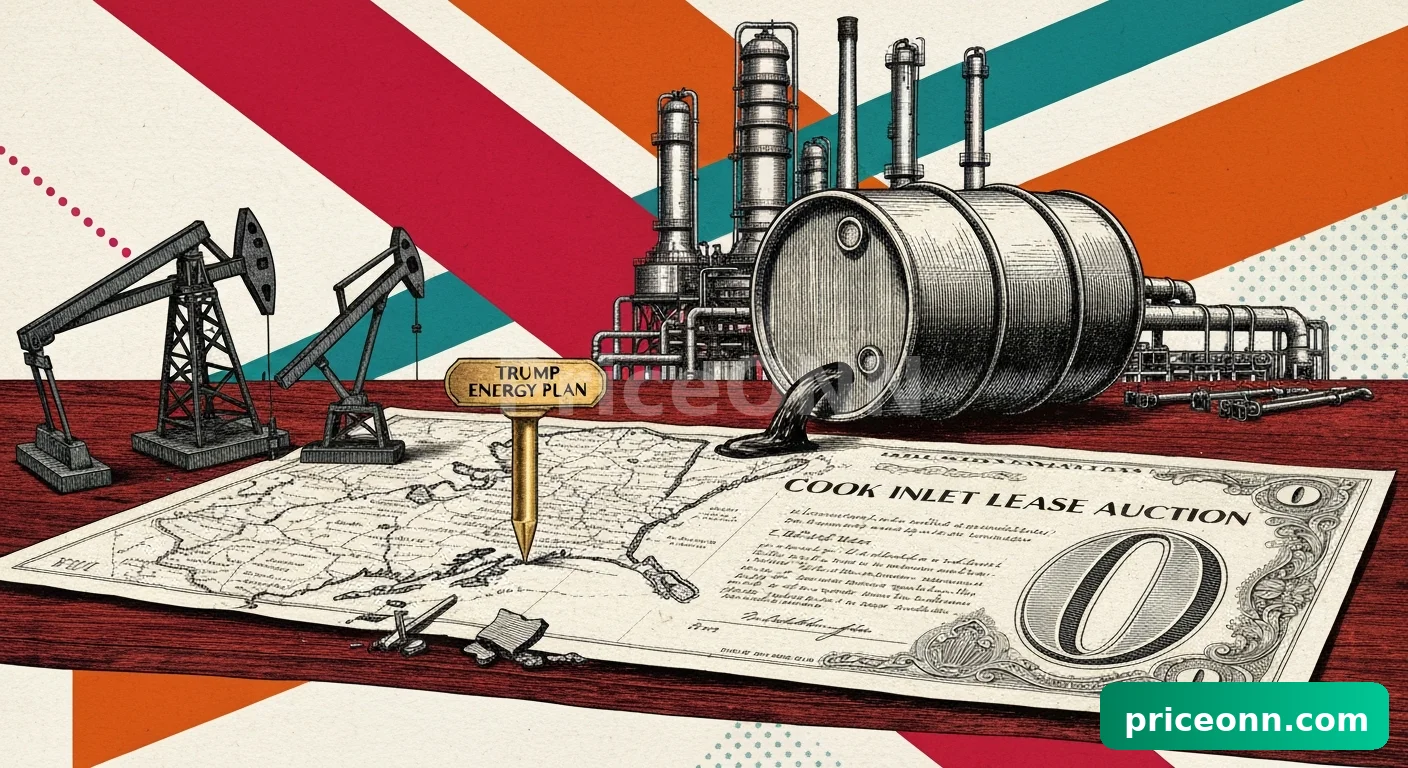
Despite the controversy, the Trump administration proceeded with its plans, holding the first of six planned offshore oil and gas auctions for Alaska this March. These auctions cover over 1 million acres and are scheduled to continue until 2032. The initial auction, however, failed to attract any interest. No bids were submitted for new offshore oil and gas exploration opportunities in Alaska’s Cook Inlet.
The Interior Department’s Bureau of Ocean Energy Management (BOEM) confirmed the lack of bids on its website. Matthew Giacona, the acting director of BOEM, issued a public statement emphasizing the importance of maintaining a transparent leasing schedule, even when sales receive no bids. He argued that this approach keeps opportunities in Cook Inlet open for future investment and supports Alaska’s role in meeting America’s energy needs.
Cooper Freeman, the Alaska director of the environmental group the Centre for Biological Diversity, described the failed auction as “a huge embarrassment for Trump’s Alaska fossil fuel fantasy.”
Beyond environmental concerns, experts point to the declining resources in the basin as a deterrent to investment. Extracting gas has become increasingly difficult and expensive, further discouraging companies from committing capital.
The lack of investor interest is particularly striking given the Trump administration's efforts to reopen Alaska for development. The previous administration had previously highlighted a similar lack of industry enthusiasm in 2022, a point that Republicans in Congress strongly disputed at the time.
Republican Senator Dan Sullivan of Alaska attributed the lack of interest to “years of regulatory uncertainty, outside environmental activism, and outright hostility to resource development under the prior administration.” The next auction in the Cook Inlet is scheduled for March 2027.
Why This Matters Now
This failed auction highlights the complex interplay of political ambition, environmental concerns, and economic realities in the energy sector. While the Trump administration aims to boost domestic fossil fuel production, market forces and environmental opposition present significant hurdles.
For investors, this situation underscores the risks associated with long-term investments in fossil fuel projects, particularly in environmentally sensitive regions. The lack of immediate interest doesn't necessarily signal the end of Alaskan oil and gas development, but it serves as a cautionary tale about the challenges of balancing energy policy with environmental stewardship and economic viability.
The outcome in Alaska could impact several areas. It could affect the valuations of companies holding existing leases in the region. It could influence investor sentiment towards Arctic drilling projects. It could even play a role in the ongoing debate about energy independence versus environmental protection.
Keep a close watch on future lease sales in Alaska. Pay attention to any shifts in regulatory policy. Track the evolving views of energy companies regarding Arctic exploration. These factors will provide valuable insights into the future of energy development in the region and its broader implications for the energy market.
Track markets in real-time
Empower your investment decisions with AI-powered analysis, technical indicators and real-time price data.