
Is the US Dollar Ignoring Geopolitical Tensions as Oil Prices Surge?
The US Dollar is demonstrating a curious stability, seemingly unfazed by a significant surge in crude oil prices and ongoing geopolitical tensions in the Middle East. While Brent crude futures are once again challenging the $100 per barrel mark, and regional conflicts persist, the greenback has maintained its ground, leaving market participants to question the sustainability of this apparent calm.
Market Context: A Tale of Two Markets
Recent market action has revealed a stark divergence between investor sentiment in equity markets and the realities on the ground in key geopolitical hotspots. Despite the United States presenting a 15-point peace proposal to Iran, which was publicly rejected by Tehran in favor of its own conditions and continued regional military actions, equity investors largely opted for optimism. The S&P 500 index, a broad measure of US market health, managed a gain of 0.54%. This resilience in stocks occurred even as global trade and geopolitical uncertainties remain elevated. Industry reports indicate that analyst projections for S&P 500 earnings have seen upward revisions since the conflict began, moving from an expected 10.9% growth to 11.9%. This has narrowed the potential for negative surprises but also increased the latent risk of a market correction.
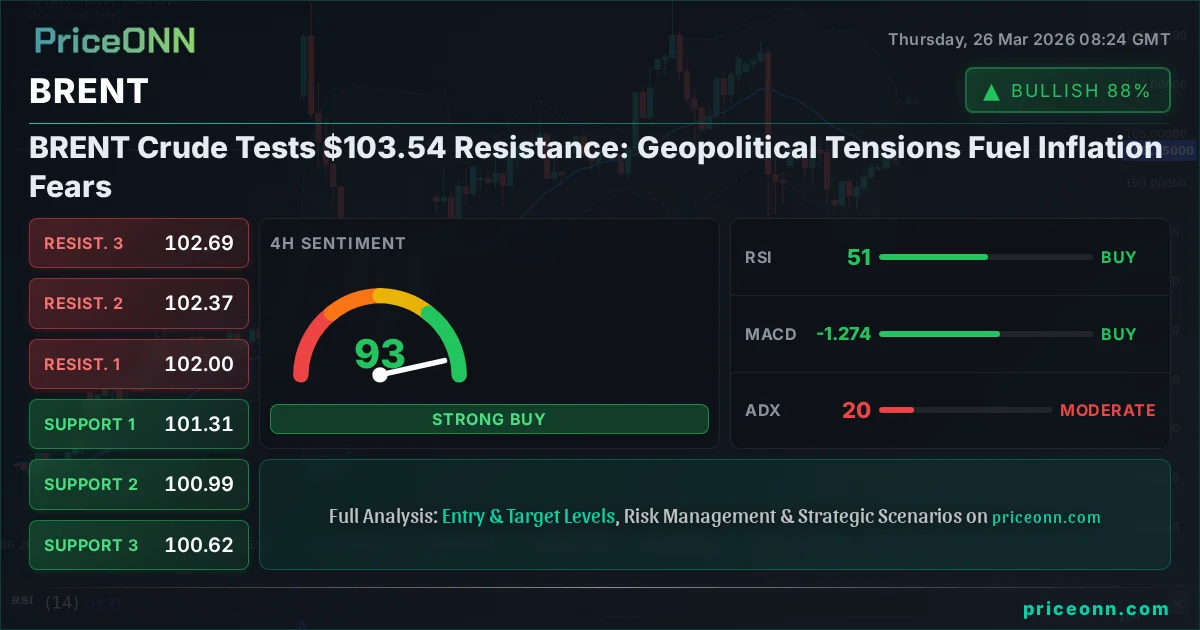
Simultaneously, crude oil prices have seen a dramatic uptick. US crude oil prices surged by 4% yesterday, and Brent crude is now showing signs of testing the psychological $100 per barrel level again. Asian stock markets, in contrast, are trading lower, and futures for US and European bourses suggest a weaker opening. This suggests that while some investors are attempting to preemptively price in a diplomatic resolution, the underlying risks remain exceptionally high, with downside pressures appearing to dominate the broader economic sentiment.
Analysis & Drivers: The Dollar's Curious Calm
The primary driver for the US Dollar's current stability appears to be a market narrative that is, for now, prioritizing potential diplomatic breakthroughs over immediate conflict escalation. Investors seem to be betting on a "peace rally" scenario, even without tangible evidence of a de-escalation. This sentiment, however, stands in contrast to the persistent geopolitical friction and the undeniable upward pressure on energy prices. Higher oil prices typically fuel inflation concerns, which could, in turn, prompt the Federal Reserve to maintain a hawkish stance on interest rates or even consider further hikes. This environment would ordinarily support a stronger US Dollar.
However, the market's reaction suggests a more complex calculus at play. The focus on the US peace initiative, however rebuffed, may be overshadowing the immediate implications of continued regional instability. Furthermore, global economic data has been mixed, with some indicators pointing towards a potential slowdown in major economies, which could increase demand for the safe-haven appeal of the US Dollar. Yet, the concurrent surge in oil prices introduces a significant inflationary risk that could complicate the Federal Reserve's policy path and, paradoxically, undermine the Dollar if it leads to fears of stagflation.
Trader Implications: Navigating the Disconnect
Traders should remain highly vigilant regarding the disconnect between geopolitical realities and market pricing. The current market sentiment appears to be pricing in a resolution that has not materialized, creating a potential for sharp reversals should tensions escalate further. Key levels to watch for the US Dollar Index (DXY) include resistance at 105.50 and support at 104.00. For Brent crude, the $100 per barrel mark is a critical psychological and technical level; a sustained break above this could inject fresh inflation fears and potentially shift market sentiment.
The primary risk for Dollar bulls is a genuine de-escalation in the Middle East, which could reduce its safe-haven appeal and lead to profit-taking. Conversely, any further military escalation or a breakdown in diplomatic efforts, coupled with sustained oil prices above $100, could reignite inflation concerns and potentially support the Dollar through safe-haven demand and expectations of higher-for-longer interest rates. Traders should closely monitor energy market movements and any official statements from key geopolitical players. A cautious approach, utilizing stop-losses and focusing on risk management, is advisable given the elevated uncertainty.
Outlook: A Fragile Equilibrium
The current market equilibrium appears fragile, heavily reliant on the hope of diplomatic success rather than concrete de-escalation. The coming days will be crucial in determining whether the optimism surrounding the US peace plan can withstand the reality of continued regional conflict and surging energy prices. Investors will be watching for any signs of renewed diplomatic engagement or, conversely, further military provocations. The Federal Reserve's upcoming commentary will also be critical, especially in light of the inflationary pressures stemming from oil prices. A sustained breach of $100 per barrel for Brent crude, without a corresponding diplomatic breakthrough, could force a rapid reassessment of market expectations and significantly impact currency valuations.
Frequently Asked Questions
What is the current price level for Brent crude oil?
Brent crude oil futures are currently showing signs of challenging the $100 per barrel mark, indicating a significant surge in energy prices amid geopolitical tensions.
How is the US Dollar reacting to the geopolitical situation and rising oil prices?
The US Dollar has shown surprising resilience, remaining stable despite the escalating regional conflicts and the surge in oil prices. Market data indicates a disconnect, with investors seemingly prioritizing potential diplomatic resolutions over immediate geopolitical risks.
What key levels should traders watch for the US Dollar Index (DXY)?
Traders should monitor resistance for the US Dollar Index (DXY) around 105.50 and support at the 104.00 level. A breach of these levels could signal a shift in market sentiment.
Track markets in real-time
Empower your investment decisions with AI-powered analysis, technical indicators and real-time price data.
Join Our Telegram Channel
Get breaking market news, AI analysis and trading signals delivered instantly to your Telegram.
Join Channel
PriceONN