
Is the US Dollar Poised for Further Gains as Middle East Tensions Escalate?
The US Dollar is on the cusp of its most significant monthly appreciation since July 2025, as global investors increasingly seek refuge amidst heightened geopolitical uncertainty originating from the Middle East. This risk-averse sentiment has simultaneously pressured major equity benchmarks, pushing indices like the S&P 500 and Nasdaq Composite to their lowest levels in six months.
Market Context: A Flight to Safety
This past week was dominated by a palpable increase in investor anxiety, largely fueled by intensifying geopolitical developments. The Middle East remained the focal point, with market participants scrutinizing every announcement and action related to the United States, Israel, and Iran. While brief periods of optimism offered temporary respite for riskier assets, the overarching mood remained one of caution and a pronounced preference for safe-haven assets. This dynamic has directly benefited the US Dollar, propelling its monthly gains and signaling a clear shift in market preference. The equity markets, conversely, bore the brunt of this sentiment. The technology sector, in particular, experienced substantial selling pressure, acting as a significant drag on broader indices. This sell-off has brought the S&P 500 and Nasdaq Composite down to their lowest points in half a year, reflecting a challenging technical environment and a broad retreat from riskier investments.
Analysis & Drivers: Geopolitics and Economic Data
The primary driver behind the current market turbulence is the escalating geopolitical situation in the Middle East. Reports of potential troop deployments, including approximately 3,000 troops from the Army's 82nd Airborne Division and considerations for an additional 10,000 ground troops, underscore the gravity of the regional instability. This backdrop of heightened global tension naturally bolsters demand for the US Dollar as a safe-haven currency. Looking ahead, market attention will pivot to key economic data releases that could further shape currency and equity market trajectories. Crucial US indicators, including the upcoming Non-Farm Payrolls report and Retail Sales figures, are expected to provide insights into the health of the American economy. Additionally, inflation data from the Eurozone will be closely watched, offering clues about the European Central Bank's potential monetary policy path. These economic releases, juxtaposed against the ongoing geopolitical risks, will create a complex trading environment.
Trader Implications: Watching Key Levels and Data
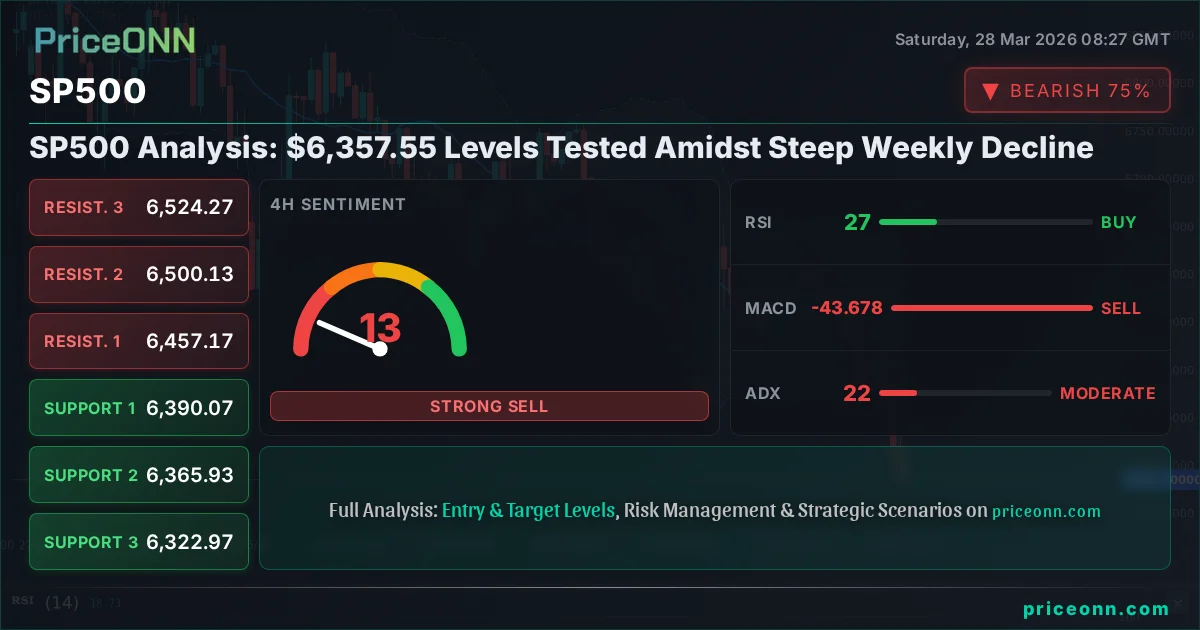
For forex traders, the strength of the US Dollar presents a key theme. The currency's upward momentum, driven by safe-haven flows, suggests that further appreciation is possible, contingent on sustained geopolitical tensions and the upcoming US economic data. Traders should monitor key support and resistance levels for major currency pairs, particularly against the Euro (EUR/USD) and the British Pound (GBP/USD), which are likely to remain under pressure if the Dollar's strength persists. The upcoming Non-Farm Payrolls report is a critical event; a significantly weaker-than-expected number could challenge the Dollar's rally, while a strong print could reinforce it. Similarly, Eurozone inflation figures will be vital for the EUR/USD pair. A higher-than-expected inflation rate might support the Euro, offering a potential counter-trend opportunity. The current market sentiment favors caution, suggesting that traders should maintain disciplined risk management, paying close attention to volatility and potential reversals. Key support for the S&P 500 is now around the 4,800 level, while resistance sits near 5,000.
Outlook: Data and Diplomacy
The coming week will likely see continued market volatility as geopolitical developments in the Middle East remain a dominant factor. However, the release of crucial US employment and inflation data, alongside Eurozone inflation figures, will provide significant domestic economic context. The interplay between these geopolitical risks and economic indicators will dictate the near-term direction for major currency pairs and risk assets. Traders should brace for continued choppiness, with safe-haven demand likely to underpin the US Dollar unless de-escalation efforts in the Middle East gain significant traction or US economic data proves surprisingly weak.
Frequently Asked Questions
What is causing the US Dollar to strengthen significantly?
The US Dollar is strengthening due to escalating geopolitical tensions in the Middle East, which are driving investors towards safe-haven assets. This has led to its most substantial monthly gain since July 2025.
What are the key economic events traders should watch this week?
Traders should closely monitor the upcoming US Non-Farm Payrolls report and Retail Sales figures. Additionally, Eurozone inflation data will be crucial for understanding the economic outlook in Europe.
What are the immediate implications for equity markets?
Equity markets, particularly the S&P 500 and Nasdaq Composite, have fallen to six-month lows due to increased risk aversion. Key support for the S&P 500 is near 4,800, with significant selling pressure expected if this level breaks.
Track markets in real-time
Empower your investment decisions with AI-powered analysis, technical indicators and real-time price data.
Join Our Telegram Channel
Get breaking market news, AI analysis and trading signals delivered instantly to your Telegram.
Join Channel
PriceONN