
Is the US Dollar Set to Slip as Geopolitical Tensions Rise and Yen Shows Strength?


The US Dollar Index (DXY), a measure of the greenback's strength against a basket of major currencies, hovered near 100.15 in early Asian trading Monday, retreating slightly from an intraday peak of 100.35. Despite this minor pullback, the DXY remains close to a two-week high, reflecting a generally firm dollar sentiment. However, a confluence of factors, including escalating geopolitical tensions and a notable rebound in the Japanese Yen, suggests potential headwinds for the world's reserve currency.
Market Context
The US Dollar experienced a broad firming trend, with market data showing it as the strongest performer against the Australian Dollar over the past seven days. The DXY's resilience comes despite concerns over widening conflicts in regions like Iran, which typically fuels demand for safe-haven assets, but also introduces broader economic uncertainty. In contrast, the Japanese Yen (JPY) demonstrated significant strength, snapping a four-day losing streak against the USD. The JPY saw a 0.2% gain, pushing the USD/JPY pair towards 160.00. This Yen outperformance was attributed to signals from Bank of Japan Governor Ueda, indicating readiness to intervene in foreign exchange markets to support the currency. The Australian Dollar (AUD) opened the week on a weaker footing, trading 0.27% lower against the US Dollar, hovering near 0.6850. This softness in the AUD appears linked to geopolitical warnings and a general risk-off sentiment that can impact commodity-linked currencies.
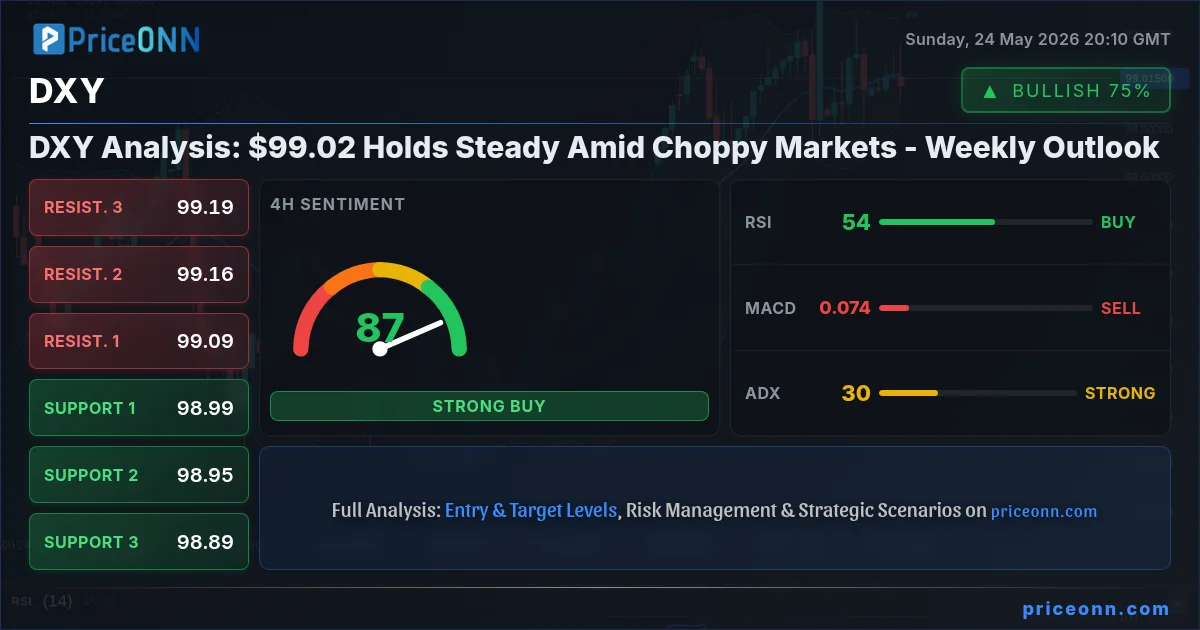
Analysis & Drivers
The primary driver for the US Dollar's recent strength has been the Federal Reserve's monetary policy stance. Analysts note that expectations of continued hawkishness from the Fed, aimed at controlling inflation, typically support the greenback. When inflation pressures rise above the Fed's 2% target, rate hikes are generally anticipated, bolstering USD value. However, the escalating geopolitical situation, particularly concerning Iran, introduces a layer of complexity. While such events can sometimes bolster the dollar as a safe haven, prolonged instability can disrupt global trade and economic growth, potentially weighing on the currency. On the other side, the Bank of Japan's (BoJ) recent shift from its ultra-loose monetary policy, coupled with verbal intervention warnings from Governor Ueda, has provided a significant boost to the Yen. The BoJ's previous QQE policy and negative interest rates had led to substantial Yen depreciation against peers, especially as other central banks aggressively raised rates. The prospect of intervention signals a potential shift in the BoJ's tolerance for further Yen weakness, providing a floor for the currency.
The Australian Dollar's weakness can be partly attributed to its sensitivity to global risk sentiment and commodity prices. As a resource-rich nation, Australia's economic health is closely tied to demand for its exports, particularly from China. Any increase in geopolitical risk or a slowdown in global growth can dampen demand for commodities like iron ore, thereby pressuring the AUD. Furthermore, the Reserve Bank of Australia's (RBA) monetary policy decisions, relative to other central banks, play a crucial role. A widening interest rate differential favoring other currencies can lead to AUD depreciation.
Trader Implications
Traders are closely watching the interplay between geopolitical developments and central bank policies. For the US Dollar, key support levels are being tested, with the DXY holding above the 100.00 mark. Hawkish commentary from Fed officials or any signs of de-escalation in geopolitical hotspots could provide further support. Conversely, a significant escalation of conflict or dovish shifts in Fed rhetoric could trigger a reversal. The Japanese Yen presents an interesting dynamic; while intervention fears provide a floor, the underlying economic conditions and the BoJ's actual policy actions will be critical. Traders should monitor USD/JPY for potential moves back towards 155.00 if intervention proves effective, or a continued grind higher if underlying pressures persist. The Australian Dollar appears vulnerable to further downside if risk aversion intensifies. Key resistance for AUD/USD lies around 0.6900, with a break below 0.6800 potentially opening the door for further declines towards 0.6750. Investors should be mindful of China's economic data releases, as they significantly influence AUD performance.
Outlook
The coming week will likely see continued volatility across major currency pairs as markets digest geopolitical news and central bank communications. The US Dollar's trajectory will be heavily influenced by developments in the Middle East and any further clues on the Fed's future rate path. The Japanese Yen is expected to remain in focus, with markets keenly awaiting any signs of direct intervention from the BoJ. For the Australian Dollar, a sustained risk-off environment or negative news from China could prolong its weakness, while a shift in global sentiment could offer a reprieve. The overall market sentiment, oscillating between safe-haven demand and risk appetite, will be a key determinant of short-term currency movements.
Frequently Asked Questions
What is the current trading range for the US Dollar Index (DXY)?
The US Dollar Index (DXY) is currently trading near 100.15, having found support above the 100.00 psychological level. It recently retreated from an intraday high of 100.35.
Why is the Japanese Yen showing strength despite a generally firm US Dollar?
The Japanese Yen is outperforming due to signals from Bank of Japan officials indicating readiness to intervene in FX markets to curb further depreciation. This follows a period of significant Yen weakness stemming from diverging monetary policies.
What are the key risks for the Australian Dollar this week?
The Australian Dollar faces risks from escalating geopolitical tensions, which can dampen global risk sentiment and commodity demand. Key levels to watch include resistance at 0.6900 and support at 0.6800; a breach below the latter could signal further downside.
Track markets in real-time
Empower your investment decisions with AI-powered analysis, technical indicators and real-time price data.
Join Our Telegram Channel
Get breaking market news, AI analysis and trading signals delivered instantly to your Telegram.
Join Channel PriceONN News
The US Dollar experienced a notable decline last week as markets priced in a potential diplomatic resolution to the US-Iran conflict, leading to a drop in oil prices and Treasury yields. This shift in sentiment suggests a move away from stagflation fears towards a more stable economic outlook.
PriceONN News
USDJPY has returned to the area of previous interventions. The ECB is moving towards a rate hike in June. The US dollar retreated on Friday amid new record highs for stock indices and rumours of amendments to the US-Iran agreement. However, tit-for-tat exchanges between the adversaries pushed the dollar index back into the support zone […] The post Yen Braces for a New Storm appeared first on ActionForex.
PriceONN News
Markets are pricing in a potential de-escalation in the US-Iran conflict, leading to a significant drop in crude oil prices and a weakening US Dollar as diplomatic efforts appear to be gaining traction.
PriceONN News
Canada's economy showed signs of a slowdown in early 2026, but upcoming May jobs data is expected to reveal a modest uplift. Analysts anticipate the unemployment rate to fall to 6.8%.
PriceONN News
Canada's economy showed signs of life in early 2026, with analysts expecting a moderate job growth of around 25,000 positions and a potential dip in the unemployment rate to 6.8% for May.
PriceONN News
USD/JPY is testing the critical 160 level as stalled US-Iran negotiations and hawkish Federal Reserve rhetoric fuel inflation concerns and a potential for further rate hikes. Traders are closely watching upcoming US Non-Farm Payrolls and Eurozone CPI data for direction.
PriceONN News
The USD/JPY pair is flirting with the 160 level as stalled US-Iran negotiations and hawkish Federal Reserve rhetoric fuel inflation concerns. Traders are closely watching upcoming US Non-Farm Payrolls and Eurozone CPI data.
PriceONN News
EUR/USD stalled below 1.1660 as the US Dollar defied expectations, refusing to weaken despite reports of a US-Iran ceasefire extension. Market participants remain cautious, awaiting concrete confirmation and assessing lingering inflationary pressures.
PriceONN News
The New Zealand Dollar surged on Friday, with investors interpreting Reserve Bank of New Zealand (RBNZ) comments as a sign that interest rate hikes could resume sooner and be larger than previously anticipated. This hawkish pivot has created significant trading opportunities.
PriceONN News
The US Dollar experienced a notable dip as a renewed ceasefire between the US and Iran spurred a rally in global equities, particularly in tech stocks. However, persistent core PCE inflation at 3.3% YoY continues to fuel 'higher for longer' rate expectations.
PriceONN News
The Japanese Yen is showing signs of renewed pressure, with USD/JPY approaching the psychologically significant 160 level. This comes as traders brace for key US jobs data and Eurozone inflation figures, all while lingering US-Iran tensions add a layer of uncertainty to market sentiment.
PriceONN News
EUR/USD closed at 1.1640, showing resilience amid mixed signals. Easing US-Iran tensions initially pressured the dollar, but persistent inflation concerns and political ratification hurdles are keeping the greenback surprisingly steady.