
Will USD/JPY Break 160 as US-Iran Talks Stall and Fed Hints at More Hikes?


The USD/JPY pair is hovering near the psychologically significant 160.00 level, a critical juncture that could signal further upside if broken, driven by a complex interplay of geopolitical tensions and central bank policy expectations. Stalled negotiations between the US and Iran over a permanent deal continue to cast a shadow over global energy markets, keeping inflation fears alive despite a seemingly resilient risk appetite.
Market Context: Geopolitical Stalemate and Currency Pressures
Seven weeks have passed since a ceasefire was announced between the US and Iran, with talks aimed at a permanent resolution and the reopening of the Strait of Hormuz. While diplomatic efforts are ongoing, significant differences persist, leading to a prolonged stalemate that has prevented a material de-escalation of energy crisis concerns. Curiously, market volatility has remained subdued, even as conflicting reports emerge regarding the progress of the negotiations. This unusual calm, particularly around oil prices, suggests a potential disconnect between geopolitical realities and market pricing. For USD/JPY, the lack of a firm resolution in the Middle East, coupled with persistent inflation worries, provides a backdrop for the Japanese Yen's weakness, pushing the pair closer to the 160 threshold.
Analysis & Drivers: Inflation Fears and Hawkish Fed Signals
The primary drivers influencing USD/JPY at present revolve around inflation expectations and the monetary policy stance of the Federal Reserve. The ongoing geopolitical uncertainty in the Middle East, particularly concerning the Strait of Hormuz, acts as a persistent inflationary undercurrent. Traders are wary that any significant escalation or prolonged impasse could send energy prices soaring, complicating the inflation fight for major economies.
Adding to this complexity are the recent pronouncements from Federal Reserve officials, which have increasingly leaned towards a hawkish tone. The market is pricing in a higher probability of additional interest rate hikes by the Fed in the coming months, a move designed to combat stubborn inflation. This widening interest rate differential between the US and Japan, where monetary policy remains exceptionally loose, significantly weighs on the Yen and supports the upward trajectory of USD/JPY. The Bank of Japan's continued accommodative stance, despite some domestic price pressures, contrasts sharply with the Fed's tightening bias, creating a powerful tailwind for the dollar against the yen.
Furthermore, upcoming economic data will be crucial. The US Non-Farm Payrolls (NFP) report is set to be a major focus. Strong job growth figures would reinforce the case for further Fed tightening, potentially pushing USD/JPY higher. Simultaneously, Eurozone flash Consumer Price Index (CPI) data will be closely watched. Higher-than-expected inflation in the Eurozone could prompt the European Central Bank (ECB) to signal a more aggressive rate hike path in June, which might offer some support to the Euro (EUR) and indirectly influence the dollar's broader strength.
Trader Implications: Key Levels and Risk Factors
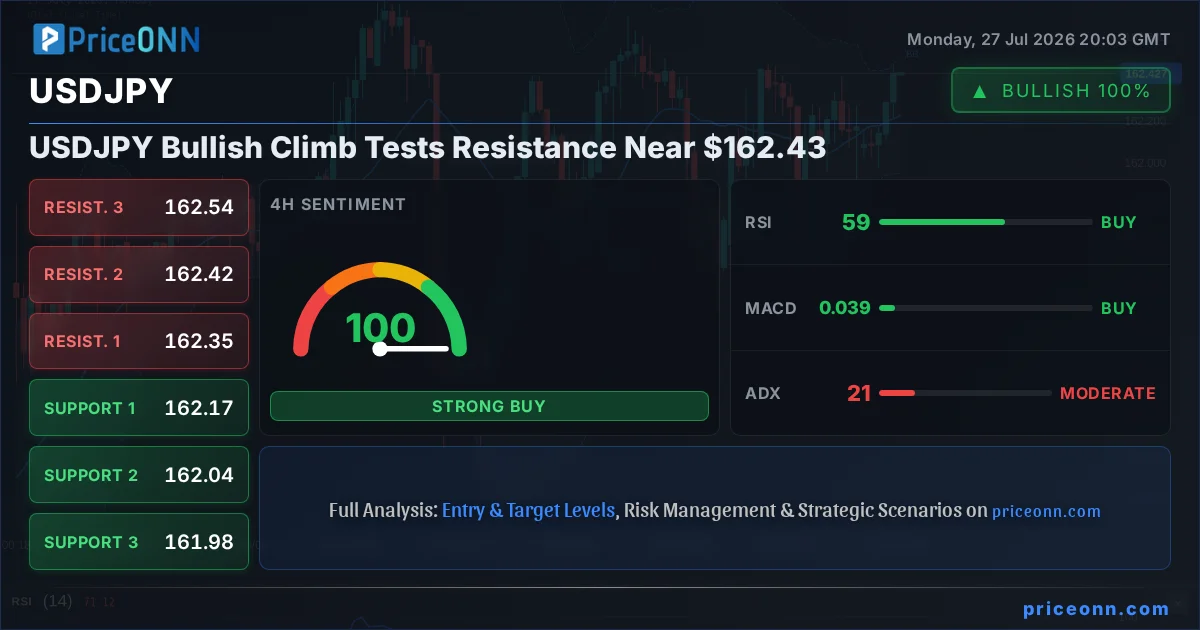
For traders, the 160.00 level in USD/JPY is paramount. A sustained break above this psychological barrier could trigger a cascade of buy orders, potentially leading to a rapid ascent towards 161.50 and beyond. Key support is seen around 158.50, a level that has previously shown resilience.
Key factors to monitor:
- US-Iran Negotiations: Any significant development, positive or negative, could trigger sharp moves in oil prices and, by extension, market sentiment. A breakdown in talks could reignite energy crisis fears, while a breakthrough might ease some inflationary pressures.
- Federal Reserve Commentary: Further hawkish remarks from Fed officials will solidify expectations for more rate hikes, supporting the dollar. Dovish shifts, though unlikely currently, would be Yen-supportive.
- US NFP Data: A robust jobs report could confirm the Fed's hawkish stance and push USD/JPY higher. A weaker-than-expected report might lead to a dollar pullback.
- Eurozone CPI: Strong inflation figures could bolster the EUR and potentially impact the USD's strength, though the primary focus remains on the Fed.
The primary risk for USD/JPY bulls is a sudden dovish pivot from the Fed or a significant de-escalation in Middle East tensions that reduces inflation expectations. Conversely, a failure to achieve a US-Iran deal and continued strong US economic data could propel the pair higher.
Outlook: Yen Intervention Risk and Data Dependency
The outlook for USD/JPY remains heavily data-dependent and sensitive to geopolitical developments. While the fundamental drivers-a hawkish Fed and a weak Yen-point towards potential further upside, traders must remain vigilant. The Japanese Ministry of Finance has previously signaled its readiness to intervene in currency markets if the Yen's depreciation becomes excessive. A sustained move beyond 160.00 could increase the probability of such intervention, creating significant volatility. The upcoming NFP report and Fed sentiment will be the primary determinants of whether USD/JPY breaks through this critical level or faces intervention threats.
Frequently Asked Questions
What is the critical resistance level for USD/JPY currently?
The critical resistance level for USD/JPY is the psychologically significant 160.00 mark. A sustained break above this level could signal further upside potential, with the next target potentially around 161.50.
What are the main drivers of the Japanese Yen's weakness?
The Japanese Yen's weakness is primarily driven by the widening interest rate differential between the US and Japan, as the Federal Reserve signals more rate hikes while the Bank of Japan maintains an accommodative stance. Geopolitical tensions also contribute by keeping inflation fears elevated.
What economic data should traders watch this week for USD/JPY?
Traders should closely monitor the US Non-Farm Payrolls (NFP) report for insights into the health of the US labor market and potential Fed policy direction. Additionally, Eurozone flash CPI data will be watched for inflation trends in Europe.
Track markets in real-time
Empower your investment decisions with AI-powered analysis, technical indicators and real-time price data.
Join Our Telegram Channel
Get breaking market news, AI analysis and trading signals delivered instantly to your Telegram.
Join Channel PriceONN News
Gold fell to 4,047 USD per ounce on Tuesday, erasing gains from the previous session. Pressure on the metal is mounting amid fears that the Federal Reserve may raise rates as early as this week. Markets currently estimate the probability of such a move on Wednesday at over 33% – an unusually high level of […] The post Gold Declines, Focus on Fed and Falling Oil Prices appeared first on ActionForex.
PriceONN News
The ceasefire in the Middle East has disrupted the greenback’s plans. Strong PMI data and falling oil prices are helping the euro. The US dollar faced a downward gap at the start of the week as the Middle East de-escalation of the conflict came as an unwelcome surprise to speculators who had built up net […] The post De-Escalation Undermines the Greenback appeared first on ActionForex.
PriceONN News
The dollar heads into a pivotal week trading near 101.80, just off a 15-month high, with the Fed’s July 29 meeting standing as the clear focal point. Markets currently price roughly a 65% chance of a hold, though renewed Middle East escalation has kept a hike back on the table for later this year. Energy […] The post US Dollar Index: a Defining Week for the King of the Markets appeared first on ActionForex.
PriceONN News
EUR/USD enters the final week of July at 1.1369. Friday’s modest decline in energy prices reduced expectations that the Federal Reserve could raise rates as early as its upcoming meeting, scheduled for Tuesday and Wednesday. At the same time, the main currency pair remains very close to the monthly low recorded in late June. Markets […] The post EUR/USD Ahead of a Key Week: Holding Near Lows appeared first on ActionForex.
PriceONN News
The de-escalation of the conflict in the Middle East has sent Brent prices tumbling. The oil market could return to a surplus as early as the end of 2026. The US dollar and oil have lost their correlation. Brent recorded its worst daily fall in three months after reports of a ceasefire in the Middle […] The post Oil: A Surplus on the Horizon appeared first on ActionForex.
PriceONN News
The US stock market is not factoring in the existing risks. Investors are increasingly focusing on the cash flows of S&P 500 companies. US stock indices have closed in the red the last two weeks, something that hasn’t happened since March. The stock market has weathered both the armed conflict in the Middle East and […] The post It’s Time to Weigh Up the Risks for the S&P 500 appeared first on ActionForex.
PriceONN News
(RTTNews) - Gold prices traded higher on Monday as oil prices tumbled amid eased Middle East tensions, helping ease inflation and interest-rate concerns ahead of crucial Fed, BoE and BoJ central bank meetings due this week.
PriceONN News
European Central Bank Governing Council member Peter Kazimir from Slovak reinforced the hawkish bias on Monday, arguing that policymakers will likely need to raise interest rates at least once more and warning that a worsening energy shock could ultimately require even more tightening than markets currently anticipate. His remarks come just days after the ECB […] The post ECB’s Kazimir Sees At Least One More Rate Hike, Warns Oil Shock Could Require More appeared first on ActionForex.
PriceONN News
On 21 July, Stats NZ reported an acceleration in inflation: the Consumer Price Index rose 1.5% in the second quarter, while the annual inflation rate climbed to 4.1%, its highest level in more than two years and slightly above analysts’ consensus forecast of 4.0%. The increase was driven primarily by higher fuel prices amid tensions […] The post NZD/USD: Inflation Surge Meets Strong US Dollar Pressure appeared first on ActionForex.
PriceONN News
US business activity accelerated at the start of the third quarter, with S&P Global’s Flash Composite PMI Output Index rising from 51.9 to 53.6 in July, its highest level in eight months. The improvement was driven by the services sector, where the Business Activity Index climbed from 51.2 to 53.6, also an eight-month high. Manufacturing, […] The post US PMI Hits Eight-Month High,Yet Rising Costs and Supply Delays Raise Caution appeared first on ActionForex.
PriceONN News
USD/JPY soared to 163.81 on Friday, marking a new 40-year high. Repeated warnings of possible currency intervention have so far failed to halt the yen’s decline amid a broad strengthening of the US dollar. The market paid little attention to the Japanese Finance Minister’s statement that authorities are ready to take decisive action. Reports that […] The post USD/JPY Breaks Records: Nothing Slows the Yen’s Decline appeared first on ActionForex.
PriceONN News
Market Overview The crypto market trended lower at the end of Monday, mirroring the US equity market, as it fell from a peak of $2.23T to $2.16T before returning to recent local lows of $2.18T by Tuesday morning. This marks yet another test of the 50-day moving average (MA) as support, which sellers have been […] The post Bitcoin Has Failed to Break Away from Its Long-Term Trend appeared first on ActionForex.