USD/JPY slides back below 158.00 on broad Yen strength

Yen Rebounds Amid Shifting Monetary Tides
In a dramatic Thursday session, the Japanese Yen demonstrated unexpected strength, staging a robust rally that pushed the key USD/JPY currency pair back below the psychologically important 158.00 mark. This downward move, representing a decline of more than 1.25% for the day, saw the pair settle in proximity to 157.80. The swift reversal caught many market participants off guard, highlighting the Yen's potential for sharp movements when underlying catalysts align.
For years, the narrative surrounding the Japanese Yen has been one of persistent depreciation. This trend was largely fueled by a stark divergence in monetary policy between the Bank of Japan (BoJ) and its major global counterparts, most notably the U.S. Federal Reserve. While other central banks embarked on tightening cycles, the BoJ maintained an ultra-accommodative stance, a policy it had sustained for over a decade leading up to 2024. This policy gap widened the spread between Japanese and U.S. bond yields, creating a powerful tailwind for the U.S. Dollar against the Yen.
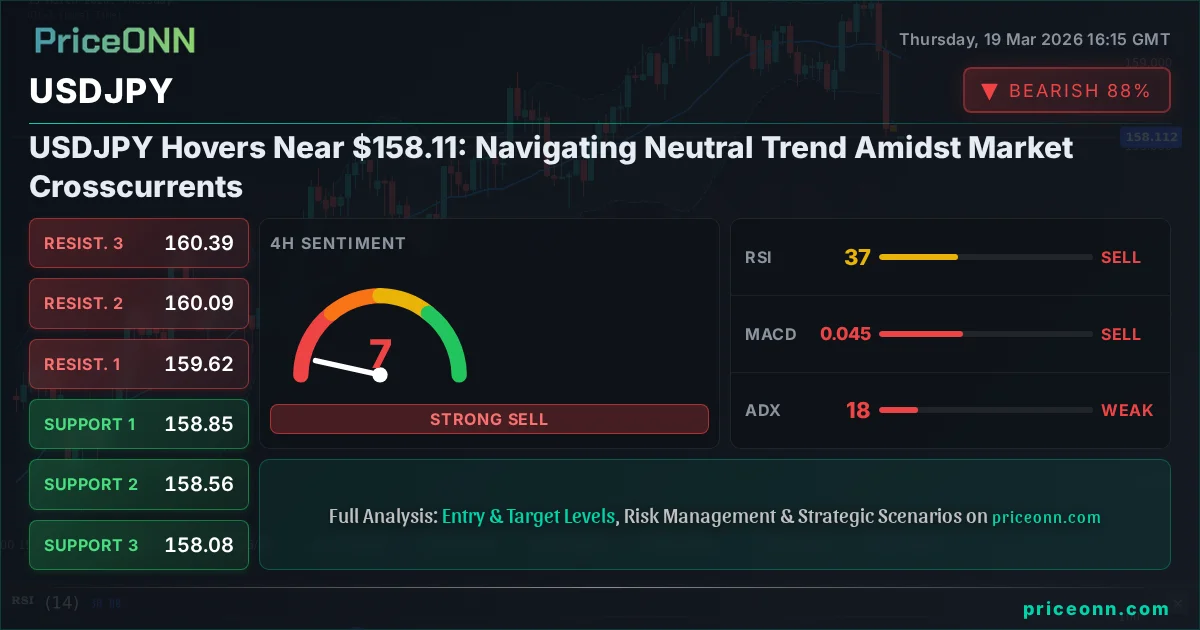
However, the landscape has begun to shift. The Bank of Japan's gradual pivot away from its deeply entrenched ultra-loose policy framework, initiated in 2024, is starting to provide a measure of support for the beleaguered Yen. As the BoJ slowly unwinds its extraordinary measures, the interest rate differential between Japan and other major economies is expected to narrow. This narrowing gap reduces the incentive for capital to flow out of Japan in search of higher yields, thereby offering a floor for the Yen's value.
Market Forces and Yen's Safe Haven Appeal
Beyond monetary policy, the Yen's status as a traditional safe-haven asset plays a critical role in its valuation. During periods of heightened global economic uncertainty or geopolitical stress, investors often seek refuge in assets perceived as stable and reliable. The Japanese Yen, with its deep, liquid markets and historical association with stability, frequently benefits from such risk-averse sentiment. When market turmoil escalates, demand for the Yen typically rises, pushing its value higher against currencies perceived as more vulnerable.
The recent volatility underscores the multi-faceted drivers of the Yen. While the BoJ's policy normalization is a significant factor, broader market sentiment and global risk appetite remain crucial determinants of its short-term trajectory. Traders are closely monitoring any signs of increased global instability, which could further bolster the Yen's safe-haven appeal, even as domestic policy shifts provide a longer-term foundation for potential appreciation.
Reading Between the Lines
Thursday's sharp decline in USD/JPY wasn't just a technical correction; it signals a potential inflection point driven by both policy shifts and risk sentiment. The BoJ's move away from negative interest rates and yield curve control, though gradual, is fundamentally altering the yield differential with the U.S. This policy normalization is a direct challenge to the carry trade strategies that have favored the dollar over the yen for years. As this differential narrows, the dollar's fundamental advantage weakens.
Furthermore, the Yen's role as a safe-haven asset is reasserting itself. In an environment where global growth concerns are simmering and geopolitical tensions remain elevated, capital flows are increasingly sensitive to perceived risks. The fact that USD/JPY fell sharply despite potentially stable U.S. economic data suggests that market participants are actively seeking havens. This dynamic implies that any significant increase in global risk aversion could trigger further Yen strength, potentially pushing USD/JPY lower.
Traders should closely watch the U.S. bond yields, particularly the spread between 10-year Treasuries and Japanese Government Bonds. A continued narrowing of this gap will likely exert downward pressure on USD/JPY. Additionally, monitoring global risk sentiment indicators – such as volatility indices and major equity market performance – will be key. A spike in global fear could see the Yen strengthen irrespective of U.S. interest rate expectations, creating opportunities for tactical short trades on USD/JPY or even long positions on the Yen against other G10 currencies.
Track markets in real-time
Empower your investment decisions with AI-powered analysis, technical indicators and real-time price data.
Join Our Telegram Channel
Get breaking market news, AI analysis and trading signals delivered instantly to your Telegram.
Join Channel