
Is the USD Poised for Further Gains as Geopolitical Fears Mount?

The US Dollar has demonstrated notable strength in early trading sessions, with the USD/CHF pair pushing towards 0.7990 and EUR/USD retreating to approximately 1.1560. This upward trend for the dollar is being underpinned by a combination of a hawkish tone from the US Federal Reserve and escalating geopolitical concerns in the Middle East, prompting a flight to safety that traditionally favors the greenback.
Market Context
The early European and Asian trading sessions saw the US Dollar consolidate its gains against several key counterparts. The USD/CHF pair is inching higher, reflecting a supportive monetary policy stance from the Federal Reserve, while the EUR/USD is under pressure as heightened global uncertainty weighs on riskier assets. The Middle East conflict, now extending into its fourth week without signs of de-escalation, is a significant driver of market sentiment, pushing investors towards perceived safe-haven assets. The Swiss Franc, typically a safe haven, is not seeing the expected surge, while the Euro faces headwinds due to its sensitivity to global economic stability. The Japanese Yen, another traditional safe haven, is also underperforming, failing to gain traction despite the ongoing geopolitical turmoil.
Analysis & Drivers
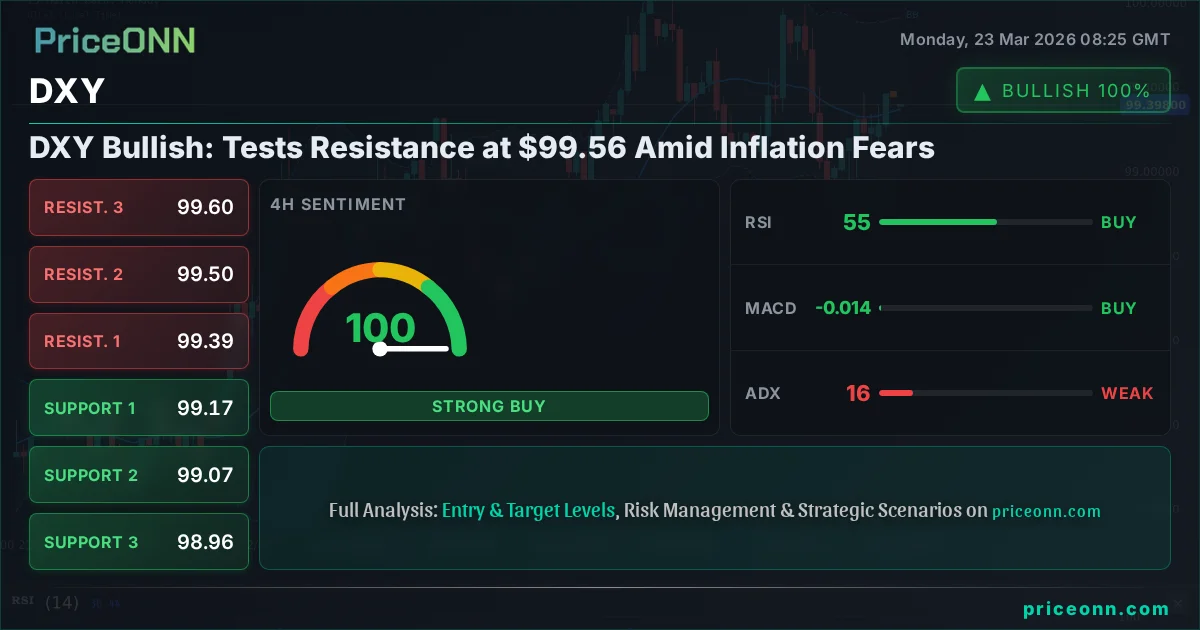
The Federal Reserve's hawkish monetary policy signals are providing a sturdy foundation for the US Dollar. By maintaining a firm outlook on interest rates, the Fed is widening the yield differential compared to other major economies, making dollar-denominated assets more attractive. Simultaneously, the persistent instability in the Middle East is fostering a risk-off environment. Investors are seeking refuge in assets perceived as less volatile, which historically includes the US Dollar. This dual catalyst of favorable monetary policy and geopolitical risk is creating a potent mix for dollar strength. The Swiss Franc, despite its safe-haven status, is not fully capitalizing on the situation, possibly due to its strong correlation with the Euro and broader European economic health. The Euro, in turn, is directly impacted by the heightened geopolitical tensions, which tend to suppress demand for riskier currencies and negatively affect global trade sentiment. The Bank of Japan's recent policy shifts away from ultra-accommodative measures are beginning to offer some underlying support for the Yen, but this is currently overshadowed by the immediate demand for USD amidst global unease.
Trader Implications
Traders should be closely monitoring the evolving situation in the Middle East, as any significant escalation or de-escalation could trigger sharp currency movements. Key levels to watch for USD/CHF include the recent high near 0.7990, with further upside potential if the hawkish Fed sentiment persists and geopolitical risks remain elevated. For EUR/USD, the 1.1560 level is acting as immediate support, and a break below could open the door for further declines towards 1.1500. The Bank of Japan's gradual policy normalization is a medium-term factor for the Yen, but short-term price action will likely be dominated by global risk sentiment. A sustained risk-off mood could see USD/JPY testing higher levels, while any signs of easing geopolitical tensions might offer some respite for the Yen.
Outlook
Looking ahead, the US Dollar is likely to remain in favor as long as geopolitical tensions persist and the Federal Reserve maintains its hawkish stance. Upcoming economic data releases from the US and Europe will be crucial in dictating short-term price action. Traders should anticipate continued volatility, particularly in currency pairs sensitive to global risk sentiment. The interplay between central bank policies and geopolitical events will be the dominant theme in the forex markets for the foreseeable future.
Frequently Asked Questions
What is the current price trend for USD/CHF?
The USD/CHF pair is currently gathering strength and is near the 0.7990 level. This upward momentum is supported by the Federal Reserve's hawkish tone and rising geopolitical tensions.
Why is the Euro weakening against the US Dollar?
The Euro is weakening as heightened geopolitical tensions in the Middle East spur volatility and lead investors to avoid riskier assets. The EUR/USD pair has fallen to around 1.1560 amid this risk-off sentiment.
What should traders watch for in the coming week?
Traders should monitor developments in the Middle East for potential shifts in risk sentiment and closely follow US Federal Reserve communications for further monetary policy clues. Key US economic data releases will also be important for directional cues.
Track markets in real-time
Empower your investment decisions with AI-powered analysis, technical indicators and real-time price data.
Join Our Telegram Channel
Get breaking market news, AI analysis and trading signals delivered instantly to your Telegram.
Join Channel


PriceONN