
Is the USD on the Brink of a Rally as Inflation and Geopolitics Fuel Rate Hike Fears?
The US Dollar is displaying a notable upward trend, driven by a potent combination of stubborn inflationary pressures and heightened geopolitical risks, particularly concerning the Middle East. Market data indicates a significant shift in expectations regarding Federal Reserve monetary policy, moving away from anticipated rate cuts towards the possibility of further tightening, which is directly impacting currency markets.
Market Context
Last week was characterized by considerable volatility across global financial markets. Escalating tensions near the Strait of Hormuz fueled significant price swings in crude oil, with prices repeatedly testing the $100 per barrel level amid concerns over supply disruptions. Simultaneously, U.S. economic indicators revealed persistent inflation; the latest Producer Price Index (PPI) data surpassed expectations, reinforcing the narrative of resilient price pressures. This confluence of factors has led to a sharp recalibration of investor sentiment, pushing U.S. stock indices into their fourth consecutive week of declines.
Analysis & Drivers
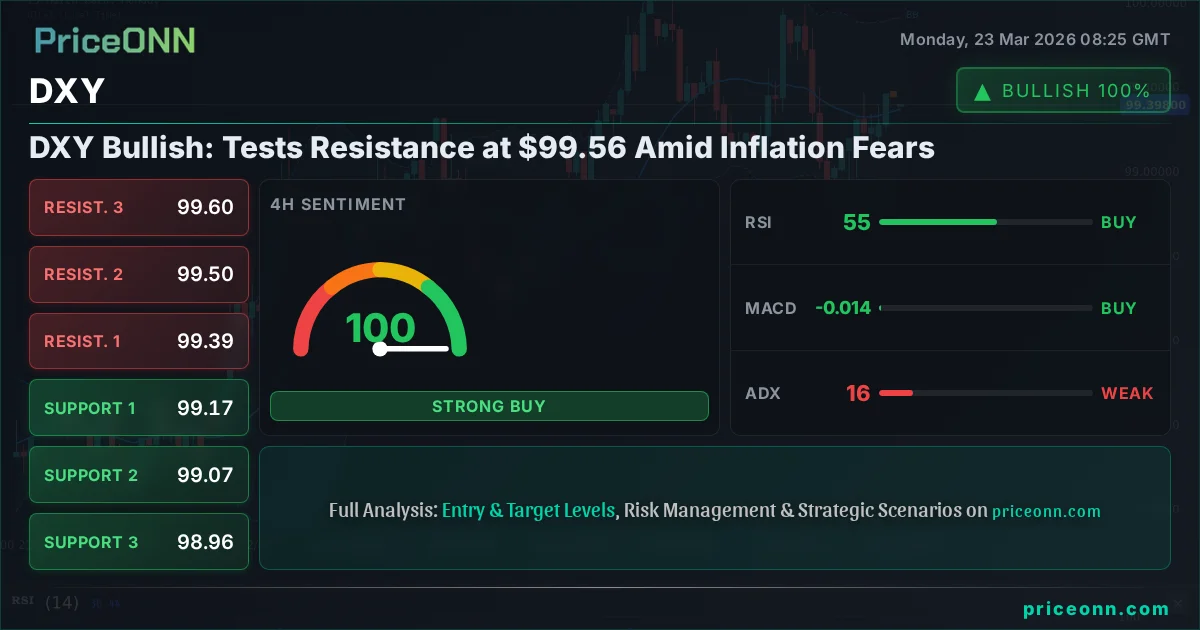
The primary driver behind the strengthening US Dollar and the weakening of risk assets is the changing outlook for U.S. monetary policy. Analysts note that stronger-than-expected PPI data has significantly diminished the likelihood of near-term interest rate cuts by the Federal Reserve. Instead, market participants are now increasingly pricing in the possibility of additional rate hikes, a stark contrast to earlier expectations. This hawkish repricing is creating a supportive environment for the dollar. Geopolitical instability in the Middle East, specifically concerning potential disruptions to oil supply routes, adds another layer of complexity. While this typically supports oil prices, it also contributes to broader market uncertainty, often leading to a flight towards perceived safe-haven assets, which in this scenario, paradoxically includes the US Dollar due to its liquidity and the Fed's policy stance. Major central banks, including the Federal Reserve and the Bank of England, maintained their benchmark interest rates as widely anticipated. However, the Bank of Japan, while holding its accommodative stance, saw its Governor hint at a potential future shift, causing a brief appreciation in the Japanese Yen.
Trader Implications
Traders should closely monitor upcoming U.S. inflation data, particularly the Consumer Price Index (CPI), as it will be crucial in confirming or refuting the market's current hawkish stance. Key support levels for major currency pairs should be watched. For EUR/USD, a sustained move below 1.0700 could signal further downside. Conversely, USD/JPY may find resistance around the 152.00 mark if the Bank of Japan intervenes. The sharp decline in gold prices, falling below $5,000 and shedding approximately 10% of its value, suggests that safe-haven demand is being overshadowed by the prospect of higher U.S. interest rates. This presents a challenging environment for commodities and riskier currencies. Traders should also be aware of potential volatility around any news related to the Strait of Hormuz, which could cause sharp, albeit potentially short-lived, moves in oil and related currencies.
Outlook
The immediate outlook suggests that the US Dollar may continue to find support as long as inflation concerns and geopolitical risks persist, pushing back expectations for Fed rate cuts. The Federal Reserve's upcoming meeting minutes and speeches from Fed officials will be critical in shaping sentiment. If the data continues to point towards sticky inflation, the dollar's upward trajectory could be extended, potentially leading to a test of higher resistance levels against major currencies. Conversely, any de-escalation in geopolitical tensions or a surprise dip in inflation could trigger a sharp reversal.
Frequently Asked Questions
What is causing the recent strength in the US Dollar?
The US Dollar's strength is primarily driven by a shift in market expectations away from Federal Reserve rate cuts due to persistent inflation, evidenced by a stronger-than-expected PPI. Geopolitical tensions in the Middle East also contribute to a general market uncertainty that favors the dollar.
How are rising inflation and geopolitical risks impacting gold prices?
Rising inflation and the prospect of higher U.S. interest rates are putting significant pressure on gold. Market data shows gold has fallen below $5,000, losing approximately 10% of its value, as the traditional safe-haven appeal is diminished by the prospect of higher yields on dollar-denominated assets.
What key levels should traders watch for EUR/USD and USD/JPY?
Traders should monitor EUR/USD for a potential break below the 1.0700 support level, indicating further dollar strength. For USD/JPY, resistance is anticipated around 152.00, a level that could prompt intervention or a shift in Japanese monetary policy discussions.
Track markets in real-time
Empower your investment decisions with AI-powered analysis, technical indicators and real-time price data.
Join Our Telegram Channel
Get breaking market news, AI analysis and trading signals delivered instantly to your Telegram.
Join Channel

PriceONN