
Is the US Dollar Set to Rally as Middle East Tensions Escalate?

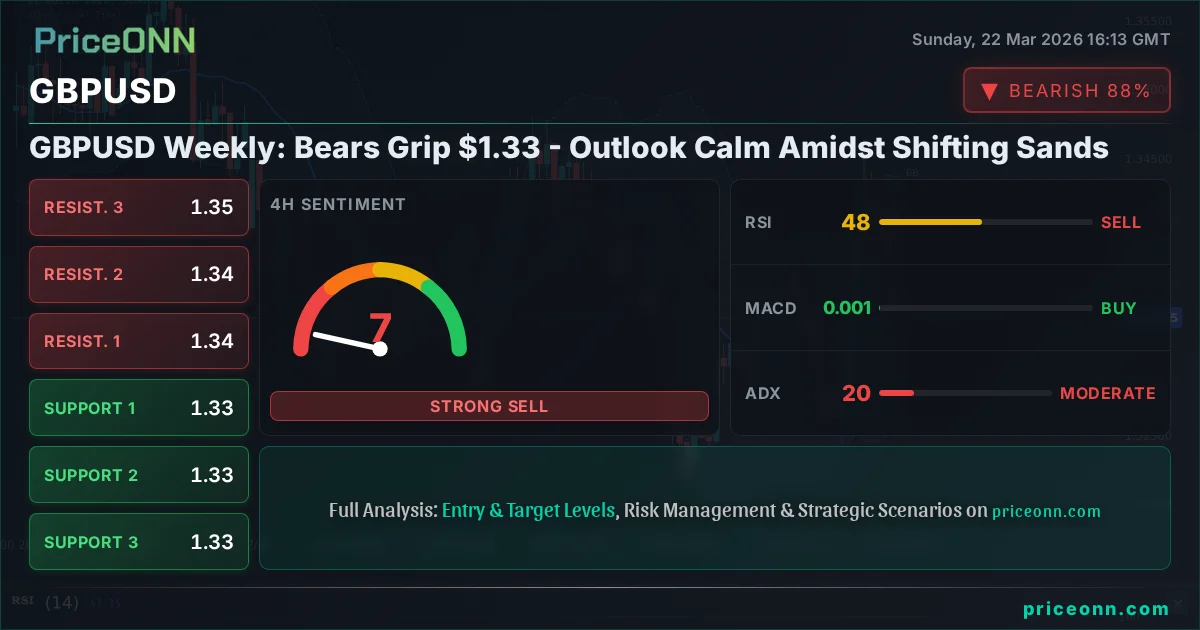
The US Dollar is exhibiting strength across major currency pairs as escalating geopolitical tensions in the Middle East compel investors to seek refuge in safe-haven assets. Early Monday trading saw significant pressure on the Euro (EUR) and Pound Sterling (GBP), with EUR/USD falling to near 1.1560 and GBP/USD testing the 1.3320 level.
Market Context
The unfolding crisis in the Middle East has injected a potent dose of risk aversion into global financial markets. This sentiment is directly benefiting the US Dollar, which is traditionally viewed as a safe haven during periods of heightened global instability. The NZD/USD pair also succumbed to this trend, weakening below 0.5850 to hover near 0.5830, as the New Zealand Dollar, a risk-sensitive currency, faced selling pressure.
The impact of geopolitical events on currency markets is often swift and pronounced. Investors re-evaluate their portfolios, shifting capital away from assets perceived as riskier and towards those offering greater perceived security. This dynamic typically leads to a stronger USD as global capital flows into US Treasury bonds and other dollar-denominated assets. For currencies like the Euro and Pound Sterling, which are sensitive to global economic sentiment and trade flows, this risk-off environment creates a significant headwind.
Analysis & Drivers
The primary driver behind the current market moves is the intensification of geopolitical conflicts in the Middle East. Reports of potential ground operations and increased instability are fueling demand for safe-haven currencies, with the US Dollar at the forefront. While specific economic data releases from the US have not been the primary catalyst, the global risk sentiment is overshadowing domestic factors for now.
For the Euro, the situation is compounded by the collective economic vulnerabilities of the Eurozone. The European Central Bank (ECB) maintains a mandate for price stability, utilizing interest rates as its primary tool. While the ECB Governing Council meets regularly to set monetary policy, the immediate focus is on the global instability that can dampen trade and investment across the bloc. The EUR/USD pair, the world's most actively traded currency corridor, is particularly susceptible to shifts in global risk appetite.
Similarly, the Pound Sterling, despite its historical resilience and status as the fourth most traded currency, is feeling the pressure. The Bank of England (BoE) also targets price stability, adjusting interest rates to manage inflation. However, in the current climate, the demand for safe-haven assets is eclipsing the usual drivers of Sterling strength, such as robust economic data or favorable interest rate differentials. The GBP/USD, or 'Cable', is experiencing selling pressure as a result.
Trader Implications
Traders should be closely monitoring the geopolitical developments in the Middle East, as these are likely to remain the dominant factor influencing currency markets in the short term. Key levels to watch for EUR/USD include the recent low around 1.1560, with a break below potentially signaling further downside towards 1.1500. For GBP/USD, the 1.3320 support level is critical; a sustained breach could open the door for a move towards 1.3250.
The NZD/USD pair has already broken below 0.5850, and further weakness towards 0.5800 is possible if risk aversion persists. A key risk for USD strength is any de-escalation in the Middle East or a significant shift in US economic data that might prompt a reassessment of the Federal Reserve's monetary policy path.
Conversely, a sudden positive turn in geopolitical news could lead to a rapid unwinding of safe-haven trades, causing the US Dollar to depreciate and riskier currencies to rebound. Traders should maintain tight risk management, utilizing stop-loss orders and being prepared for increased volatility.
Outlook
The immediate outlook for major currency pairs, particularly those involving the Euro and Pound Sterling, remains cautious as long as geopolitical tensions in the Middle East persist. The US Dollar is expected to retain its strength, supported by its safe-haven appeal. However, any signs of de-escalation or significant shifts in central bank policy expectations could quickly alter market sentiment. Traders will be looking for further clarity on the geopolitical situation and any accompanying economic data that might signal a change in the risk environment.
Frequently Asked Questions
What is the immediate impact of Middle East tensions on EUR/USD?
Escalating geopolitical tensions in the Middle East are driving a flight to safety, causing the EUR/USD to decline. The pair was trading near 1.1560 in early Asian trading, pressured by increased demand for the US Dollar as a safe haven.
What are the key support levels for GBP/USD amidst this risk-off sentiment?
The GBP/USD pair is facing selling pressure and is testing the 1.3320 level. A decisive break below this support could lead to further declines, with traders watching for a potential move towards 1.3250.
How might a de-escalation in the Middle East affect the US Dollar?
A significant de-escalation of Middle East tensions could trigger a reversal of safe-haven flows, leading to a depreciation of the US Dollar. This would likely benefit currencies like the Euro and Pound Sterling, allowing them to recover lost ground.
Track markets in real-time
Empower your investment decisions with AI-powered analysis, technical indicators and real-time price data.
Join Our Telegram Channel
Get breaking market news, AI analysis and trading signals delivered instantly to your Telegram.
Join Channel
PriceONN