
Why Is Brent Crude Surging Past $100 Amid Middle East Tensions?


Brent crude oil prices have climbed decisively above the $100 per barrel threshold, with West Texas Intermediate (WTI) trading in the low $90s, as escalating geopolitical conflicts in the Middle East disrupt global energy flows. The ongoing military actions and retaliatory measures have moved from a risk premium into tangible supply constraints, particularly impacting transit through the Strait of Hormuz.
Market Context
The Middle East has become the epicenter of a deepening energy crisis. Since late February, oil-producing nations in the region have collectively slashed production by an estimated 7 to 12 million barrels per day. This significant output reduction has virtually paralyzed exports, creating a substantial global supply deficit. Adding to the market pressure, reports indicate that Iran is now charging a premium of $2 million per vessel for passage through the Strait of Hormuz, a critical chokepoint for global energy trade. These events have drastically altered the supply landscape, with major Asian economies keenly watching the impact on their refinery operations and crude delivery schedules.
Analysis & Drivers
At the heart of the current oil price surge are the heightened geopolitical maneuvers involving Iran and its regional adversaries, including Saudi Arabia and the United States. Market data indicates that Saudi Arabia, while publicly advocating for regional stability, has privately urged the White House to maintain its campaign against Iran. This strategy, according to sources, is partly driven by a desire to reshape the regional balance of power and a concern that a prolonged conflict could escalate attacks on Saudi oil infrastructure. While Saudi officials have denied lobbying for a harder stance, the narrative suggests a complex dynamic where higher oil prices could support Saudi Arabia's ambitious Vision 2030 spending plans, even as the disruptions directly impact its export capabilities.
Beyond the immediate conflict, a surprising development is the renewed interest in Libya as an energy investment destination. Despite persistent internal factional challenges, evidenced by incidents like the recent fire at the Sharara oil field, international oil companies are increasing their commitment. This is partly a response to the global imperative to diversify energy supplies, amplified since early 2022. Libya aims to boost crude oil output to 2 million barrels per day by 2028 and plans to tender 22 offshore and onshore blocks to attract foreign capital. Italian energy giant Eni's recent substantial offshore gas discoveries, estimated at over 1 trillion cubic feet, underscore this growing confidence and signal long-term investment in deepwater exploration.
Saudi Arabia's reliance on its East-West pipeline, connecting its fields to the Red Sea port of Yanbu, offers a partial mitigation for its export challenges. This 1,200-kilometer pipeline has a maximum capacity of 7 million barrels per day. However, its current utilization is reportedly insufficient to compensate for the full impact of disrupted Strait of Hormuz flows, and even Yanbu-based refining operations have reportedly faced targeted incidents, highlighting the pervasive risk across the region.
Trader Implications
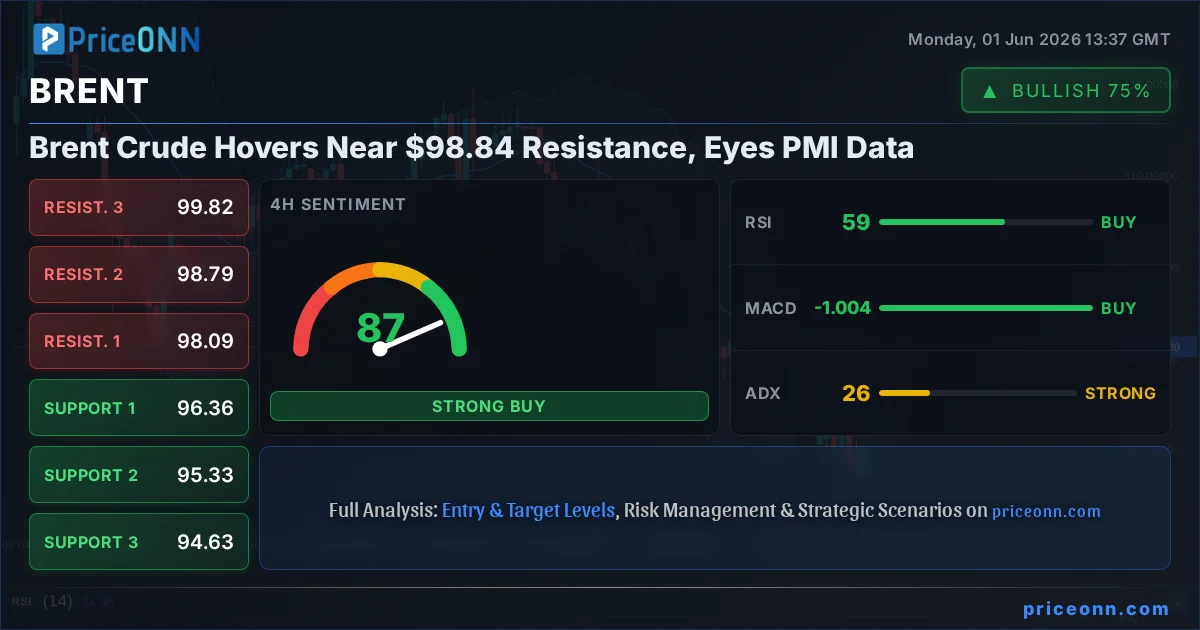
Traders should closely monitor the geopolitical developments in the Middle East, as they remain the primary driver for oil price volatility. Key levels to watch for Brent crude are the immediate resistance at $105 and the psychological $100 mark as support. Any escalation in hostilities could see prices push higher, potentially testing levels not seen in years. Conversely, signs of de-escalation or a successful diplomatic resolution could lead to a sharp price correction. The potential for oil demand destruction at these elevated price levels is a significant risk factor that could cap upside potential. Traders should also watch for inventory reports and statements from OPEC+ nations for further directional cues. Given the supply constraints, a cautious approach with defined risk management strategies is advised.
Outlook
The outlook for oil prices remains heavily tied to the geopolitical situation in the Middle East. While Libya's efforts to increase production offer a glimmer of hope for diversified supply, the immediate market sentiment is dominated by the supply disruptions emanating from the Iran-related conflicts. If tensions persist or escalate, Brent crude could see further upward pressure, potentially exceeding $105 in the near term. However, sustained prices above $100 increase the likelihood of demand destruction, which could eventually lead to a price reversal. The coming weeks will be critical in determining whether diplomatic efforts can de-escalate the situation or if the region plunges deeper into conflict, further tightening global oil supplies.
Frequently Asked Questions
What is driving the current surge in Brent crude oil prices?
Brent crude prices have surpassed $100 per barrel due to escalating geopolitical tensions in the Middle East, which are causing significant disruptions to oil exports and transit through critical shipping lanes like the Strait of Hormuz. Production cuts averaging between 7 and 12 million barrels per day from the region have exacerbated supply concerns.
How is Saudi Arabia managing its oil exports amidst these disruptions?
Saudi Arabia is increasingly relying on its East-West pipeline to transport crude to its Red Sea port of Yanbu, with a maximum capacity of 7 million barrels per day. However, this route may not fully offset the impact of reduced flows through the Strait of Hormuz, and has faced its own reported security incidents.
What is the short-term price forecast for Brent crude?
The short-term outlook for Brent crude remains bullish, with immediate resistance seen around $105. However, sustained prices above $100 raise concerns about demand destruction, which could limit further significant gains and potentially lead to a price reversal if geopolitical tensions ease.
Track markets in real-time
Empower your investment decisions with AI-powered analysis, technical indicators and real-time price data.
Join Our Telegram Channel
Get breaking market news, AI analysis and trading signals delivered instantly to your Telegram.
Join Channel PriceONN News
Crude oil prices experienced a significant drop, with WTI futures falling over 1.8% to $87.25, as optimism grew for a U.S.-Iran deal potentially reopening the Strait of Hormuz.
PriceONN News
(RTTNews) - Crude oil prices have tumbled on Friday as expectations of the U.S. and Iran signing a Memorandum of Understanding run high. The MoU would allow for immediate reopening of the Strait of Hormuz and pave the way for the resumption of oil and energy trade.
PriceONN News
Crude oil futures experienced a dramatic intraday reversal on Thursday, soaring overnight on geopolitical fears only to pull back significantly as reports of a potential diplomatic understanding between the U.S. and Iran emerged.
PriceONN News
Crude oil futures experienced a dramatic intraday reversal, soaring to $92.52 before pulling back significantly on Thursday. The volatile session was driven by shifting geopolitical narratives and U.S. inventory data.
PriceONN News
Brent crude prices surged towards the mid-$90s amid fears of supply disruptions from Middle East tensions, only to pare gains later as whispers of a potential US-Iran diplomatic understanding emerged.
PriceONN News
Crude oil futures experienced a dramatic reversal, soaring overnight to $92.52 before plummeting nearly 6% to $89 a barrel. This volatility was driven by escalating US-Iran tensions followed by reports of a potential preliminary diplomatic understanding.
PriceONN News
(RTTNews) - Crude oil futures skyrocketed overnight but have shown a significant pullback over the course of the trading day on Thursday.
PriceONN News
Crude oil benchmarks experienced a sharp decline of over 5% this week, driven by renewed optimism surrounding U.S.-Iran peace talks and a potential easing of Middle East tensions. Both Brent and WTI futures saw significant drops as market sentiment shifted towards de-escalation.
PriceONN News
Global oil prices are treading water after a significant 5% slump, as market sentiment grapples with cautious optimism over Middle East de-escalation efforts versus lingering geopolitical uncertainties. Brent crude hovers near $104.72 and WTI near $98.07.
PriceONN News
WTI Crude Oil futures experienced a sharp decline of over 5.6%, falling to $98.26 per barrel as diplomatic efforts between the U.S. and Iran gained significant momentum, easing supply disruption fears.
PriceONN News
(RTTNews) - Oil prices were little changed on Thursday, after having fallen over 5 percent in the previous session amid optimism over a possible easing of Middle East tensions. Brent crude futures for July delivery were down 0.3 percent at $104.72 a barrel while WTI crude futures
PriceONN News
Crude oil prices experienced a sharp decline, with WTI futures for July delivery falling 5.66% to $98.26. This drop is largely attributed to renewed diplomatic efforts aimed at de-escalating the U.S.-Iran conflict and easing tensions around the Strait of Hormuz.