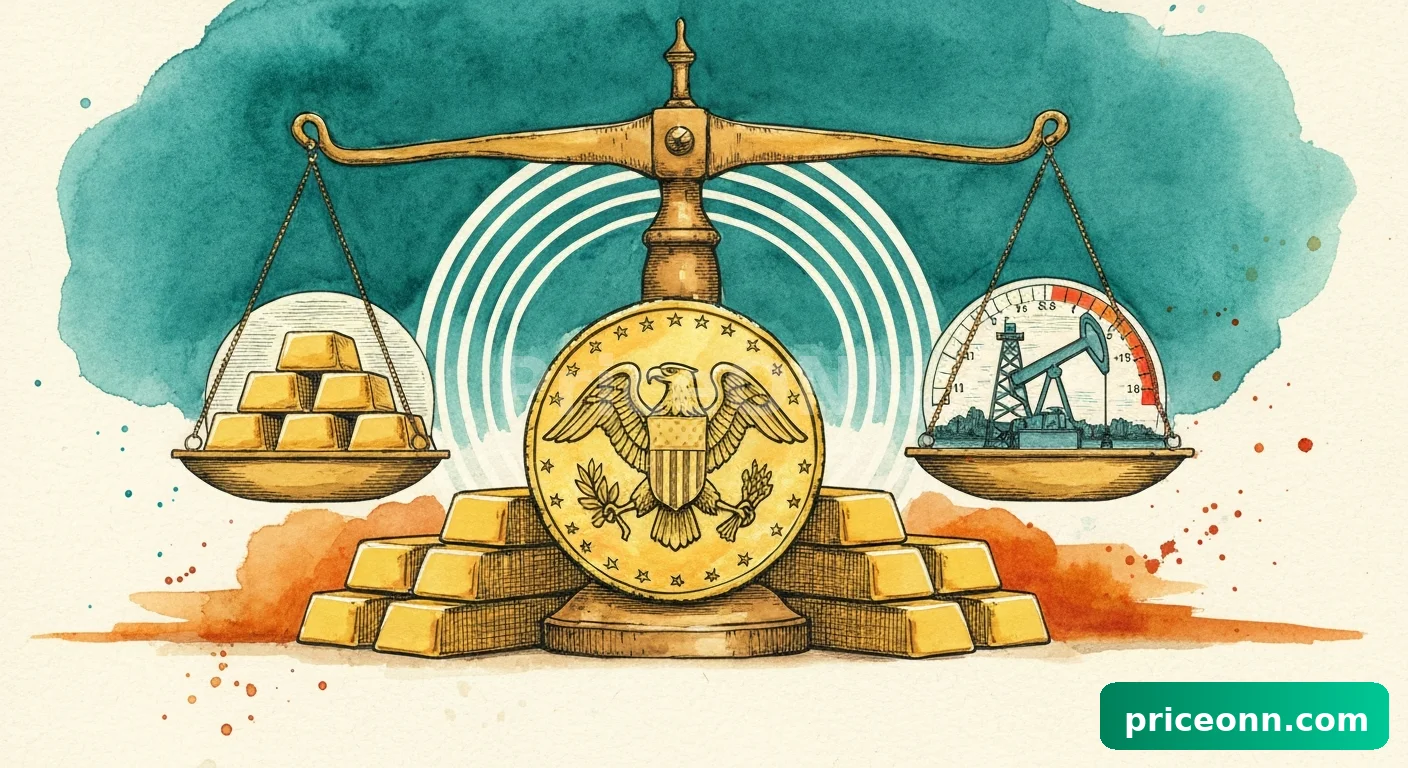
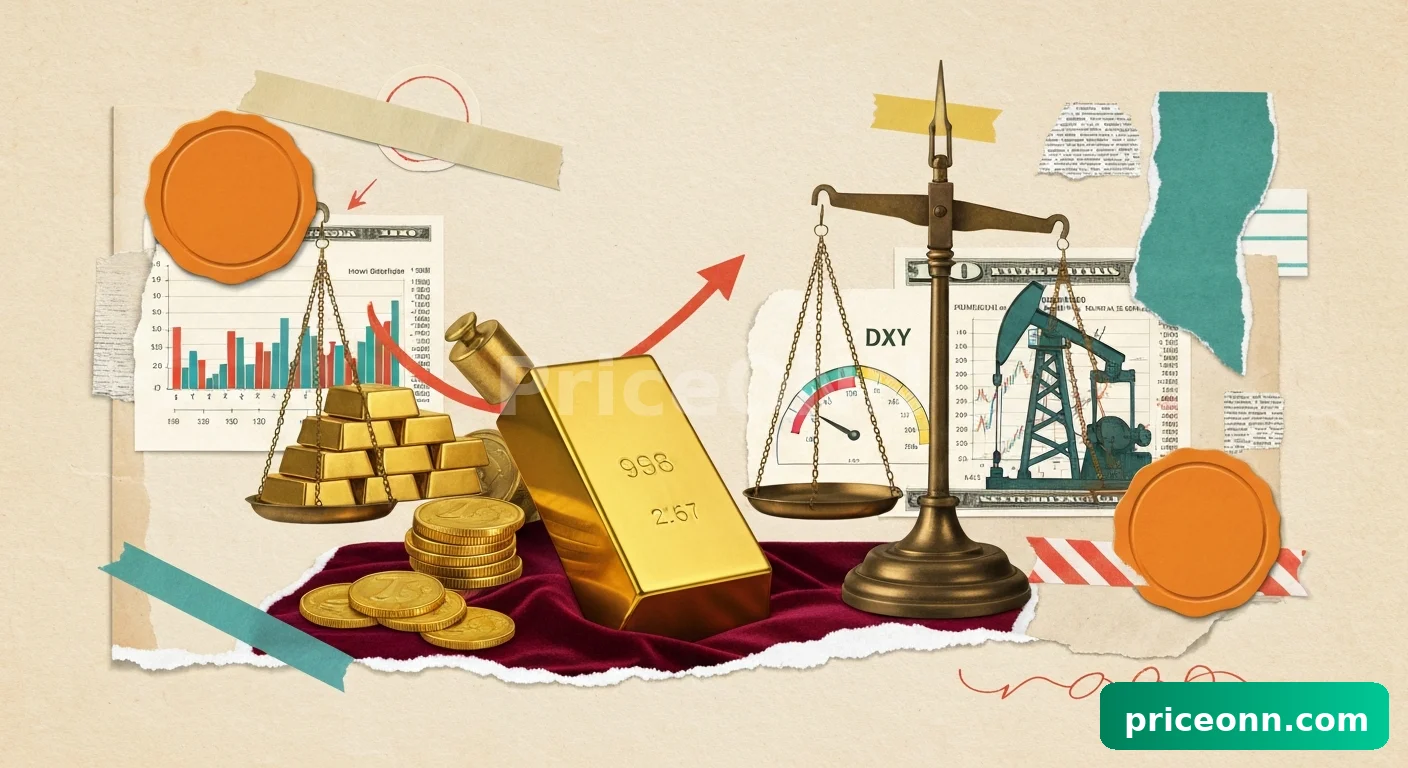
Why Did Gold Plunge Below $5,000 Amid Escalating Inflation Fears?
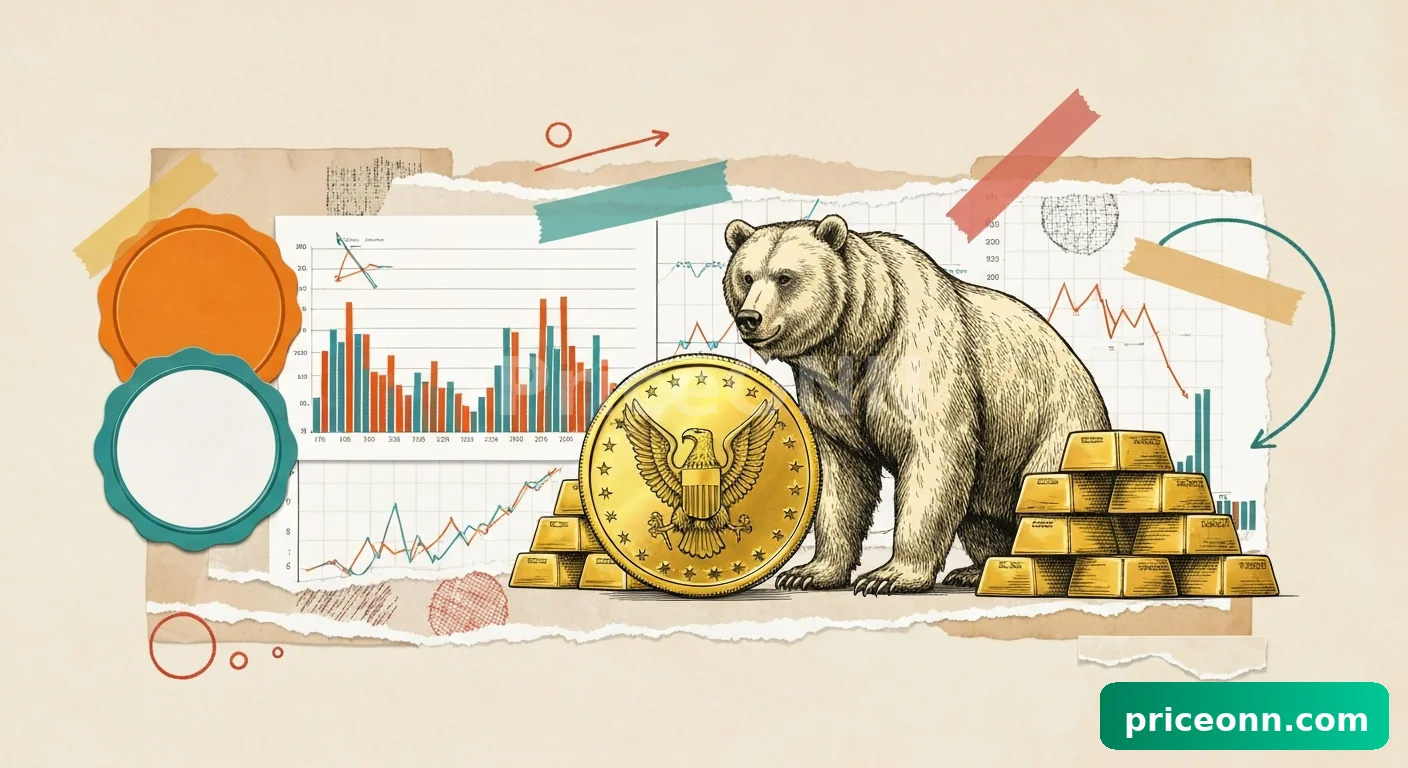
Gold (XAU/USD) has seen a significant pullback, trading around $4,980 early Monday. This downturn comes as market sentiment shifts, with fears of oil-driven inflation taking precedence over the traditional safe-haven appeal amid Middle Eastern geopolitical unrest.
Market Context
The precious metal's retreat below a critical psychological level of $5,000 marks a notable shift in recent market dynamics. For years, gold has been a primary beneficiary of geopolitical uncertainty and a hedge against inflation. However, the current economic narrative appears to be dominated by the prospect of sustained, elevated energy costs impacting broader price levels. This has led to a reassessment of asset allocation, with investors perhaps favoring assets with more direct inflation-hedging capabilities or those poised to benefit from an aggressive monetary policy response.
Analysis & Drivers
Several factors appear to be converging to pressure the yellow metal. Firstly, the persistent concerns over escalating inflation, particularly those linked to energy prices, are a significant driver. Rising crude oil benchmarks, often influenced by supply disruptions and geopolitical events, can directly translate into higher consumer and industrial costs, sparking fears of a wage-price spiral. Market data shows that central banks, significant gold holders, added a record 1,136 tonnes in 2022, seeking to diversify reserves and bolster currency strength. However, if inflation becomes entrenched, it could prompt aggressive interest rate hikes, which typically weigh on non-yielding assets like gold.
Secondly, while geopolitical tensions in the Middle East, specifically the US-Israel conflict with Iran, usually bolster gold's safe-haven status, the current market focus seems to be on the economic fallout rather than the immediate geopolitical risk premium. The inverse correlation between gold and the US Dollar also plays a role. If a strong dollar emerges as a response to perceived economic stability or aggressive monetary policy, it can cap gold's upside.
Trader Implications
For traders, the break below $5,000 is a significant technical development. Key support levels to watch will now be tested, with the next major floor potentially around the $4,800 mark. Conversely, any resurgence of safe-haven demand, perhaps due to a de-escalation of geopolitical fears or a shift in inflation expectations, could see gold attempt to reclaim the $5,000 level. Traders should closely monitor oil price movements and upcoming inflation data releases, as these are likely to dictate short-term price action. The US Dollar Index (DXY) will also be a crucial indicator to track.
Outlook
The immediate outlook for gold remains cautious. The persistent inflation narrative, driven by energy markets, presents a formidable headwind. Unless geopolitical risks significantly escalate or inflation expectations begin to recede, gold may struggle to regain its upward momentum. Traders should remain vigilant for any signs of a shift in central bank rhetoric towards a less hawkish stance, which could offer some reprieve. The market will be keenly watching developments in the Middle East and their subsequent impact on oil prices and broader inflation trends.
Frequently Asked Questions
What is the current price of Gold (XAU/USD)?
As of early Monday trading, Gold (XAU/USD) has fallen below the $5,000 level, with prices observed around $4,980.
What are the main reasons for gold's recent decline?
The primary drivers for gold's drop are escalating fears of oil-driven inflation and a potential shift in market focus away from geopolitical risks towards economic stability. Higher interest rate expectations also weigh on the non-yielding metal.
What key levels should traders watch for gold in the near term?
Traders should monitor the $5,000 level as resistance. A break below could lead to a test of the $4,800 support level. Oil prices and inflation data are critical factors to watch.
Track markets in real-time
Empower your investment decisions with AI-powered analysis, technical indicators and real-time price data.
Join Our Telegram Channel
Get breaking market news, AI analysis and trading signals delivered instantly to your Telegram.
Join Channel