
Why Did Gold Tumble Below $4,650 Amidst Soaring Energy Costs?

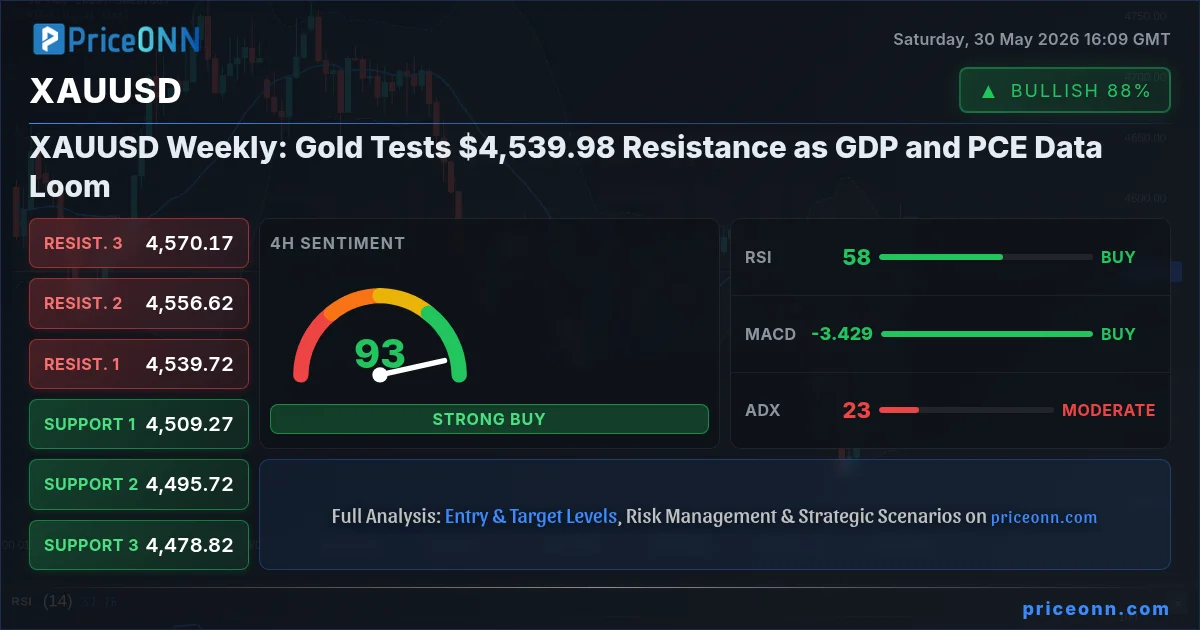
Gold (XAU/USD) has experienced a significant price drop, falling below the crucial $4,650 level and currently trading around $4,640 in early Asian trading. This sharp decline extends recent downward pressure, fueled by escalating inflation concerns and a tightening liquidity environment in global financial markets.
Market Context: Energy Shockwaves and Inflation Fears
The primary catalyst for gold's recent slump appears to be the dramatic surge in crude oil and broader energy prices. These upward price movements are directly linked to escalating geopolitical tensions, particularly the ongoing conflict between the United States and Iran. As energy costs rise, fears of a sustained inflationary spiral are reignited, prompting a shift in investor sentiment. In such an environment, investors often prioritize immediate liquidity and cash preservation over longer-term asset holdings, leading to sell-offs in assets like gold, which typically acts as a safe-haven.
Historically, gold has been valued not only for its role in jewelry but as a premier safe-haven asset, offering stability during periods of high market volatility. It is also widely considered a hedge against inflation and currency devaluation. This intrinsic stability has led to substantial accumulation by central banks in recent years. For instance, in 2022, official institutions added approximately 1,136 tonnes of gold, a record increase valued at around $70 billion, according to World Gold Council data. Emerging economies, including China, India, and Turkey, were at the forefront of this expansion in gold holdings, signaling a global trend towards de-dollarization and a strategic shift towards tangible assets amidst economic uncertainty.
Analysis & Drivers: Geopolitics and Monetary Policy Tightening
The current market dynamic for gold is being shaped by a confluence of factors. The geopolitical instability in the Middle East, leading to the spike in energy prices, is a significant driver. Higher energy costs directly translate to increased input costs across various sectors, stoking inflation expectations. This, in turn, can lead central banks to maintain or even accelerate monetary tightening policies, such as interest rate hikes, to combat rising prices. Such policies tend to increase the opportunity cost of holding non-yielding assets like gold, making them less attractive to investors.
Furthermore, a strong US Dollar and rising US Treasury yields typically exert downward pressure on gold prices due to their inverse correlation. While the immediate focus is on energy-driven inflation, any signs of persistent dollar strength or hawkish commentary from the Federal Reserve could exacerbate the weakness in the precious metal. Market data shows that increased liquidity in the financial system often supports gold, while a liquidity squeeze, as potentially occurring now, can force investors to liquidate assets across the board to meet cash demands.
Trader Implications: Watching Key Levels and Risk Factors
For traders, the breach of the $4,650 support level is a critical development. The immediate downside target could be the $4,600 psychological mark. Key resistance levels to watch on any potential rebound would be the recently broken $4,650 level, and then higher towards $4,700. Traders should closely monitor energy price movements and any official statements from central banks regarding inflation and monetary policy.
The escalating geopolitical situation in the Middle East remains a significant risk factor. Any further escalation could lead to even higher energy prices, potentially intensifying inflation fears and putting additional downward pressure on gold. Conversely, a de-escalation or a swift resolution could see energy prices recede, potentially offering some relief to gold. The market sentiment appears to be leaning towards risk aversion, which, coupled with inflation concerns, is currently detrimental to gold's safe-haven appeal.
Outlook: Continued Volatility Expected
The outlook for gold remains cautious in the short term. The interplay between geopolitical risks driving energy prices higher and the potential for continued monetary policy tightening by central banks creates a challenging environment. While central bank accumulation has provided a long-term structural support for gold, current market pressures suggest that volatility is likely to persist. Traders should remain vigilant for shifts in inflation data, geopolitical developments, and central bank communications that could influence price direction. A sustained move below $4,600 could signal further downside potential.
Frequently Asked Questions
What is causing the current drop in gold prices?
Gold prices have tumbled below $4,650 primarily due to surging energy costs, which are fueling inflation fears. This, combined with a general liquidity squeeze in financial markets, is causing investors to move away from non-yielding assets like gold.
What are the key price levels traders should watch for gold?
Traders should monitor the $4,650 level as a key resistance following its breach. Immediate support is seen near $4,640, with a further psychological level at $4,600. A sustained break below $4,600 could indicate further declines.
What is the short-term outlook for gold amidst geopolitical tensions?
The short-term outlook for gold remains cautious. Geopolitical tensions driving up energy prices and the potential for further central bank rate hikes create headwinds. However, any de-escalation in the Middle East could ease some pressure, while continued escalation could further impact gold's trajectory.
Track markets in real-time
Empower your investment decisions with AI-powered analysis, technical indicators and real-time price data.
Join Our Telegram Channel
Get breaking market news, AI analysis and trading signals delivered instantly to your Telegram.
Join Channel PriceONN News
The Iran war suddenly turned what had started as a year of oversupply in global oil and LNG markets into the worst oil and gas supply disruption in history. Three months after the U.S.-Israeli strikes on Iran began on February 28, the world has already lost 1 billion barrels of crude oil supply, oil and gas prices have found a new, much higher floor, and whipsaw with violent volatility nearly every day, trade routes have shifted, and tanker rates have spiked. Actual supply shortages are...
PriceONN News
The Iran war has handed the United States a rare opportunity: a new dawn of energy dominance in an increasingly fractured world. With coordinated US-Israeli strikes disrupting the Strait of Hormuz from late February, roughly 20% of global LNG supply has been stripped from the market since early March. Prices have surged across Asia and Europe. And into that vacuum, American gas has flowed. The numbers speak for themselves. US LNG exports to Asia jumped sharply in April, with nearly a quarter of...
PriceONN News
Cuba has been experiencing a worsening energy crisis for several years, which previously led it to rely heavily on Venezuela for its fuel. Following the United States’ intervention in Venezuela in February, the energy crisis has grown even worse, as Cubans face regular blackouts and the economy suffers. Cuba requires about 100,000 barrels a day to power its grid and meet the regular transportation demands. It fulfils just 40 percent of this demand domestically. In January, the Trump...
PriceONN News
Crude oil prices experienced a significant drop, with WTI futures falling over 1.8% to $87.25, as optimism grew for a U.S.-Iran deal potentially reopening the Strait of Hormuz.
PriceONN News
Crude oil prices experienced a significant downturn as market sentiment shifted towards optimism about a potential US-Iran Memorandum of Understanding that could reopen the Strait of Hormuz. WTI futures fell nearly 2% on the news.
PriceONN News
(RTTNews) - Crude oil prices have tumbled on Friday as expectations of the U.S. and Iran signing a Memorandum of Understanding run high. The MoU would allow for immediate reopening of the Strait of Hormuz and pave the way for the resumption of oil and energy trade.
PriceONN News
Crude oil futures experienced a dramatic intraday reversal on Thursday, soaring overnight on geopolitical fears only to pull back significantly as reports of a potential diplomatic understanding between the U.S. and Iran emerged.
PriceONN News
Crude oil futures experienced a dramatic intraday reversal, soaring to $92.52 before pulling back significantly on Thursday. The volatile session was driven by shifting geopolitical narratives and U.S. inventory data.
PriceONN News
Brent crude prices surged towards the mid-$90s amid fears of supply disruptions from Middle East tensions, only to pare gains later as whispers of a potential US-Iran diplomatic understanding emerged.
PriceONN News
Crude oil futures experienced a dramatic reversal, soaring overnight to $92.52 before plummeting nearly 6% to $89 a barrel. This volatility was driven by escalating US-Iran tensions followed by reports of a potential preliminary diplomatic understanding.
PriceONN News
(RTTNews) - Crude oil futures skyrocketed overnight but have shown a significant pullback over the course of the trading day on Thursday.
PriceONN News
The market’s faith in an imminent US-Iran peace breakthrough has clearly weakened today - but it has not disappeared yet. Oil prices jumped again in after fresh military escalation around the Strait of Hormuz reignited fears of prolonged supply disruptions across the Gulf. Brent crude pushed back toward the mid-$90s after new U.S. strikes inside […] The post Brent Oil Holding Below $100 Suggests Markets Still See Room for a US-Iran Deal appeared first on ActionForex.