
Why Did Silver Tumble 5% This Week As Fed Hints at Higher Rates?
Silver prices experienced a significant downturn to start the trading week, with the white metal shedding 4.82% of its value by Monday. Trading at $64.58 per troy ounce, silver saw a substantial retreat from its Friday closing price of $67.85. This marks the fifth consecutive session of losses for XAG/USD, highlighting a shift in market sentiment away from the precious metal.
Market Context: Silver's Steep Slide
The sharp decline in silver prices underscores the sensitivity of non-yielding assets to monetary policy expectations. While silver often moves in tandem with gold, its industrial applications and more volatile price swings can create distinct trading dynamics. The metal's dual nature as both a store of value and an industrial commodity means its price is influenced by a broader set of factors than gold alone. Investors typically gain exposure to silver through physical holdings like coins and bars, or via financial instruments such as Exchange Traded Funds (ETFs) that track its market performance. Historically, silver has been sought after as a hedge against inflation and a safe-haven asset during times of economic uncertainty. However, its performance is particularly susceptible to changes in interest rates and the strength of the US Dollar, given its dollar-denominated pricing.
Analysis & Drivers: Fed's Hawkish Stance Takes Center Stage
The primary catalyst behind silver's recent slump appears to be the persistent hawkish rhetoric from the US Federal Reserve. Analysts note that indications of a prolonged period of higher interest rates, or even the possibility of further rate hikes, directly pressure assets like silver that do not offer a yield. When interest rates rise, the opportunity cost of holding non-interest-bearing assets increases, making them less attractive to investors compared to instruments like bonds or even cash. Furthermore, a strong US Dollar, often a byproduct of a hawkish Fed stance, also weighs on silver prices. As silver is priced in dollars, a stronger dollar makes the commodity more expensive for holders of other currencies, thereby dampening demand.
Beyond monetary policy, the supply side of the silver market also plays a role. Unlike gold, a significant portion of silver supply comes from mining operations, often as a byproduct of base metal extraction. Fluctuations in mining output and recycling rates can therefore impact availability. Geopolitical events can also provide short-term support, as investors may seek refuge in precious metals, but these effects appear to be overshadowed by the macroeconomic headwinds currently facing the market.
Trader Implications: Watching Key Levels and Fed Signals
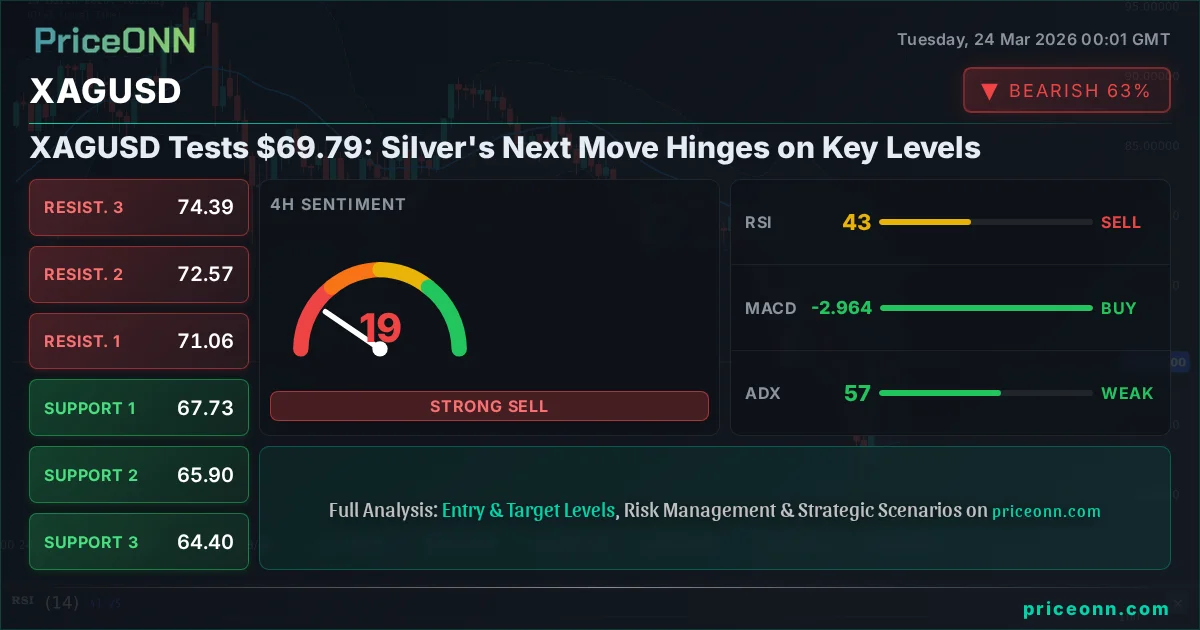
For traders, the current environment calls for caution and a close monitoring of key technical and fundamental indicators. The immediate support level for silver appears to be around the $64.00 mark, with a break below this potentially leading to further declines towards the $62.50 level. Conversely, any signs of a dovish shift from the Federal Reserve or a weakening US Dollar could provide a catalyst for a rebound, with initial resistance likely found near the $66.00 and then $68.00 levels.
Traders should pay close attention to upcoming economic data releases, particularly inflation figures and employment reports from the US, as these will heavily influence the Fed's future policy decisions. The market's interpretation of Fed speeches and meeting minutes will be crucial. A sustained move above $68.00 would signal a potential reversal, but the current trend suggests that downside risks remain elevated as long as the Fed maintains its hawkish outlook.
Outlook: Uncertainty Lingers for Silver
The outlook for silver remains subdued in the short term, contingent on the Federal Reserve's policy trajectory and broader economic conditions. While the metal's intrinsic value and industrial demand provide underlying support, the prevailing macroeconomic environment, characterized by higher interest rates and a strong dollar, presents significant headwinds. Investors will be looking for a clear signal from central bankers that inflation is under control and that interest rates can soon begin to ease before a sustained rally in silver can be expected. Until then, volatility is likely to persist, with potential for further price discovery to the downside if macroeconomic pressures intensify.
Frequently Asked Questions
What is the current price of silver and how much has it fallen recently?
As of Monday, silver is trading at $64.58 per troy ounce, marking a significant 4.82% decline from its Friday closing price of $67.85. This represents a five-session losing streak.
What is the main reason for silver's recent price drop?
The primary driver for silver's decline is the continued hawkish stance from the US Federal Reserve. This outlook pressures non-yielding assets like silver, as higher interest rates increase the opportunity cost of holding them.
What are the key levels to watch for silver traders in the near term?
Traders should monitor the $64.00 support level, with a potential fall to $62.50 if broken. Resistance is seen around $66.00 and potentially $68.00 if market sentiment shifts favorably.
Track markets in real-time
Empower your investment decisions with AI-powered analysis, technical indicators and real-time price data.
Join Our Telegram Channel
Get breaking market news, AI analysis and trading signals delivered instantly to your Telegram.
Join Channel
PriceONN