
Why Did US Oil Inventories Unexpectedly Surge Amid Strait of Hormuz Tensions?


Crude oil prices experienced upward pressure this week, despite a significant and unexpected surge in U.S. crude oil inventories. Market data shows a build of 6.556 million barrels for the week ending March 13, a stark contrast to the anticipated draw of 600,000 barrels and the previous week's decline of 1.7 million barrels.
Market Context
The substantial increase in U.S. crude stockpiles, as estimated by the American Petroleum Institute (API), has injected a dose of uncertainty into a market already grappling with significant supply-side concerns. This build occurred even as U.S. production saw a slight dip, falling by 18,000 barrels per day to an average of 13.678 million bpd for the week ending March 6. Meanwhile, inventories within the U.S. Strategic Petroleum Reserve (SPR) have remained static at 415.4 million barrels for several weeks, still considerably below maximum capacity.
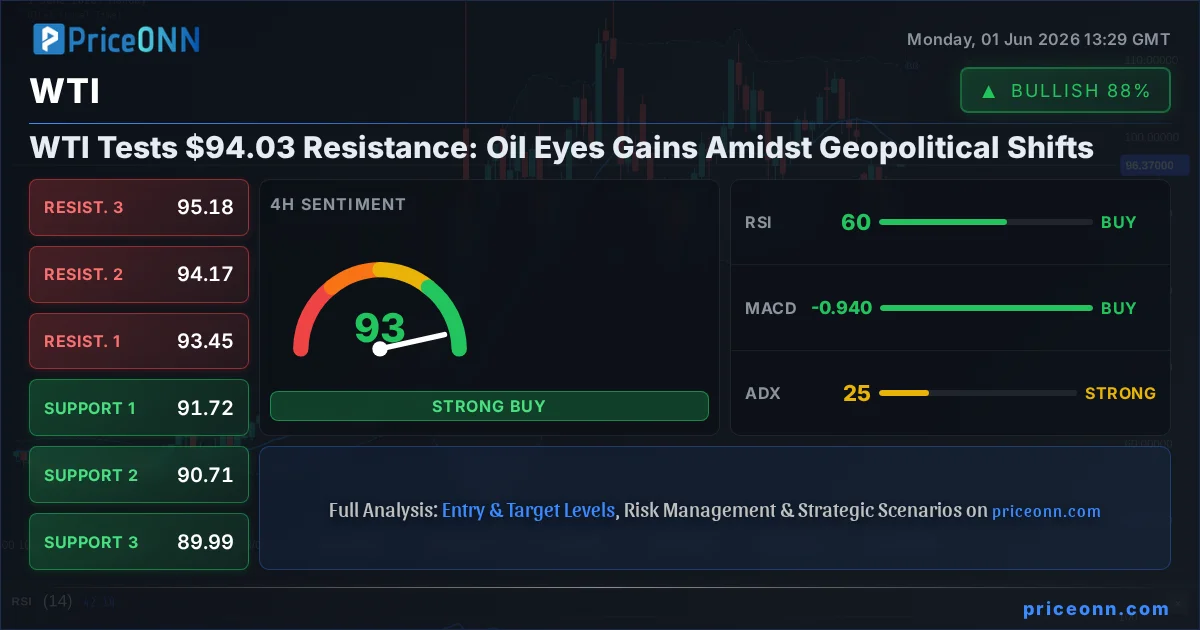
Despite the inventory build, both Brent and WTI crude futures traded higher on the day. Brent crude was trading around $103.40 per barrel, up approximately $12 from the previous week, while WTI hovered near $95.96 per barrel. This price resilience can be attributed to ongoing disruptions affecting tanker traffic in the critical Strait of Hormuz and reported production losses in key Middle Eastern oil-producing nations.
Analysis & Drivers
The primary driver underpinning current oil prices remains the geopolitical instability surrounding the Strait of Hormuz. An estimated 17 million barrels per day of crude and refined products typically transit this vital chokepoint, and ongoing tensions have severely hampered tanker movements. Despite efforts by the U.S. administration to provide security guarantees and escort services, shipowners have shown considerable hesitation to traverse the waterway, leading to rerouted voyages and a perceived tightening of immediate supply.
Adding to the supply-side narrative are reports of significant production challenges in Iraq, the United Arab Emirates, and Saudi Arabia, further constricting available barrels. While the U.S. has utilized some emergency measures, such as a draw from the Strategic Petroleum Reserve and a temporary waiver for sanctioned Russian oil, market analysts note that most immediate intervention options have likely been exhausted. The administration's focus has reportedly shifted towards diplomatic appeals to allies for assistance in ensuring passage through the contested strait.
The unexpected inventory build in the U.S. presents a complex picture. While it might typically suggest waning demand or ample supply, the persistent geopolitical premium embedded in oil prices appears to be overshadowing this data point for now. Furthermore, refined product inventories tell a different story: gasoline stocks decreased by 4.6 million barrels, and distillate inventories fell by 1.4 million barrels, indicating robust demand for end-user products.
Trader Implications
Traders should closely monitor developments in the Strait of Hormuz, as any escalation or de-escalation of tensions will likely have an immediate impact on crude prices. The current risk premium suggests that prices could remain elevated or even climb higher if supply disruptions persist or worsen.
Key levels to watch for WTI crude include resistance around the $96-$98 range and support near the $94 mark. For Brent, resistance lies near $104-$106, with support at $100. The surprising inventory build adds a layer of caution, suggesting that a sharp upward move might be capped unless geopolitical events significantly tighten supply further. Traders should also keep an eye on official U.S. Energy Information Administration (EIA) inventory data, which often differs from API estimates.
The divergence between crude inventory build and refined product draw suggests strong consumer demand for fuels like gasoline and diesel. This could support prices even if crude stockpiles remain elevated. Therefore, a strategy focusing on the supply-side disruptions due to geopolitical factors, while acknowledging the potential ceiling presented by the API inventory data, would be prudent.
Outlook
The immediate outlook for oil prices remains heavily influenced by geopolitical risks and the ongoing transit challenges in the Strait of Hormuz. While the unexpected increase in U.S. crude inventories may temper some of the bullish sentiment, the market appears more sensitive to potential supply disruptions than to domestic stock builds. Any significant news regarding tanker movements or production issues in the Middle East could trigger further price volatility. Traders should remain vigilant for diplomatic developments and monitor shipping data closely in the coming days and weeks.
Frequently Asked Questions
What caused the surprise build in US crude oil inventories?
The American Petroleum Institute (API) estimated a build of 6.556 million barrels for the week ending March 13. While the exact causes are not detailed, this unexpected increase occurred despite a slight dip in U.S. production and suggests that refinery demand or import levels may have outpaced consumption during that specific period.
How are tensions in the Strait of Hormuz impacting oil prices?
Geopolitical tensions in the Strait of Hormuz are creating a significant risk premium in oil prices, pushing Brent above $103 and WTI near $96. Hesitation among shipowners to traverse the waterway, through which 17 million barrels per day typically flow, is perceived as a tightening of immediate global supply.
What is the outlook for crude oil prices given current market conditions?
The outlook remains volatile, heavily dependent on geopolitical developments in the Middle East and the Strait of Hormuz. While the U.S. inventory build could provide some resistance to further price gains, persistent supply concerns and strong refined product demand suggest prices could remain supported or even climb if disruptions intensify.
Track markets in real-time
Empower your investment decisions with AI-powered analysis, technical indicators and real-time price data.
Join Our Telegram Channel
Get breaking market news, AI analysis and trading signals delivered instantly to your Telegram.
Join Channel PriceONN News
Global oil prices are treading water after a significant 5% slump, as market sentiment grapples with cautious optimism over Middle East de-escalation efforts versus lingering geopolitical uncertainties. Brent crude hovers near $104.72 and WTI near $98.07.
PriceONN News
Crude oil prices experienced a significant drop, with WTI futures falling over 1.8% to $87.25, as optimism grew for a U.S.-Iran deal potentially reopening the Strait of Hormuz.
PriceONN News
(RTTNews) - Crude oil prices have tumbled on Friday as expectations of the U.S. and Iran signing a Memorandum of Understanding run high. The MoU would allow for immediate reopening of the Strait of Hormuz and pave the way for the resumption of oil and energy trade.
PriceONN News
Crude oil futures experienced a dramatic intraday reversal on Thursday, soaring overnight on geopolitical fears only to pull back significantly as reports of a potential diplomatic understanding between the U.S. and Iran emerged.
PriceONN News
Iran's oil exports fell to their lowest level in at least six years in May as the U.S. naval blockade continued to choke off crude shipments and leave tens of millions of barrels stranded at sea. According to shipping data from Vortexa, Iran exported just 209,000 barrels per day (bpd) of crude oil and condensate in May, down from 1.34 million bpd in April and nearly 1.9 million bpd in March. Kpler had estimated May exports slightly higher at 260,000 bpd, but still the lowest level since the...
PriceONN News
Crude oil prices experienced a significant downturn as market sentiment shifted towards optimism about a potential US-Iran Memorandum of Understanding that could reopen the Strait of Hormuz. WTI futures fell nearly 2% on the news.
PriceONN News
Crude oil futures experienced a dramatic intraday reversal, soaring to $92.52 before pulling back significantly on Thursday. The volatile session was driven by shifting geopolitical narratives and U.S. inventory data.
PriceONN News
(RTTNews) - Crude oil futures skyrocketed overnight but have shown a significant pullback over the course of the trading day on Thursday.
PriceONN News
(RTTNews) - Extending the losses from yesterday's session, crude oil prices have gone into freefall on Wednesday as investor expectations on a potential U.S.-Iran agreement continue to rise despite the U.S. refusing to ease its demands.
PriceONN News
(RTTNews) - Crude oil prices have tumbled on Tuesday as optimism about a U.S.-Iran peace deal that could lead to reopening of the Strait of Hormuz soon grows despite reports of fresh U.S. strikes on Iran yesterday.
PriceONN News
(RTTNews) - After surging early in the day, crude oil prices have tumbled over the course of the trading session on Thursday. With the downturn, crude oil is extending the losses from the two previous sessions, as investors watch the developments in U.S.-Iran peace talks.
PriceONN News
Africa's biggest refinery is getting bigger. Nigeria's Dangote refinery has started work on a second crude processing unit that will add another 700,000 barrels per day (bpd) of capacity, putting the complex on track to rival the world's largest refining site and giving billionaire owner Aliko Dangote a much larger role in global fuel markets. According to Dangote Petroleum Refinery CEO David Bird, construction is already underway at the Lekki site outside Lagos. The new refinery is expected to...