
Why Is WTI Crude Oil Trading Near $92 Amid Middle East Tensions and Dollar Strength?

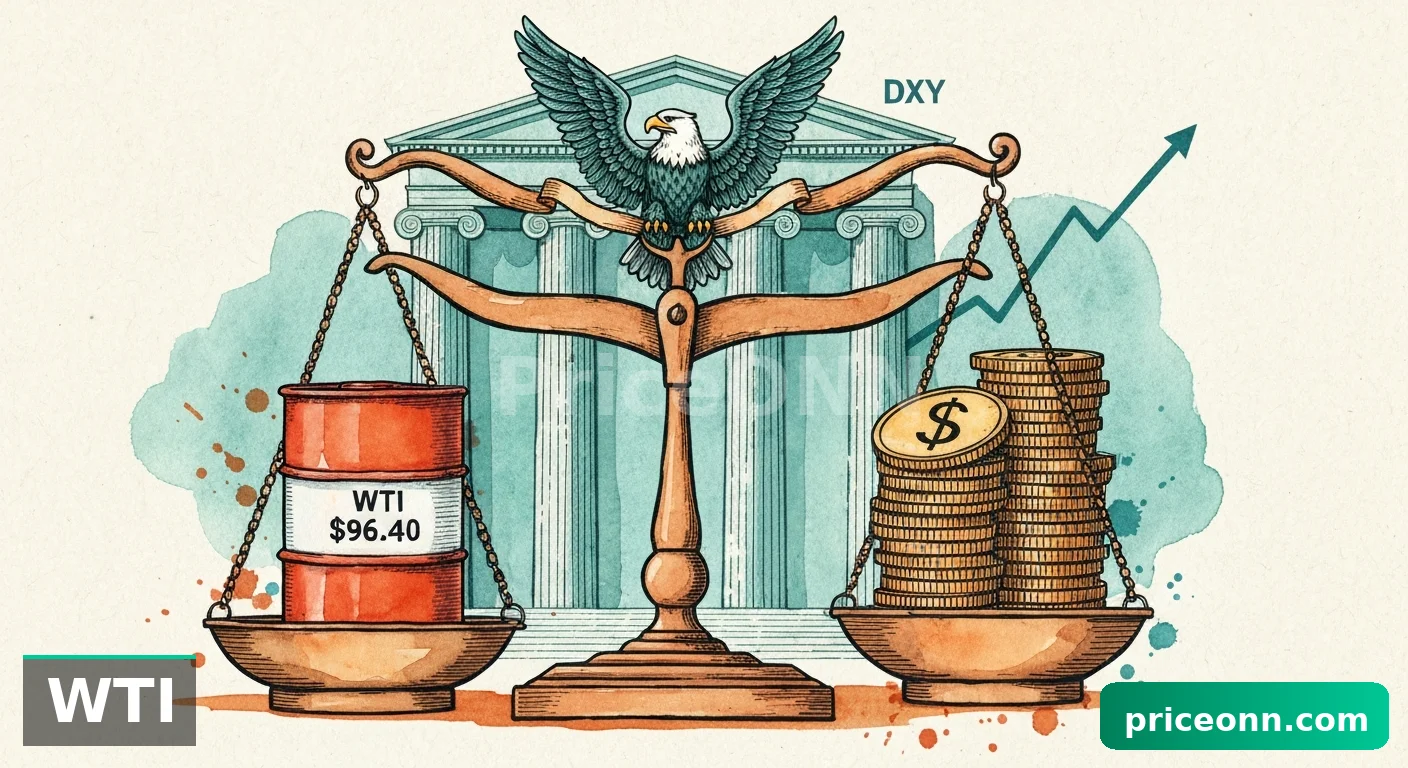
West Texas Intermediate (WTI) crude oil is currently trading around the $92.05 mark, representing a 1.73% increase on the day. While this shows resilience, the advance lacks the overwhelming conviction typical of a strong bull run, indicating that upside potential is being constrained by competing market forces.
Market Context: Navigating Geopolitical Risk and Currency Headwinds
The current price action for WTI reflects a delicate balancing act. Heightened geopolitical tensions in the Middle East are providing a foundational risk premium, acting as a floor for prices and preventing significant downturns. However, this supply-side concern is being counteracted by a notably strong US Dollar. As crude oil is primarily priced in dollars, a strengthening dollar makes oil more expensive for international buyers, thereby capping upward price movement.
This dynamic is creating a constrained market where significant price swings are unlikely without a clear shift in either geopolitical sentiment or currency valuation. The implications are that while supply disruptions are a tangible threat, the global economic environment, particularly currency strength, is acting as a significant brake on potential rallies.
Analysis & Drivers: Supply Disruptions vs. Dollar Dominance
Recent reports indicate a tangible impact on physical oil flows. Saudi crude oil exports to key Asian markets, China and India, are projected to fall in April. Traders estimate shipments to China to be around 40 million barrels, down from 48 million barrels in February, and to India at approximately 23 million barrels. This decline is attributed to production disruptions in the Middle East, potentially linked to issues around the Strait of Hormuz. Saudi Aramco has reportedly notified Asian customers of reduced term supplies, focusing on specific grades and export terminals.
The broader issue stems from the potential closure of the Strait of Hormuz, a critical chokepoint for Middle Eastern energy exports. This disruption is leading to millions of barrels of crude being landlocked and producers being forced to curtail output. Asian economies, heavily reliant on Gulf energy, are already implementing measures such as fuel rationing and export bans, paying hefty premiums for alternative supplies. Sour crude grades, in particular, are trapped, impacting refineries that depend on them. While the paper market has seen volatility, with a recent 10% slide attributed to speculative optimism about de-escalation, the underlying physical supply realities suggest a tightening market that could eventually force prices higher.
Conversely, the strength of the US Dollar remains a formidable headwind. A stronger dollar reduces the purchasing power of currencies globally, making dollar-denominated commodities like oil more expensive for consumers outside the United States. This currency effect is a significant factor limiting the extent to which geopolitical supply concerns can translate into sustained price increases.
Trader Implications: Watching Key Levels and Sentiment Shifts
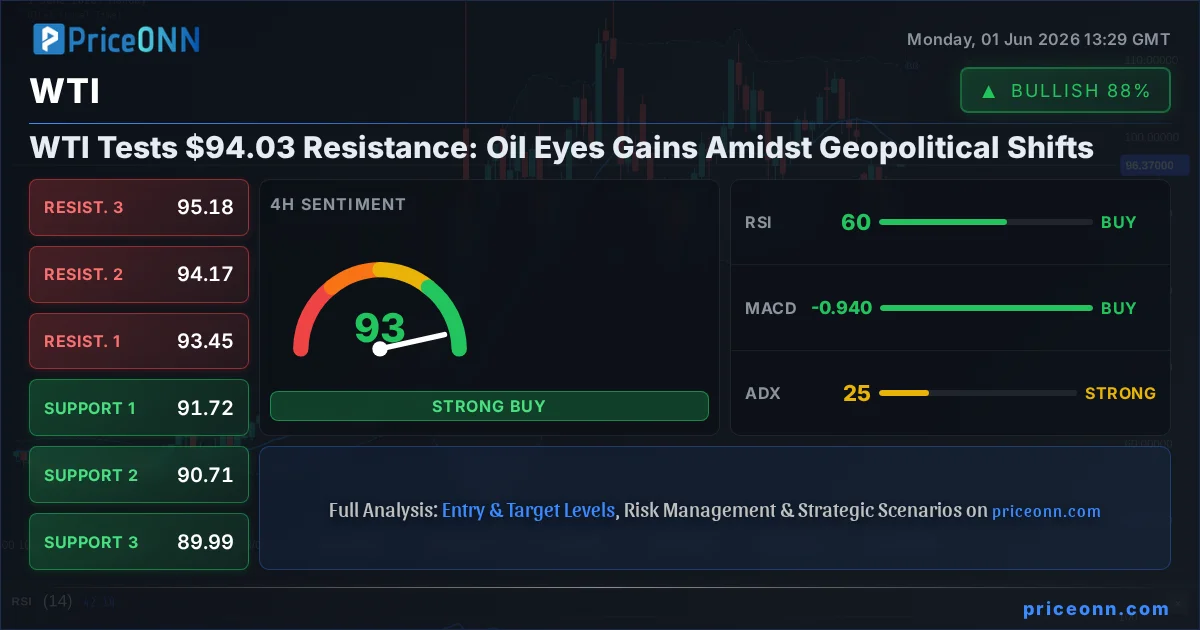
Traders should closely monitor the interplay between geopolitical developments and currency movements. Key levels to watch for WTI include immediate resistance around the $93-$94 mark and support at the $90 psychological level. A decisive break above $94 could signal a re-evaluation of the market's upside potential, while a fall below $90 might indicate that dollar strength is overpowering supply concerns.
The erratic nature of geopolitical communication adds another layer of complexity. Short-term price rallies fueled by optimistic news could quickly reverse if physical supply constraints reassert themselves. Conversely, a clear escalation of regional conflict could provide a significant boost to prices, provided the dollar does not strengthen in tandem to offset gains. The divergence between the physical market realities and the paper futures market suggests potential for increased volatility as these forces continue to clash.
Outlook
The outlook for WTI crude oil remains highly sensitive to geopolitical events in the Middle East and the trajectory of the US Dollar. While supply disruptions are tightening the physical market, particularly in Asia, the strong dollar is providing a significant ceiling. Traders should anticipate continued choppiness unless a clear catalyst emerges. Upcoming economic data from major economies and any further pronouncements from key players in the Middle East will be critical in shaping sentiment and price direction in the coming weeks.
Frequently Asked Questions
What is the current price of WTI crude oil and what is driving its movement?
WTI crude oil is trading around $92.05 per barrel. Its current movement is influenced by a tug-of-war between rising geopolitical tensions in the Middle East, which support prices, and a strong US Dollar, which acts as a cap on gains.
Are Saudi oil exports to Asia being significantly impacted?
Yes, Saudi crude oil exports to China and India are expected to decline in April. Shipments to China are seen at around 40 million barrels and to India at approximately 23 million barrels, reflecting production disruptions in the Middle East.
What are the key levels traders should watch for WTI?
Traders should monitor immediate resistance around the $93-$94 area. Support is seen at the crucial psychological level of $90. A decisive move beyond these levels could indicate a shift in market sentiment and direction.
Track markets in real-time
Empower your investment decisions with AI-powered analysis, technical indicators and real-time price data.
Join Our Telegram Channel
Get breaking market news, AI analysis and trading signals delivered instantly to your Telegram.
Join Channel PriceONN News
Crude oil prices experienced a significant drop, with WTI futures falling over 1.8% to $87.25, as optimism grew for a U.S.-Iran deal potentially reopening the Strait of Hormuz.
PriceONN News
(RTTNews) - Crude oil prices have tumbled on Friday as expectations of the U.S. and Iran signing a Memorandum of Understanding run high. The MoU would allow for immediate reopening of the Strait of Hormuz and pave the way for the resumption of oil and energy trade.
PriceONN News
Crude oil futures experienced a dramatic intraday reversal on Thursday, soaring overnight on geopolitical fears only to pull back significantly as reports of a potential diplomatic understanding between the U.S. and Iran emerged.
PriceONN News
Crude oil futures experienced a dramatic reversal, soaring overnight to $92.52 before plummeting nearly 6% to $89 a barrel. This volatility was driven by escalating US-Iran tensions followed by reports of a potential preliminary diplomatic understanding.
PriceONN News
Crude oil prices experienced a significant downturn as market sentiment shifted towards optimism about a potential US-Iran Memorandum of Understanding that could reopen the Strait of Hormuz. WTI futures fell nearly 2% on the news.
PriceONN News
Crude oil futures experienced a dramatic intraday reversal, soaring to $92.52 before pulling back significantly on Thursday. The volatile session was driven by shifting geopolitical narratives and U.S. inventory data.
PriceONN News
Brent crude prices surged towards the mid-$90s amid fears of supply disruptions from Middle East tensions, only to pare gains later as whispers of a potential US-Iran diplomatic understanding emerged.
PriceONN News
(RTTNews) - Crude oil futures skyrocketed overnight but have shown a significant pullback over the course of the trading day on Thursday.
PriceONN News
(RTTNews) - Extending the losses from yesterday's session, crude oil prices have gone into freefall on Wednesday as investor expectations on a potential U.S.-Iran agreement continue to rise despite the U.S. refusing to ease its demands.
PriceONN News
(RTTNews) - Crude oil prices have tumbled on Tuesday as optimism about a U.S.-Iran peace deal that could lead to reopening of the Strait of Hormuz soon grows despite reports of fresh U.S. strikes on Iran yesterday.
PriceONN News
South America has raised its oil exports more than the U.S. has done so far this year as key producers in the region boosted production and shipments to a world scrambling for crude that’s not dependent on the Strait of Hormuz. Over the past five years, South America’s biggest producer and exporter, Brazil, has started production at several new offshore platforms in the Santos pre-salt fields. Guyana has continuously increased overseas shipments as the Exxon-led consortium starts up...
PriceONN News
The possibility of Iran developing a nuclear weapon is now higher than it was before the United States and Israel first attacked the country in February, the International Atomic Energy Agency has concluded in a report. The conclusion suggests the war has so far resulted in the opposite of what President Trump set out to do, namely, prevent Iran from developing a nuclear weapon. Bloomberg cited the report, which has restricted access, saying that in it, the IAEA had warned its member states...