
Will AUD/USD Break Lower as RBA Hikes Rates Amid Persistent Inflation Fears?


The Australian Dollar (AUD) finds itself at a critical juncture, struggling to sustain recent gains even as the Reserve Bank of Australia (RBA) delivers its third consecutive interest rate increase, pushing the benchmark rate to 4.35%. This hawkish stance by the RBA, aimed at curbing inflation that hit 4.6% annually in March, is being overshadowed by a global surge in risk aversion, prompting a flight to safety that is dampening the appeal of currencies like the AUD.
Market Context: RBA Tightens While Global Fears Mount
The RBA's decision to raise rates again underscores its deep concern over rising inflation, a trend exacerbated by geopolitical tensions in the Middle East that are driving up energy costs and consequently, consumer prices. While analysts at Commonwealth Bank of Australia suggest this hike might be sufficient and anticipate rates holding steady through the end of 2026, this outlook is contingent on stable economic conditions and favorable upcoming data. However, the Australian Dollar's momentum has stalled near its May peaks. This loss of traction is largely attributed to heightened global uncertainty, which is spurring demand for traditional safe-haven assets. Investors are reallocating capital away from risk-sensitive currencies, creating a challenging environment for the AUD despite supportive domestic monetary policy.
Analysis & Drivers: Inflation's Stubborn Grip and Fed Uncertainty
The inflationary pressures are not unique to Australia. Across the Pacific, Federal Reserve officials Thomas Barkin and Austan Goolsbee have voiced increasing concerns about the persistence of inflation in the United States. While they did not explicitly signal further rate hikes, their commentary highlighted a plateau in inflation progress, suggesting that recent price shocks from supply disruptions might not resolve themselves quickly. This sentiment reinforces a market shift towards a 'higher-for-longer' interest rate scenario globally. President Barkin noted that the Fed's current pause allows for data assessment, but warned of potential future pressures on both employment and inflation mandates. He also raised pertinent questions about the traditional approach to managing supply shocks, cautioning that factors like geopolitical instability, trade fragmentation, and high debt levels could undermine inflation expectations. This global backdrop of persistent inflation and potential prolonged higher interest rates creates a significant headwind for riskier assets and currencies like the Australian Dollar.
Trader Implications: Watching Key Levels Amid Risk Aversion
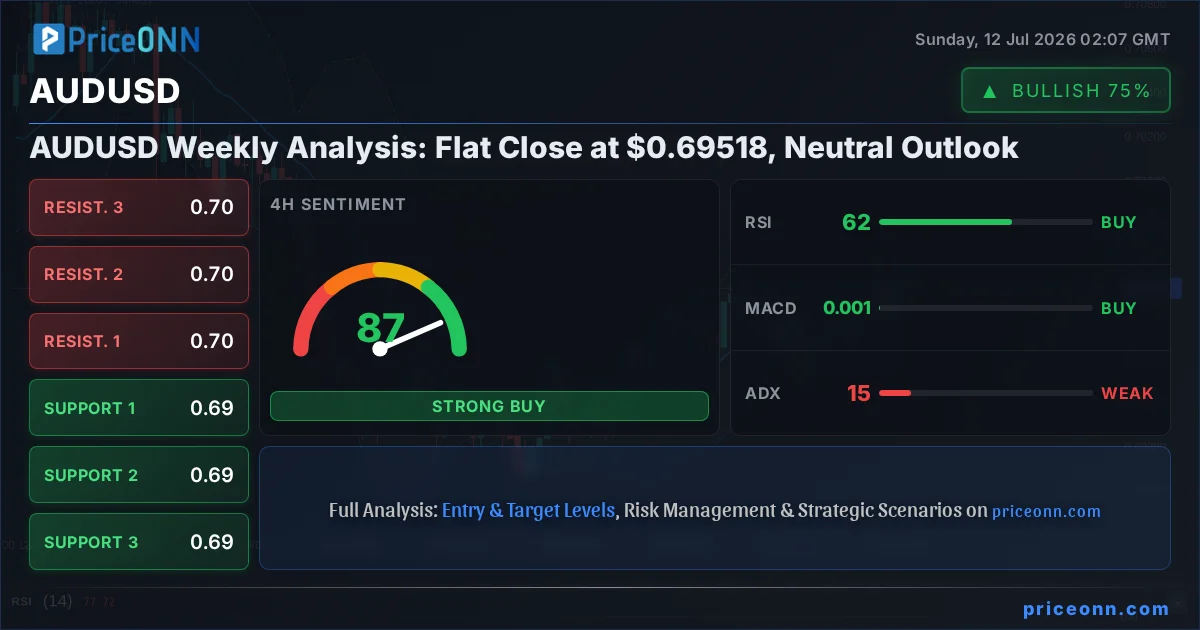
For traders monitoring the AUD/USD pair, the current environment presents a complex picture. The RBA's hawkish policy offers underlying support, but the prevailing risk-off sentiment is a powerful counterforce. Key technical levels to watch include the recent May high around 0.6650 as immediate resistance. A sustained break below the 0.6550 support level could signal a deeper retracement, driven by continued safe-haven flows. Traders should closely monitor upcoming inflation data releases from both Australia and the US, as well as any further commentary from Fed officials, for clues on the future path of monetary policy. Geopolitical developments will also play a crucial role in shaping market sentiment and risk appetite.
Outlook: AUD/USD Poised for Potential Downside
The outlook for the Australian Dollar remains cautious. While the RBA's commitment to fighting inflation is clear, the global macroeconomic landscape is fraught with uncertainty. The persistent inflation narrative, coupled with the Federal Reserve's hawkish undertones, suggests that risk aversion may continue to dominate market sentiment. This could lead to further pressure on AUD/USD, potentially testing lower support levels in the coming weeks, especially if safe-haven demand intensifies. Traders should remain vigilant for any shifts in global risk sentiment and central bank communication.
Frequently Asked Questions
What is the current RBA interest rate and why was it raised?
The Reserve Bank of Australia (RBA) raised its interest rate for the third consecutive time to 4.35%. This decision was driven by concerns over rising inflation, which reached 4.6% annually in March, partly due to increased energy costs stemming from global conflicts.
What factors are causing the Australian Dollar to lose momentum?
Despite the RBA's rate hike, the Australian Dollar is losing momentum due to a global increase in demand for safe-haven assets amid heightened geopolitical and economic uncertainty. This risk-off sentiment is drawing capital away from risk-sensitive currencies like the AUD.
What are the key levels to watch for AUD/USD in the short term?
Traders should watch the recent May high around 0.6650 as immediate resistance. A break below the support level at 0.6550 could indicate further downside pressure, influenced by global risk sentiment and central bank policies.
Track markets in real-time
Empower your investment decisions with AI-powered analysis, technical indicators and real-time price data.
Join Our Telegram Channel
Get breaking market news, AI analysis and trading signals delivered instantly to your Telegram.
Join Channel PriceONN News
US consumer confidence weakened further in July as households grew less upbeat about current business conditions and the labor market, although easing inflation expectations offered a modest offset. The Conference Board’s Consumer Confidence Index slipped -1.4 points to 90.8 from an upwardly revised 92.2 in June. The Present Situation Index fell -3.6 points to 114.9, […] The post US Consumer Confidence Falls to 90.8 in July, Expectations Remain Below Recession Threshold appeared first on...
PriceONN News
Dollar pushed broadly higher on Tuesday as investors navigated a combination of deteriorating risk sentiment and persistent expectations that the Federal Reserve could still raise rates in September. A sharp selloff across global AI-related technology shares sparked an immediate flight into the greenback, while the continued resilience of Fed tightening expectations prevented Dollar buying from […] The post Dollar Rises as AI Rout Meets Sticky September Fed Hike Bets appeared first on...
PriceONN News
Market Overview The crypto market trended lower at the end of Monday, mirroring the US equity market, as it fell from a peak of $2.23T to $2.16T before returning to recent local lows of $2.18T by Tuesday morning. This marks yet another test of the 50-day moving average (MA) as support, which sellers have been […] The post Bitcoin Has Failed to Break Away from Its Long-Term Trend appeared first on ActionForex.
PriceONN News
Gold fell to 4,047 USD per ounce on Tuesday, erasing gains from the previous session. Pressure on the metal is mounting amid fears that the Federal Reserve may raise rates as early as this week. Markets currently estimate the probability of such a move on Wednesday at over 33% – an unusually high level of […] The post Gold Declines, Focus on Fed and Falling Oil Prices appeared first on ActionForex.
PriceONN News
TL;DR: RBA Governor Michele Bullock has reframed Wednesday’s Q2 CPI report - the question isn’t whether core inflation is elevated, but whether it’s hot enough above 3.8% to justify an August RBA hike, with AUD/USD stalled at resistance ahead of the release. Why This CPI Report Matters Australia’s Q2 CPI report is shaping up as […] The post Rangebound AUD/USD Awaits Australia CPI as Bullock Signals Higher Hurdle for RBA Hike appeared first on ActionForex.
PriceONN News
The de-escalation of the conflict in the Middle East has sent Brent prices tumbling. The oil market could return to a surplus as early as the end of 2026. The US dollar and oil have lost their correlation. Brent recorded its worst daily fall in three months after reports of a ceasefire in the Middle […] The post Oil: A Surplus on the Horizon appeared first on ActionForex.
PriceONN News
I am already riding two EURUSD sell entries. Another possible sell opportunity could be forming for traders that are not in yet. EURUSD Possible Bearish Scenario Watch for price to tap 4 Hour FVG (Purple) first. Watch for a bearish shift and bearish reversal signs in the FVG zone. Wait for all above to play […] The post Riding EURUSD Sellside appeared first on ActionForex.
PriceONN News
Speaking in Sydney today, Reserve Bank of Australia Governor Michele Bullock reaffirmed that the Board remains firmly focused on restoring price stability while leaving the door open to further monetary tightening if inflation proves more persistent than expected. Although she acknowledged that “the global environment has changed and the outlook is uncertain,” Bullock stressed that […] The post RBA’s Bullock Keeps Rate Hike Option Alive Despite Policy Lags appeared first on ActionForex.
PriceONN News
Key Highlights GBP/USD started a fresh decline from the 1.3550 resistance zone. It traded below a bullish trend line with support at 1.3435 on the 4-hour chart. Bitcoin could aim for an upside break if it clears $66,500. USD/JPY seems to be aiming for more gains above 164.00. GBP/USD Technical Analysis The British Pound failed […] The post GBP/USD Falls Back Under Pressure as Sellers Tighten Their Grip appeared first on ActionForex.
PriceONN News
The Trump administration is weighing whether to extend access to some Chinese rare earth materials beyond the January 1, 2027 cutoff after U.S. producers acknowledged they cannot build sufficient domestic processing and magnet capacity before the deadline, Reuters reported on Monday. Industry executives and Pentagon suppliers told Reuters that U.S. processing and magnet manufacturing capacity remains insufficient to meet despite billions of dollars in federal support for new mines, separation...
PriceONN News
Risk sentiment improved markedly at the start of the week after the United States and Iran suspended military strikes over the weekend, encouraging investors to unwind part of last week’s geopolitical premium. Brent crude, which briefly traded above the psychologically important $100 mark last week amid fears of a prolonged supply disruption, opened sharply lower […] The post Markets Cheer Pause in US-Iran Conflict, but Hormuz Closure Clouds Outlook appeared first on ActionForex.
PriceONN News
The US stock market is not factoring in the existing risks. Investors are increasingly focusing on the cash flows of S&P 500 companies. US stock indices have closed in the red the last two weeks, something that hasn’t happened since March. The stock market has weathered both the armed conflict in the Middle East and […] The post It’s Time to Weigh Up the Risks for the S&P 500 appeared first on ActionForex.