
Will the Euro Rally as the ECB Signals a June Rate Hike Amidst Rising Inflation?


The Euro is on watch as European Central Bank (ECB) President Christine Lagarde signals that inflation forecasts are likely to be revised higher, bolstering expectations for a potential interest rate hike in June. This hawkish lean from the ECB contrasts with a more cautious stance emerging from New Zealand, where the Reserve Bank of New Zealand (RBNZ) faces a split advisory board regarding immediate policy tightening.
ECB Inflation Outlook Fuels Rate Hike Speculation
ECB President Christine Lagarde has indicated that the central bank’s March inflation projection of 2.6% for 2026 will likely be revised upwards, stating that “the situation has evolved” since those estimates were made. This suggests that persistent inflationary pressures, particularly those driven by energy costs, are forcing a reassessment of monetary policy. While Lagarde stopped short of a definitive commitment to a June rate hike, her comments have significantly increased market wagers on a 25 basis point increase at the next policy meeting. The ECB's primary mandate is to maintain price stability, targeting inflation at 2% over the medium term. Several Governing Council members have previously expressed concerns that prolonged inflation could necessitate a proactive policy response. This evolving sentiment, coupled with Lagarde’s latest remarks, points towards a more hawkish trajectory for the ECB, aiming to anchor inflation expectations and prevent them from becoming unmoored.
New Zealand's Monetary Policy Dilemma
In contrast to the Eurozone's inflationary pressures, New Zealand's monetary policy landscape presents a more complex picture. The NZIER Monetary Shadow Board, an independent advisory group, has revealed a divided opinion ahead of the Reserve Bank of New Zealand's (RBNZ) upcoming policy decision. The majority of the shadow board recommends holding the Official Cash Rate (OCR) steady at 2.25%. This cautious approach is attributed to concerns over weak domestic economic conditions, including subdued growth and available capacity, as well as a heightened sense of global geopolitical uncertainty, particularly concerning ongoing international conflicts. These factors suggest that the majority believes further tightening could exacerbate existing economic fragilities.
However, a significant minority of three members within the shadow board has strongly advocated for an immediate interest rate hike. Their rationale centers on the prolonged period of low real interest rates, which they argue is actively contributing to persistent inflation. This dissenting view warns that delaying further action risks unanchoring inflation expectations, potentially requiring more aggressive and disruptive policy measures down the line. This divergence highlights the RBNZ's challenging task of balancing domestic economic weakness with the need to control inflation.
Analysis and Key Drivers
The divergence in monetary policy signals from the ECB and the RBNZ is a critical development for currency traders. For the Euro, the prospect of a June rate hike, driven by upward revisions to inflation forecasts, could provide significant support. Traders will be closely monitoring incoming inflation data, wage growth figures, and ECB officials' speeches for further confirmation of a hawkish stance. Any indication that inflation is proving more stubborn than anticipated will likely reinforce rate hike expectations and boost the EUR. Conversely, any signs of easing price pressures or dovish commentary from ECB policymakers could lead to a reassessment, potentially causing the Euro to falter.
For the New Zealand Dollar, the split within the RBNZ's shadow board underscores the uncertainty surrounding the RBNZ's next move. If the RBNZ decides to hold rates steady, the NZD could face downward pressure, especially if inflation concerns persist and the market anticipates future tightening. However, if the RBNZ opts for a surprise hike, driven by the dissenting members' concerns about inflation, the NZD could see a short-term boost. Traders will be scrutinizing the RBNZ's official statement for clues on the Governing Board's internal deliberations and their assessment of the inflation outlook versus domestic growth concerns.
Trader Implications
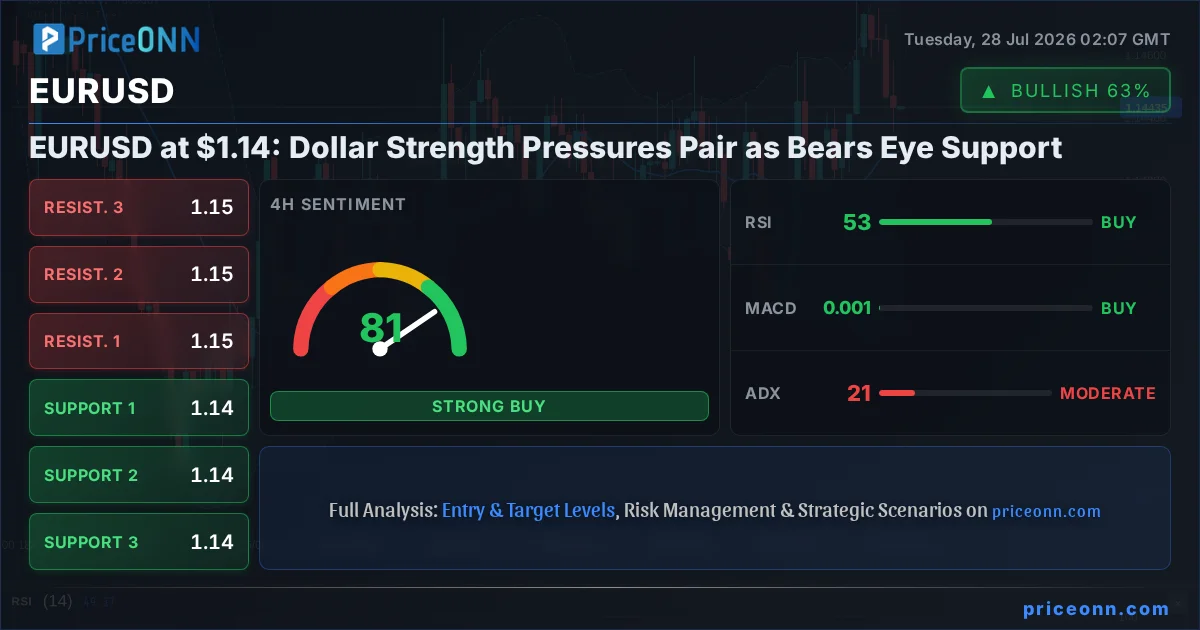
For Euro traders, the key implication is to watch for confirmation of a hawkish ECB path. Key levels to monitor include resistance around 1.0850 for EUR/USD, with a sustained move above this level potentially signaling further upside if rate hike expectations firm. Support can be found near 1.0700. Traders should prioritize upcoming Eurozone inflation figures and any statements from ECB officials. A move above the recent highs could target 1.0900 if the hawkish sentiment solidifies.
For New Zealand Dollar traders, the RBNZ decision is paramount. The current OCR stands at 2.25%. A hold might see NZD/USD test support around 0.6050, while a hike could propel it towards resistance at 0.6180. Traders should pay close attention to the RBNZ's forward guidance and their assessment of the balance between inflation risks and growth concerns. Geopolitical developments also remain a background risk factor for the NZD.
Outlook
The path forward for the Euro appears increasingly tilted towards potential gains if the ECB maintains its hawkish tone and proceeds with a June rate hike, driven by persistent inflation. Conversely, the New Zealand Dollar faces a period of elevated uncertainty, with the RBNZ's upcoming decision likely to be a significant driver. Traders should remain vigilant for economic data releases and central bank communications from both regions as they navigate these diverging monetary policy paths.
Frequently Asked Questions
What is the current inflation forecast for the Eurozone in 2026 according to the ECB?
The ECB's March inflation forecast for 2026 was 2.6%. However, ECB President Lagarde has indicated this figure will likely be revised upwards due to evolving economic conditions.
What is the current Official Cash Rate (OCR) in New Zealand?
The current Official Cash Rate (OCR) set by the Reserve Bank of New Zealand is 2.25%. The NZIER Monetary Shadow Board is divided on whether to maintain this rate or implement an immediate hike.
What are the key implications for EUR/USD if the ECB hikes rates in June?
If the ECB hikes rates in June, EUR/USD could see upward pressure, potentially testing resistance levels around 1.0850 and possibly targeting 1.0900, assuming inflation concerns remain elevated.
Track markets in real-time
Empower your investment decisions with AI-powered analysis, technical indicators and real-time price data.
Join Our Telegram Channel
Get breaking market news, AI analysis and trading signals delivered instantly to your Telegram.
Join Channel PriceONN News
The US stock market is not factoring in the existing risks. Investors are increasingly focusing on the cash flows of S&P 500 companies. US stock indices have closed in the red the last two weeks, something that hasn’t happened since March. The stock market has weathered both the armed conflict in the Middle East and […] The post It’s Time to Weigh Up the Risks for the S&P 500 appeared first on ActionForex.
PriceONN News
The ceasefire in the Middle East has disrupted the greenback’s plans. Strong PMI data and falling oil prices are helping the euro. The US dollar faced a downward gap at the start of the week as the Middle East de-escalation of the conflict came as an unwelcome surprise to speculators who had built up net […] The post De-Escalation Undermines the Greenback appeared first on ActionForex.
PriceONN News
(RTTNews) - Gold prices traded higher on Monday as oil prices tumbled amid eased Middle East tensions, helping ease inflation and interest-rate concerns ahead of crucial Fed, BoE and BoJ central bank meetings due this week.
PriceONN News
EUR/USD enters the final week of July at 1.1369. Friday’s modest decline in energy prices reduced expectations that the Federal Reserve could raise rates as early as its upcoming meeting, scheduled for Tuesday and Wednesday. At the same time, the main currency pair remains very close to the monthly low recorded in late June. Markets […] The post EUR/USD Ahead of a Key Week: Holding Near Lows appeared first on ActionForex.
PriceONN News
European Central Bank Governing Council member Peter Kazimir from Slovak reinforced the hawkish bias on Monday, arguing that policymakers will likely need to raise interest rates at least once more and warning that a worsening energy shock could ultimately require even more tightening than markets currently anticipate. His remarks come just days after the ECB […] The post ECB’s Kazimir Sees At Least One More Rate Hike, Warns Oil Shock Could Require More appeared first on ActionForex.
PriceONN News
On 21 July, Stats NZ reported an acceleration in inflation: the Consumer Price Index rose 1.5% in the second quarter, while the annual inflation rate climbed to 4.1%, its highest level in more than two years and slightly above analysts’ consensus forecast of 4.0%. The increase was driven primarily by higher fuel prices amid tensions […] The post NZD/USD: Inflation Surge Meets Strong US Dollar Pressure appeared first on ActionForex.
PriceONN News
Market Overview The crypto market trended lower at the end of Monday, mirroring the US equity market, as it fell from a peak of $2.23T to $2.16T before returning to recent local lows of $2.18T by Tuesday morning. This marks yet another test of the 50-day moving average (MA) as support, which sellers have been […] The post Bitcoin Has Failed to Break Away from Its Long-Term Trend appeared first on ActionForex.
PriceONN News
Gold fell to 4,047 USD per ounce on Tuesday, erasing gains from the previous session. Pressure on the metal is mounting amid fears that the Federal Reserve may raise rates as early as this week. Markets currently estimate the probability of such a move on Wednesday at over 33% – an unusually high level of […] The post Gold Declines, Focus on Fed and Falling Oil Prices appeared first on ActionForex.
PriceONN News
The de-escalation of the conflict in the Middle East has sent Brent prices tumbling. The oil market could return to a surplus as early as the end of 2026. The US dollar and oil have lost their correlation. Brent recorded its worst daily fall in three months after reports of a ceasefire in the Middle […] The post Oil: A Surplus on the Horizon appeared first on ActionForex.
PriceONN News
I am already riding two EURUSD sell entries. Another possible sell opportunity could be forming for traders that are not in yet. EURUSD Possible Bearish Scenario Watch for price to tap 4 Hour FVG (Purple) first. Watch for a bearish shift and bearish reversal signs in the FVG zone. Wait for all above to play […] The post Riding EURUSD Sellside appeared first on ActionForex.
PriceONN News
The Trump administration is weighing whether to extend access to some Chinese rare earth materials beyond the January 1, 2027 cutoff after U.S. producers acknowledged they cannot build sufficient domestic processing and magnet capacity before the deadline, Reuters reported on Monday. Industry executives and Pentagon suppliers told Reuters that U.S. processing and magnet manufacturing capacity remains insufficient to meet despite billions of dollars in federal support for new mines, separation...
PriceONN News
The dollar heads into a pivotal week trading near 101.80, just off a 15-month high, with the Fed’s July 29 meeting standing as the clear focal point. Markets currently price roughly a 65% chance of a hold, though renewed Middle East escalation has kept a hike back on the table for later this year. Energy […] The post US Dollar Index: a Defining Week for the King of the Markets appeared first on ActionForex.