
WTI Crude Defends $88 as Geopolitical Tensions Offset IEA Stockpile Release


West Texas Intermediate (WTI) crude oil is trading near $88 per barrel, defying downward pressure from the International Energy Agency's (IEA) historic release of emergency oil reserves. The price action reflects ongoing concerns about supply disruptions stemming from heightened geopolitical tensions in the Middle East.
Market Context
Oil markets have experienced extreme volatility recently due to the ongoing US–Iran war. WTI crude initially surged to a four-year high of $119.54 per barrel before plummeting to $76.83, a staggering 35% drop in a single day. This dramatic price swing was triggered by conflicting signals, including remarks suggesting a potential end to the conflict and the anticipated coordinated release of strategic oil reserves by G-7 nations. The IEA's subsequent announcement of a 400-million-barrel release, the largest in its history, aimed to stabilize prices. However, escalating retaliatory attacks on Gulf oil infrastructure and threats to tanker traffic have largely offset the impact of the reserve release.
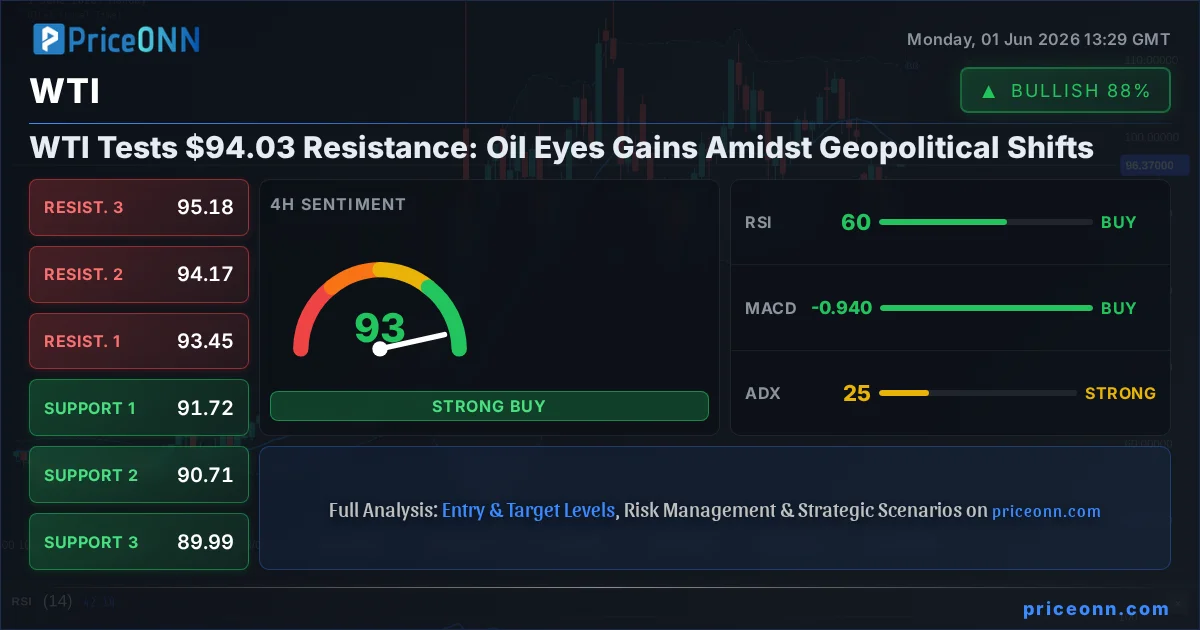
Despite the IEA's efforts, WTI crude has managed to hold its ascending trendline support, with $88.36 acting as a crucial short-term level. This resilience underscores the market's focus on immediate supply risks rather than the potential for increased supply from strategic reserves.
Analysis & Drivers
The primary driver of WTI's current price strength is the elevated risk of supply disruptions emanating from the Strait of Hormuz. This waterway is a critical chokepoint for global energy supplies, and any disruption to tanker traffic could have significant consequences for oil availability. The US-Iran conflict has introduced a high degree of uncertainty, as demonstrated by the rapid and substantial price swings seen in recent days.
The IEA's decision to release 400 million barrels from emergency reserves, including 172 million barrels from the United States, reflects the severity of the perceived threat to global oil supplies. While this release is substantial, its impact has been muted by the escalating geopolitical tensions. The market appears to be pricing in a higher probability of actual supply disruptions, which would dwarf the impact of the reserve release.
Other factors influencing WTI prices include overall global economic growth or contraction, decisions by OPEC (Organization of Petroleum Exporting Countries) to either raise or lower production quotas, and the strength of the US dollar. The weekly oil inventory reports published by the American Petroleum Institute (API) and the Energy Information Agency (EIA) also impact the price of WTI Oil.
Trader Implications
Traders should closely monitor geopolitical developments in the Middle East, as any escalation of the conflict could trigger further price spikes. Key technical levels to watch include the $88.36 support level. A sustained break below this level could signal a deeper pullback towards $81-$76. Conversely, if WTI can maintain its upward momentum, it could target resistance levels at $102.25 and $116-$119.
Given the high level of volatility, risk management is crucial. Traders should consider using stop-loss orders to limit potential losses and avoid over-leveraging their positions. The market sentiment is highly sensitive to news headlines, making it essential to stay informed and react quickly to changing conditions.
The EIA data is considered more reliable, since it is a government agency. OPEC (Organization of the Petroleum Exporting Countries) is a group of 12 Oil-producing nations who collectively decide production quotas for member countries at twice-yearly meetings. Their decisions often impact WTI Oil prices. When OPEC decides to lower quotas, it can tighten supplies, which will drive up the price of WTI crude oil.
Outlook
The near-term outlook for WTI crude oil remains highly uncertain. The direction of prices will likely depend on the trajectory of the US-Iran conflict and its impact on oil supplies from the Middle East. While the IEA's stockpile release provides some cushion against potential disruptions, it is unlikely to be a long-term solution. Traders should remain vigilant and be prepared to adjust their positions based on evolving geopolitical and market conditions. The next major catalyst could be a significant military development or a shift in diplomatic efforts.
Track markets in real-time
Empower your investment decisions with AI-powered analysis, technical indicators and real-time price data.
Join Our Telegram Channel
Get breaking market news, AI analysis and trading signals delivered instantly to your Telegram.
Join Channel PriceONN News
Crude oil prices experienced a significant drop, with WTI futures falling over 1.8% to $87.25, as optimism grew for a U.S.-Iran deal potentially reopening the Strait of Hormuz.
PriceONN News
(RTTNews) - Crude oil prices have tumbled on Friday as expectations of the U.S. and Iran signing a Memorandum of Understanding run high. The MoU would allow for immediate reopening of the Strait of Hormuz and pave the way for the resumption of oil and energy trade.
PriceONN News
Crude oil futures experienced a dramatic intraday reversal on Thursday, soaring overnight on geopolitical fears only to pull back significantly as reports of a potential diplomatic understanding between the U.S. and Iran emerged.
PriceONN News
Global oil prices are treading water after a significant 5% slump, as market sentiment grapples with cautious optimism over Middle East de-escalation efforts versus lingering geopolitical uncertainties. Brent crude hovers near $104.72 and WTI near $98.07.
PriceONN News
Crude oil prices experienced a sharp decline, with WTI futures for July delivery falling 5.66% to $98.26. This drop is largely attributed to renewed diplomatic efforts aimed at de-escalating the U.S.-Iran conflict and easing tensions around the Strait of Hormuz.
PriceONN News
Crude oil prices experienced a significant downturn as market sentiment shifted towards optimism about a potential US-Iran Memorandum of Understanding that could reopen the Strait of Hormuz. WTI futures fell nearly 2% on the news.
PriceONN News
Crude oil futures experienced a dramatic intraday reversal, soaring to $92.52 before pulling back significantly on Thursday. The volatile session was driven by shifting geopolitical narratives and U.S. inventory data.
PriceONN News
Crude oil futures experienced a dramatic reversal, soaring overnight to $92.52 before plummeting nearly 6% to $89 a barrel. This volatility was driven by escalating US-Iran tensions followed by reports of a potential preliminary diplomatic understanding.
PriceONN News
(RTTNews) - Crude oil futures skyrocketed overnight but have shown a significant pullback over the course of the trading day on Thursday.
PriceONN News
(RTTNews) - Extending the losses from yesterday's session, crude oil prices have gone into freefall on Wednesday as investor expectations on a potential U.S.-Iran agreement continue to rise despite the U.S. refusing to ease its demands.
PriceONN News
(RTTNews) - Crude oil prices have tumbled on Tuesday as optimism about a U.S.-Iran peace deal that could lead to reopening of the Strait of Hormuz soon grows despite reports of fresh U.S. strikes on Iran yesterday.
PriceONN News
(RTTNews) - After surging early in the day, crude oil prices have tumbled over the course of the trading session on Thursday. With the downturn, crude oil is extending the losses from the two previous sessions, as investors watch the developments in U.S.-Iran peace talks.