
WTI Crude Eyes $100 as Geopolitical Tensions Roil Markets

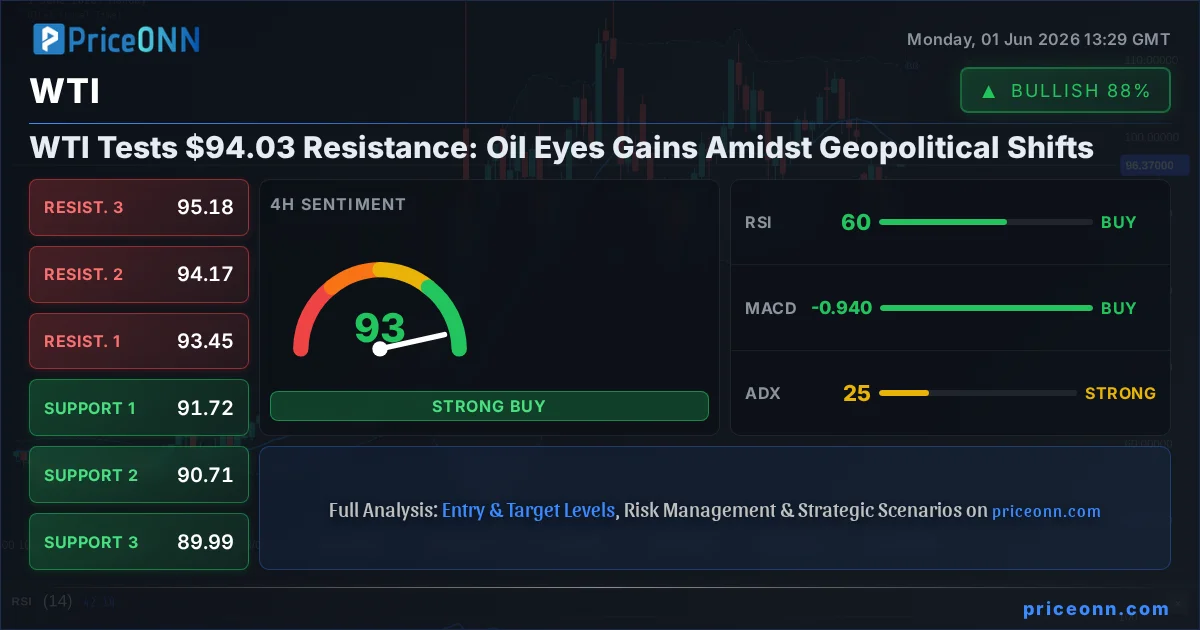
West Texas Intermediate (WTI) crude oil is trading above $93 a barrel after a week of extreme volatility. Geopolitical tensions, particularly the ongoing US-Iran conflict, are fueling concerns about supply disruptions and impacting price action.
Market Context
Oil markets have experienced significant turbulence in recent days. WTI crude initially surged to a four-year high of $119.54 before plummeting to $76.83, a staggering 35% drop, triggered by comments suggesting a swift end to the US-Iran war and expectations of a coordinated stockpile release. However, prices rebounded sharply as attacks on ships near the Strait of Hormuz intensified, raising fears of major supply disruptions. The Strait is a critical chokepoint for global oil supplies, and any disruption there has an outsized impact on prices. The announcement of a record 400 million barrel release from G-7 emergency reserves by the International Energy Agency (IEA), with the US contributing 172 million barrels, did little to stem the upward pressure on prices.
Analysis & Drivers
The primary driver of the recent volatility is the ongoing US-Iran conflict and its potential impact on global oil supply. Iran's retaliatory actions targeting Gulf oil infrastructure and threats to tanker traffic have amplified concerns. Despite the IEA's attempt to stabilize the market with a large-scale reserve release, the geopolitical risk premium remains elevated. WTI is considered a "light" and "sweet" crude oil, easily refined and sourced in the US. Its price is sensitive to supply and demand dynamics, global economic growth, political instability, and OPEC decisions. Weekly inventory reports from the American Petroleum Institute (API) and the Energy Information Agency (EIA) also play a role, with falling inventories typically indicating increased demand and pushing prices higher.
Trader Implications
Traders should closely monitor geopolitical developments in the Middle East, as they are likely to remain the primary driver of oil prices. Key levels to watch for WTI include the ascending trendline support around $88.36. Holding above this level suggests the bullish uptrend remains intact, with potential targets at $102.25 and the $116-$119 range. A break below $88.36 could signal a deeper pullback towards $81-$76. Traders should also pay attention to weekly inventory reports from API and EIA, as well as any statements from OPEC regarding production quotas.
- Monitor Geopolitical Risks: Focus on news flow from the Middle East regarding the US-Iran conflict and potential disruptions to oil infrastructure.
- Watch Key Technical Levels: Pay attention to support and resistance levels to identify potential entry and exit points.
- Track Inventory Data: Analyze weekly API and EIA reports to gauge supply and demand dynamics.
Looking ahead, the outlook for oil prices remains highly uncertain. The market will continue to be driven by geopolitical events and any signs of escalation or de-escalation in the US-Iran conflict. Traders should be prepared for continued volatility and adjust their positions accordingly. Market sentiment appears to be cautiously bullish, as the risk of supply disruptions outweighs concerns about the IEA stockpile release.
Track markets in real-time
Empower your investment decisions with AI-powered analysis, technical indicators and real-time price data.
Join Our Telegram Channel
Get breaking market news, AI analysis and trading signals delivered instantly to your Telegram.
Join Channel PriceONN News
Crude oil prices experienced a significant drop, with WTI futures falling over 1.8% to $87.25, as optimism grew for a U.S.-Iran deal potentially reopening the Strait of Hormuz.
PriceONN News
(RTTNews) - Crude oil prices have tumbled on Friday as expectations of the U.S. and Iran signing a Memorandum of Understanding run high. The MoU would allow for immediate reopening of the Strait of Hormuz and pave the way for the resumption of oil and energy trade.
PriceONN News
Crude oil futures experienced a dramatic intraday reversal on Thursday, soaring overnight on geopolitical fears only to pull back significantly as reports of a potential diplomatic understanding between the U.S. and Iran emerged.
PriceONN News
Global oil prices are treading water after a significant 5% slump, as market sentiment grapples with cautious optimism over Middle East de-escalation efforts versus lingering geopolitical uncertainties. Brent crude hovers near $104.72 and WTI near $98.07.
PriceONN News
Crude oil prices experienced a significant downturn as market sentiment shifted towards optimism about a potential US-Iran Memorandum of Understanding that could reopen the Strait of Hormuz. WTI futures fell nearly 2% on the news.
PriceONN News
Crude oil futures experienced a dramatic intraday reversal, soaring to $92.52 before pulling back significantly on Thursday. The volatile session was driven by shifting geopolitical narratives and U.S. inventory data.
PriceONN News
Crude oil futures experienced a dramatic reversal, soaring overnight to $92.52 before plummeting nearly 6% to $89 a barrel. This volatility was driven by escalating US-Iran tensions followed by reports of a potential preliminary diplomatic understanding.
PriceONN News
(RTTNews) - Crude oil futures skyrocketed overnight but have shown a significant pullback over the course of the trading day on Thursday.
PriceONN News
(RTTNews) - Extending the losses from yesterday's session, crude oil prices have gone into freefall on Wednesday as investor expectations on a potential U.S.-Iran agreement continue to rise despite the U.S. refusing to ease its demands.
PriceONN News
(RTTNews) - Crude oil prices have tumbled on Tuesday as optimism about a U.S.-Iran peace deal that could lead to reopening of the Strait of Hormuz soon grows despite reports of fresh U.S. strikes on Iran yesterday.
PriceONN News
(RTTNews) - After surging early in the day, crude oil prices have tumbled over the course of the trading session on Thursday. With the downturn, crude oil is extending the losses from the two previous sessions, as investors watch the developments in U.S.-Iran peace talks.
PriceONN News
Iran's oil exports fell to their lowest level in at least six years in May as the U.S. naval blockade continued to choke off crude shipments and leave tens of millions of barrels stranded at sea. According to shipping data from Vortexa, Iran exported just 209,000 barrels per day (bpd) of crude oil and condensate in May, down from 1.34 million bpd in April and nearly 1.9 million bpd in March. Kpler had estimated May exports slightly higher at 260,000 bpd, but still the lowest level since the...