
WTI Oil falls as oversupply concerns outweigh recent rebound
 PriceONN Editorial Desk
Multi-source verification
PriceONN Editorial Desk
Multi-source verification
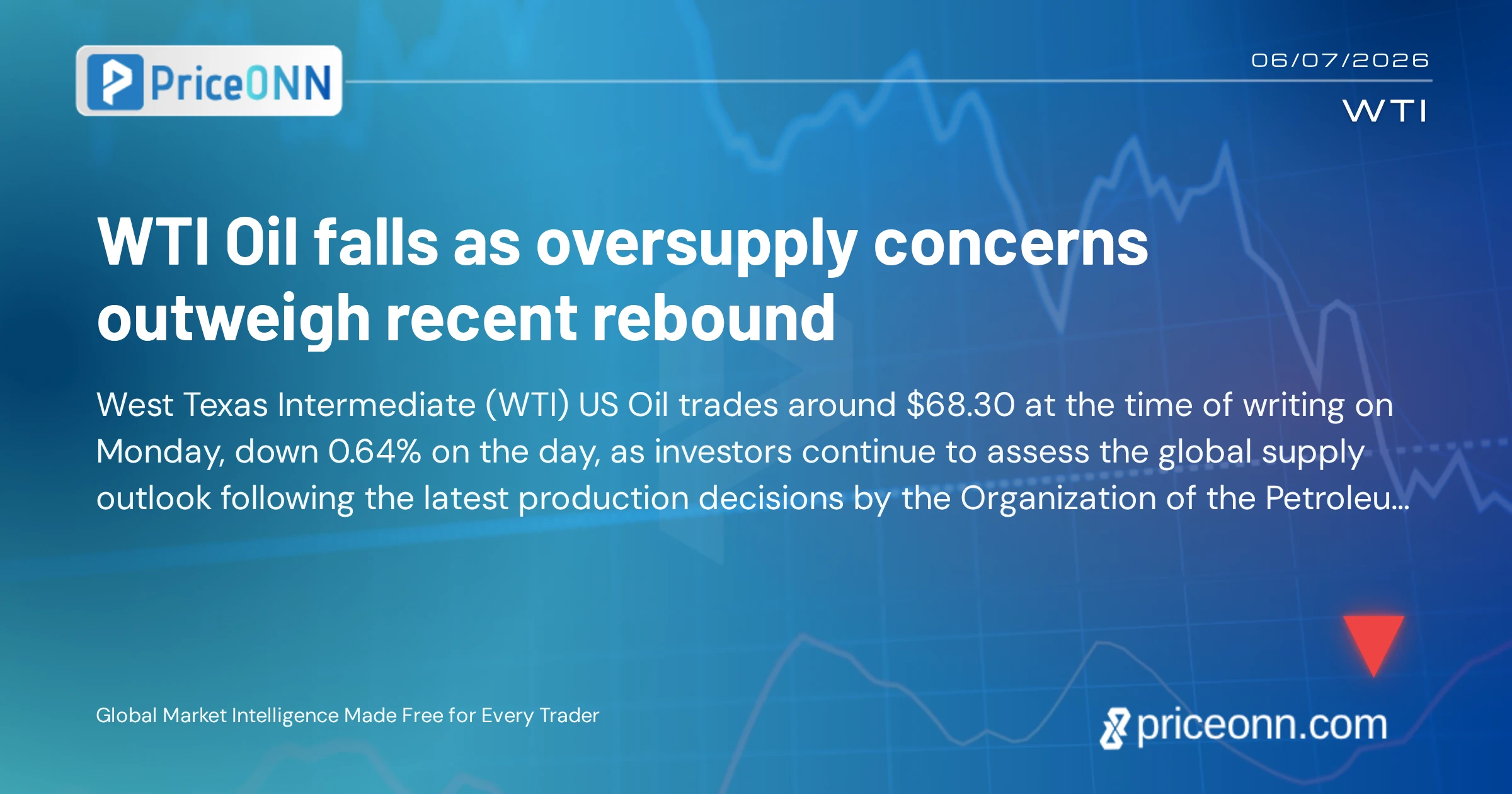
Market Sentiment Shifts on Global Oil Outlook
The price of West Texas Intermediate (WTI) crude oil experienced a dip, trading near $68.30 per barrel. This downward movement, a 0.64% decline on the day, reflects a growing unease among investors regarding the global supply landscape. The latest production directives from the Organization of the Petroleum Exporting Countries and its allies (OPEC+) are now under intense scrutiny, creating a cautious sentiment across the energy markets.
WTI, a benchmark crude oil primarily sourced from the United States, is recognized for its low sulfur content and lighter gravity, classifying it as a "sweet" and "light" oil. This composition makes it highly desirable for refining processes. Its price is a critical indicator, frequently cited in financial news, and is fundamentally shaped by the interplay of supply and demand forces. Factors such as the pace of global economic expansion, geopolitical tensions including conflicts and sanctions, and the strategic output decisions made by major oil-producing nations all exert significant influence on its valuation.
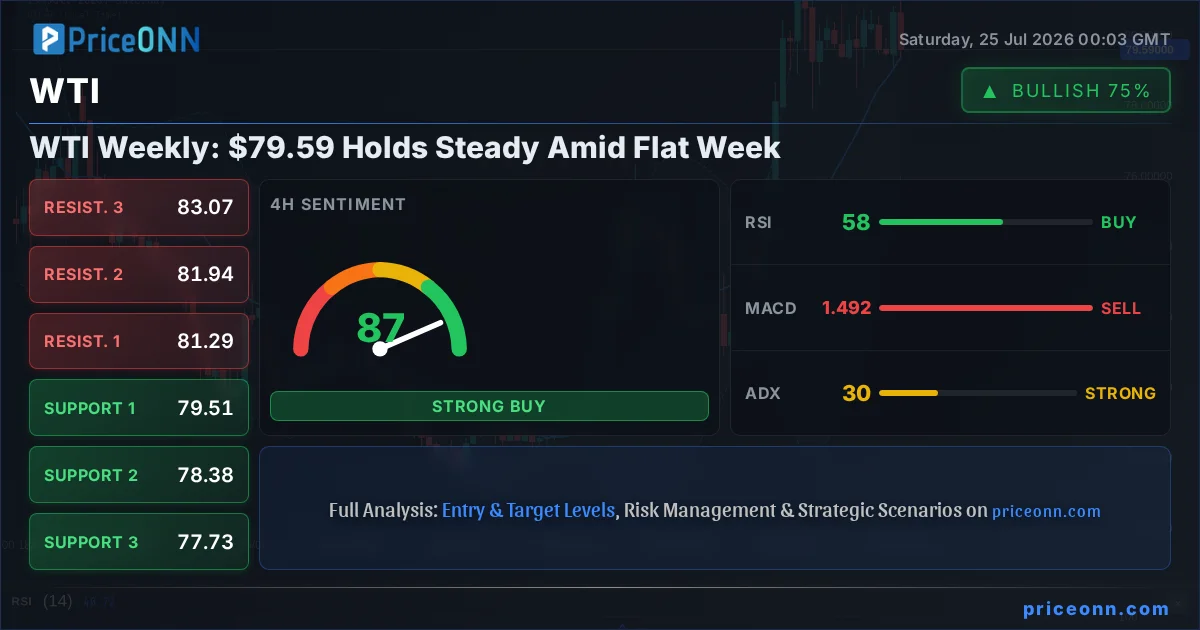
Key Influences on WTI Pricing
The collective output strategy of OPEC, a cartel of twelve oil-producing countries, plays a pivotal role in price discovery. Their bi-annual meetings, where production quotas are deliberated, often send ripples through the market. A decision to curtail production can tighten global supplies, typically leading to price increases. Conversely, an agreement to boost output generally exerts downward pressure on prices.
The influence extends to the broader OPEC+ group, which incorporates ten additional non-OPEC nations, with Russia being a prominent member. This larger alliance's actions carry even greater weight in shaping global oil availability. Furthermore, the strength of the US Dollar acts as another significant variable. Given that oil transactions are predominantly settled in dollars, a weaker dollar tends to make crude oil more accessible and thus potentially more attractive to buyers using other currencies, while a stronger dollar can have the opposite effect, increasing the cost for non-dollar purchasers.
Market watchers also closely monitor weekly inventory reports from the American Petroleum Institute (API) and the Energy Information Agency (EIA). These publications offer crucial insights into the balance between crude oil supply and demand within the United States. A reduction in stored crude, as indicated by these reports, can signal robust demand, potentially driving prices higher. An increase in stockpiles, however, might suggest an oversupply, contributing to price declines. While both API and EIA reports are usually closely aligned, with results often within 1% of each other, the EIA data, being from a government entity, is generally considered the more authoritative source.
Reading Between the Lines
The current market sentiment appears to be dominated by concerns over an oversupply, even as OPEC+ has signaled intentions to manage production. This suggests that either the market is skeptical of the group's ability to enforce cuts effectively, or that non-OPEC production is rising rapidly enough to offset any planned reductions. Investors are likely weighing increased output from nations outside the OPEC+ agreement, such as the United States, against the group's efforts to stabilize the market.
The implications for traders are nuanced. While OPEC+ actions aim to support prices, the underlying fear of too much oil entering the market is creating a ceiling. This tension between supply management efforts and the reality of global production levels is likely to keep WTI volatile. Traders will be keenly observing upcoming inventory data for concrete signs of demand strength or weakness, as well as any further communication from OPEC+ members regarding their commitment to agreed output levels.
The interplay between geopolitical events and oil supply remains a critical risk factor. Any unexpected disruption in major producing regions could rapidly shift the narrative from oversupply to undersupply, triggering a sharp price reversal. Similarly, a significant slowdown in global economic growth, particularly in key consuming nations like China, could dampen demand expectations and exacerbate downward price pressure, irrespective of OPEC+ actions.
Track markets in real-time
Empower your investment decisions with AI-powered analysis, technical indicators and real-time price data.
Join Our Telegram Channel
Get breaking market news, AI analysis and trading signals delivered instantly to your Telegram.
Join Channel PriceONN News
Saudi Arabia, which at the start of the Iran war redirected virtually all crude exports through its East-West pipeline to Yanbu on the Red Sea, has seen crude exports from Yanbu crumble by 41% to about 2.39 million barrels per day (bpd) by June, from a peak of 4.07 million bpd in March, Wood Mackenzie vessel tracking and cargo data showed. Despite the near-total concentration of exports through Yanbu, volumes have declined steadily from the March peak, according to WoodMac's tracking data. By...
PriceONN News
The dual disruption of Hormuz and Bab el-Mandeb is tightening global oil flows, raising transport costs and fueling expectations of $100 oil. Friday, July 24, 2026 The double blockade of the Strait of Hormuz and the Bab el-Mandeb has turbo-boosted oil prices this week, with both ICE Brent and WTI gaining $10 per barrel on the week. Whilst technically the Bab el-Mandeb could be bypassed through the Suez Canal, resulting in longer routes and higher costs, the dramatic decline in transits via the...
PriceONN News
Abu Dhabi National Oil Company ADNOC has issued its seventh tender offering crude from the United Arab Emirates since the beginning of June, expecting to sell millions of barrels of oil between August and October, both from within and outside the Persian Gulf. Despite the renewed threats to supply from the Strait of Hormuz and the new threats to shipping in the Red Sea by the Iran-aligned Houthis in Yemen, ADNOC is inviting interested buyers to bid by the middle of next week for crude loading...
PriceONN News
Chinese refiners have bought up all crude oil cargoes set to load from Russia’s Far East port of Kozmino in August weeks earlier than usual, traders with knowledge of the market told Bloomberg on Friday, as risks to Middle Eastern supply spiked this week with attacks on tankers in the Red Sea. China has been snapping up the cargoes at a faster pace, which raised the price of the Russian Far Eastern crude blend ESPO to a discount of just $1 per barrel to the price of ICE Brent, up from a...
PriceONN News
India is on track to export the highest volume of refined petroleum products in months as refining margins have jumped with the re-escalation of the Middle East conflict. India is estimated to ship as many as 1.55 million barrels per day (bpd) of light and middle distillates in July, per data by commodity analysts Kpler cited by Reuters columnist Clyde Russell. The July volumes would be nearly double the fuel export volumes of just 866,000 bpd in May, when the Strait of Hormuz crisis hit crude...
PriceONN News
Since Middle East hostilities reignited, oil prices have soared higher, although they remain below the highs witnessed during April 2026. This can be blamed on U.S. strikes against Iran, with Tehran and Washington disrupting traffic in the Strait of Hormuz, through which a fifth of global hydrocarbon supplies are shipped. This has sparked greater demand for Brazil’s high-quality oil grades, notably from Asia, because there is no need for shipments to pass through contested waters. This will...
PriceONN News
Indian refiners are in search of crude supply from as far as Angola in Africa and Venezuela in South America as their term supplies from the Middle East are trapped again and unable to reach India as planned. Some of the biggest state-held refiners in India, the world’s third-largest crude oil importer, are looking for and testing new crude grades, to offset part of the supply lost to the Middle East conflict, senior refinery executives told Indian outlet Economic Times. “We diversified our...
PriceONN News
At least one oil tanker carrying Saudi crude oil has transited the Bab al-Mandeb Strait with its transponder switched off as risks to vessels in the Red Sea spiked this week after the Houthis announced a blockade on Saudi shipments and targeted vessels offshore Yemen. The Merbabu tanker, owned by a Greek company and laden with Saudi crude oil, transited the Bab al-Mandeb Strait in the so-called dark mode, which many shippers and tanker operators used for months to move undetected to hostile...
PriceONN News
Crude oil prices were on course for a sizable weekly gain today, as the Strait of Hormuz remains almost entirely paralysed and the Yemeni Houthis target tankers in the Bab el-Mandeb Strait in the Red Sea. To make matters worse, Kazakhstan has suspended oil flows via the Caspian Pipeline Consortium system following Ukrainian drone attacks. At the time of writing, Brent crude was trading at $100.30 per barrel, with West Texas Intermediate at $91.70 per barrel, both up by over $10 per barrel since...
PriceONN News
Kazakhstan should, in theory, be one of the major beneficiaries of Russia’s growing isolation from global energy markets. Its crude is unsanctioned and European refiners need alternatives to Russian barrels. Yet instead of gaining a clear geopolitical advantage, Kazakhstan has found itself exposed to many of the same risks as its northern neighbour: attacks on export infrastructure, disruptions inside Russia and repeated operational failures at its own largest fields. The roots of that...
PriceONN News
Brent crude has broken back above $100 a barrel for the first time in nearly two months as escalating attacks on commercial shipping in the Red Sea deepen concerns that the Middle East supply crisis is spreading beyond the Strait of Hormuz. As of mid-morning Thursday, front-month Brent for September delivery was trading at $100.69 a barrel, up more than 7% on the day after touching an intraday high of $101.01. WTI was also sharply higher, with the entire Brent forward curve moving higher as...
PriceONN News
The war in the Middle East has diminished the negotiating power that key regional LNG exporters Qatar and the United Arab Emirates (UAE) have enjoyed for years. Importers of LNG from Europe to Asia plan to negotiate better terms in future long-term deals and ask for lower prices and higher contract flexibility, industry executives at LNG importing companies have told Reuters. For years, Qatar and the UAE commanded significant negotiating power, tied to their reliability as LNG suppliers. The...